
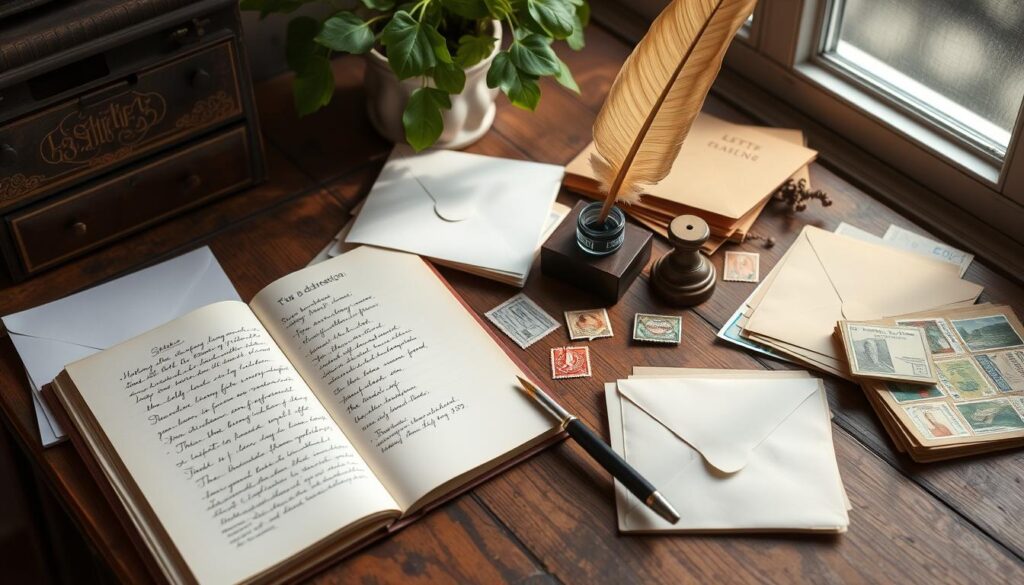
Learning to address a letter is a valuable skill in our digital world. Letters offer a unique way to connect with others personally and professionally. Handwritten notes provide warmth that digital messages can’t match.
Proper letter addressing matters for job applications, thank-you notes, and personal messages. It’s about creating a meaningful connection, not just putting words on paper. The art of letter writing goes beyond mere communication.
Letters still hold a special appeal despite technological advances. They were once the main way people communicated over distances. Understanding letter-addressing nuances helps you communicate more effectively and professionally.
Key Takeaways
- Letter writing is a timeless form of communication
- Proper addressing ensures your letter reaches the right recipient
- Handwritten letters offer a personal touch digital messages lack
- Different letter formats suit various communication needs
- Attention to detail matters in letter writing
Why Properly Addressing a Letter Matters
Addressing envelopes is crucial for effective communication. Your letter’s format showcases your professionalism and attention to detail. It’s a powerful tool that speaks volumes about you1.
The Power of First Impressions
First impressions are vital in professional communication. Recruiters closely evaluate your initial contact, making letter addressing crucial1.
Your address format can show your professional competence before the content is read. It sets the tone for your entire message.
Ensuring Accurate Delivery
Many people still use traditional mail communication. Nearly 65% send letters and packages monthly2.
Proper addressing prevents misdeliveries and ensures your message reaches its target. It’s essential for effective communication.
Professional Communication Strategies
- Include complete contact information at the top of your letter1
- Research the recipient’s name and correct title1
- Use gender-neutral honorifics when appropriate2
- Verify the recipient’s contact details before sending
Mastering the art of addressing letters is not just about postal accuracy—it’s about making a lasting professional impression.
Perfecting your envelope addressing technique shows commitment to professionalism2. It’s crucial for job applications and formal communications.
Main Components of a Letter Address
Addressing an envelope correctly is crucial for your letter’s first impression. Proper addressing ensures your message reaches its destination smoothly. Mastering letter addressing rules is essential for effective professional communication and business letter formats.
Recipient’s Name and Title
Precision is key when addressing letters. 82% of business letters use block format, maintaining consistent alignment3. Include the recipient’s full name and professional title.
65% of individuals prefer being addressed with a personal title like Dr., Mr., or Ms3. This small detail shows respect and attention to detail.
- Use full professional titles
- Verify correct spelling of names
- Match the recipient’s gender-appropriate salutation
Street Address Details
Write a clear and complete street address. Include the full street number, name, and any apartment or suite information on separate lines4.
For international mail, be aware of additional formatting requirements. These may vary by country.
| Address Component | Example |
|---|---|
| Recipient Name | Jane Smith |
| Street Address | 123 Business Lane |
| Additional Info | Suite 456 |
City, State, and ZIP Code
The final address line includes city, state abbreviation, and ZIP code. 77% of business letters include sender’s address information3.
Use standard two-letter state abbreviations and include the full ZIP code. This ensures quick and accurate delivery.
“Accuracy in addressing is the hallmark of professional communication.”
Following these guidelines will help your letter reach its destination efficiently and professionally. Proper addressing reflects well on you and your business.
Tips for Addressing Different Types of Letters
Mastering letter addressing is key for effective communication. Your approach changes based on the recipient and purpose. Professional letters need formality, while casual ones allow more freedom.
Proper envelope etiquette helps navigate these differences. It guides you through the nuances of various correspondence types.
Personal Letters vs. Business Letters
Personal letters offer more addressing flexibility. You can use first names or nicknames for friends and family. Abbreviated names are fine for informal letters5.
Business letters require a structured approach. Use full names and titles for professional contacts. Interestingly, 31% of business letters use professional titles6.
International Mail Considerations
Sending letters abroad needs extra care. Research the address format for each country you’re mailing to. About 17% of international letters include the country name below the address6.
Postal systems differ worldwide, so pay attention to formatting. For professional international letters, use full names and formal titles5.
Handwritten vs. Typed Addresses
Your address format can leave a lasting impression. Handwritten addresses add a personal touch to private letters. Typed addresses ensure clarity, crucial for business communication.
When typing, remember that 26% of addresses include apartment or office numbers6. Always double-check the recipient’s information for accuracy.
FAQ
What are the essential components of a letter address?
Key components include the recipient’s full name, title, and complete address. For business letters, add the sender’s details and date at the top. Include the street address, city, state, and ZIP code.
How do I address a formal business letter?
Use the recipient’s full name and professional title on the first line. Follow with their company name and complete street address on subsequent lines.
What’s the difference between block and indented letter formats?
Block format aligns all text to the left margin without indentations. Indented format slightly indents the first line of each paragraph. Block format is more modern and common in professional settings.
How should I address an envelope for international mail?
Research the specific address format for the destination country. Include the full international address and country name in capital letters. Use the correct postal code format and consider adding “AIRMAIL” for international shipping.
Can I handwrite a business letter address?
Typed addresses are preferred for business correspondence to ensure clarity and professionalism. Handwritten addresses can add a personal touch to informal letters. For crucial business communications, always type the address.
What title should I use when I don’t know the recipient’s gender?
Use “Dear [First Name] [Last Name]” or “Dear Hiring Manager” for job applications. If you know their professional title, use that instead. Avoid gendered titles like “Mr.” or “Ms.” when unsure.
How do I address a letter to multiple recipients?
List individual names for multiple recipients at the same address. Use “Dear Team” or “Dear [Department Name] Staff” for groups. Ensure correct spelling and titles for each recipient.
What should I do if I’m unsure about a recipient’s exact address?
Call the company or individual to confirm the precise mailing address. Double-check spelling, suite or apartment numbers, and ZIP code. Using the correct address is crucial for business correspondence.
Source Links
- How to Address a Letter – https://corporatefinanceinstitute.com/resources/career/how-to-address-a-letter/
- How to address a professional letter: Format + tips – https://preply.com/en/blog/how-to-address-professional-letters/
- The Basic Business Letter – Purdue OWL® – https://owl.purdue.edu/owl/subject_specific_writing/professional_technical_writing/basic_business_letters/index.html
- EXAMPLE OF FULL BLOCK FORMAT – https://www.hunter.cuny.edu/rwc/repository/files/business-and-professional-writing/business_letter_handout-major-rev.pdf
- How to Properly Address an Envelope: Tips and Etiquette – https://www.southernliving.com/culture/addressing-envelopes-etiquette?srsltid=AfmBOor-xRGcp79i_S-mHmOJDGjFnVI2oHHtjjOEmaZIJAgVzI6Cj1ak
- 4 Ways to Address a Letter – wikiHow – https://www.wikihow.com/Address-a-Letter

