
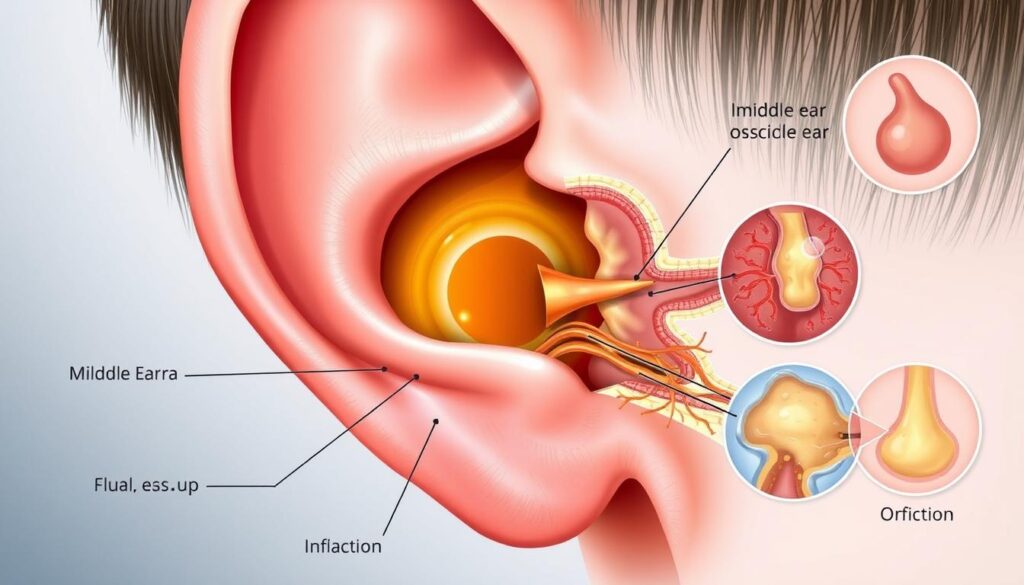
Middle ear infections can be painful for kids and adults. They’re common and need proper care. Kids are more likely to get them due to their body structure1.
Ear infections happen when fluid builds up behind the eardrum. This creates a place for germs to grow. Weather changes can increase the risk of eardrum swelling1.
Fall and winter see more infections. People with allergies are at higher risk during these seasons1.
Most middle ear infections get better on their own. They usually clear up in a few days2. Good hand washing and avoiding smoke can help prevent infections1.
Key Takeaways
- Middle ear infections are most common in young children
- Seasonal factors can increase infection risk
- Most infections resolve within 3-5 days without antibiotics
- Environmental factors play a significant role in ear infection development
- Preventive measures can help reduce infection likelihood
Understanding Middle Ear Infections
Middle ear infections affect people of all ages, especially young children. They occur behind the eardrum, where sound-conducting mechanisms are located. These infections can cause discomfort and potential hearing issues.
What is a Middle Ear Infection?
A middle ear infection, or otitis media, inflames the middle ear space. It happens when bacteria or viruses enter the area, causing fluid buildup. This can lead to Ear Pain.
Kids are more prone to these infections3:
- More common in children under 5 years old4
- More prevalent in boys than girls3
- Frequently associated with respiratory infections
How Does it Occur?
Middle ear infections often start with congestion from a cold or allergies. This can block the eustachian tubes, preventing proper air circulation. The blockage creates an ideal environment for bacteria and viruses to grow4.
The eustachian tubes play a crucial role in maintaining middle ear health by regulating air pressure and draining secretions.
Risk Factors for Developing an Infection
| Age Group | Risk Factors |
|---|---|
| Children | Group child care, bottle-feeding, seasonal allergies |
| Adults | Weakened immune system, chronic respiratory conditions |
Key risk factors include young age, secondhand smoke exposure, and frequent respiratory infections. Lifestyle choices can affect your chances of getting Ear Discharge and Hearing Loss. Breastfeeding, good hand hygiene, and avoiding smoke can lower infection risks3.
Most middle ear infections clear up within 2-3 days. However, it’s important to watch for symptoms. If they persist or worsen, seek medical help to prevent complications3.
Recognizing Symptoms of Middle Ear Infections
Middle ear infections can cause discomfort and potential health risks. Identifying symptoms early helps determine when to seek medical help.
Understanding these signs is crucial for timely treatment. Let’s explore the common symptoms and when to consult a doctor.
Common Symptoms to Watch For
Ear infections show different signs in adults and children. Key indicators include ear pain, especially when lying down.
Other symptoms are fluid drainage and muffled hearing. High fever and balance problems may also occur.
- Ear pain, particularly when lying down
- Fluid drainage from the ear
- Difficulty hearing or muffled sounds
- Fever reaching 102.2°F (39°C) or higher5
- Vertigo or balance problems
Differences Between Adult and Child Symptoms
Children often show more obvious signs of ear infections. They might tug at their ears and become more irritable.
Kids may also have trouble sleeping and eat less. Adults usually experience milder symptoms like slight ear pain.
- Tug at their ears frequently
- Experience increased irritability
- Have trouble sleeping
- Show reduced appetite
Adults typically experience more subtle signs, such as mild ear pain and occasional hearing difficulties6.
When to Seek Medical Attention
Contact a doctor if symptoms last more than a day. Severe ear pain or fluid discharge are also reasons to seek help.
A high fever that doesn’t go away is another concern. Don’t ignore these signs, as they may indicate a serious problem.
- Symptoms lasting more than a day
- Severe ear pain
- Discharge of fluid, pus, or blood
- High fever persisting for extended periods5
Early detection and treatment can prevent potential complications like hearing loss6.
Treatment Options for Middle Ear Infections
Ear infections can be tough, but there are ways to manage them. Your doctor will suggest the best approach for your case.
Home Remedies and Initial Management
For mild ear infections, try these home remedies:
- Apply warm compresses to the affected ear
- Use over-the-counter pain relievers
- Rest and stay hydrated
Over-the-Counter Medications
Pain control is key during ear infections. Acetaminophen and ibuprofen can ease discomfort and fever. Always follow recommended dosage instructions.
Prescription Medications and Antibiotics
Antibiotics are crucial in treating ear infections. The American Academy of Pediatrics gives specific guidelines for their use:
- Mild ear pain may not require immediate antibiotics7
- Severe infections typically need antibiotic treatment8
- Children under 6 months often receive immediate antibiotics7
Ear Tubes: A Surgical Solution
For ongoing ear infections, ear tubes might help. These small tubes can ventilate the middle ear and prevent fluid buildup.
Ear tubes can reduce infection frequency. They usually stay in place for 12 to 18 months8.
Ear tubes can greatly improve ear health for kids with frequent infections.
“Proper treatment can prevent long-term complications and restore ear health.” – Pediatric ENT Specialist
Always talk to a doctor about the best treatment for your ear infection.
Preventing Future Ear Infections
Ear infections are common in children. Five out of six kids get at least one by age three9. Their growing immune systems and smaller ear tubes make them more prone to ear issues9.
Vaccines are key in prevention. The CDC recommends PCV13 for kids under two9. Studies show that vaccinated children have fewer ear10.
Lifestyle changes can lower infection risks. Avoid secondhand smoke and practice good hygiene11. Breastfeeding infants can also help11.
Adults should manage allergies and treat respiratory infections quickly11. Staying in a smoke-free environment is crucial11. Daily nasal rinses with saline can remove irritants and may reduce ear pain11.
FAQ
What exactly is a middle ear infection?
A middle ear infection affects the space behind your eardrum. It happens when eustachian tubes swell or block, causing fluid buildup. This fluid can become infected.
Children are more likely to get these infections. Their eustachian tubes are smaller and shaped differently than adults’.
What are the most common symptoms of a middle ear infection?
Symptoms differ between children and adults. Kids may have ear pain, especially when lying down. They might tug at their ear or have trouble sleeping.
Other signs include fussiness, hearing problems, and loss of balance. Fever, fluid drainage, and poor appetite can also occur.
Adults often experience ear pain, fluid drainage, and hearing difficulties.
When should I see a doctor about an ear infection?
See a doctor if symptoms last more than a day. Seek help for babies under 6 months with symptoms.
Get medical attention for severe ear pain or unusual irritability in infants after a cold. Fluid, pus, or blood from the ear requires immediate care.
Adults should be cautious. Ear infections can sometimes signal more serious conditions.
How are middle ear infections typically treated?
Treatment varies based on age, severity, and infection type. Many ear infections heal on their own.
Pain relievers like acetaminophen or ibuprofen can help manage symptoms. Antibiotics may be prescribed for bacterial infections.
For frequent or persistent infections, ear tubes might be recommended. These help drain fluid and prevent future infections.
Can ear infections be prevented?
Good hygiene and avoiding secondhand smoke can reduce infection risk. Breastfeeding infants and holding babies upright during bottle-feeding helps.
Vaccinations, including flu shots and pneumococcal vaccines, can prevent some ear infections. Managing allergies is also beneficial.
Limiting time in group child care settings may help reduce exposure to infections.
Are ear infections more common in children or adults?
Ear infections occur more often in children, especially those between 6 months and 2 years old.
Children’s eustachian tubes are shorter and more horizontal. This makes them prone to blockage and infection.
Group child care, bottle-feeding, and certain genetic factors can increase a child’s risk.
What complications can arise from untreated ear infections?
Untreated ear infections can lead to serious problems. These include hearing loss and speech delays in children.
The infection may spread to nearby tissues. In rare cases, it can affect the skull or brain.
Prompt medical attention is crucial to prevent these complications.
Source Links
- Ear infection (middle ear)-Ear infection (middle ear) – Symptoms & causes – Mayo Clinic – https://www.mayoclinic.org/diseases-conditions/ear-infections/symptoms-causes/syc-20351616
- Middle ear infection (otitis media) – https://www.nhsinform.scot/illnesses-and-conditions/ears-nose-and-throat/middle-ear-infection-otitis-media/
- Middle Ear Infections (Otitis Media) (for Parents) – https://kidshealth.org/en/parents/otitis-media.html
- Understanding Middle Ear Infections in Children – https://www.saintlukeskc.org/health-library/understanding-middle-ear-infections-children
- Ear Infection Basics – https://www.cdc.gov/ear-infection/about/index.html
- Middle-Ear Infection in Adults – https://www.hopkinsmedicine.org/health/conditions-and-diseases/otitis-media-middle-ear-infection-in-adults
- Ear infection (middle ear)-Ear infection (middle ear) – Diagnosis & treatment – Mayo Clinic – https://www.mayoclinic.org/diseases-conditions/ear-infections/diagnosis-treatment/drc-20351622
- Middle Ear Infection (Otitis Media): Symptoms, Causes & Treatment – https://my.clevelandclinic.org/health/diseases/8613-ear-infection-otitis-media
- Ear Infections in Children – https://www.nidcd.nih.gov/health/ear-infections-children
- Patient education: Ear infections (otitis media) in children (Beyond the Basics) – https://www.uptodate.com/contents/ear-infections-otitis-media-in-children-beyond-the-basics/print
- How to Prevent Ear Infections When It’s Cold – https://www.keckmedicine.org/blog/how-to-prevent-ear-infections-when-its-cold/

