
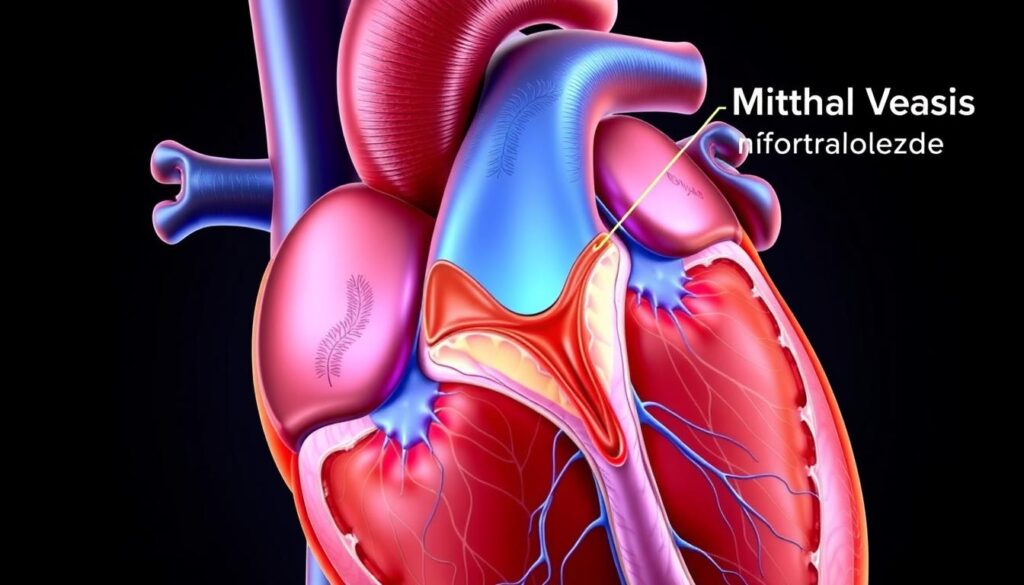
Mitral valve stenosis is a serious heart condition that affects blood flow. It narrows the mitral valve, impacting your heart’s ability to pump blood efficiently1. This condition can greatly influence your overall health and requires careful medical attention1.
Your heart works non-stop to keep you healthy. However, certain symptoms can signal problems with your mitral valve. Watch out for shortness of breath, fatigue, and irregular heartbeats1.
These signs develop slowly, making early detection tough but crucial. Recognizing them early can lead to better management of the condition.
Rheumatic fever used to cause this condition often. Now, it’s rare in the United States1. However, other factors can lead to mitral valve stenosis.
Aging, radiation therapy, and certain medications may contribute to this heart problem1. Knowing these risk factors can help you take steps to protect your heart health.
Key Takeaways
- Mitral valve stenosis is a serious heart valve disease
- Early detection is crucial for effective management
- Multiple factors can contribute to valve narrowing
- Symptoms develop gradually and require attention
- Regular medical checkups are essential for monitoring
Understanding Mitral Valve Stenosis
Your heart’s mitral valve keeps blood flowing properly. Mitral valve stenosis occurs when this valve narrows. This condition can disrupt your heart’s normal functioning2.
Mitral valve stenosis can greatly affect your heart health. It may also impact your daily life.
What Causes Mitral Valve Stenosis
Several factors can lead to mitral valve stenosis. The main causes include:
- Rheumatic fever, typically developing 5-10 years after the initial infection3
- Calcium deposits around the heart valve3
- Radiation treatment to the chest3
- Congenital heart defects2
Common Symptoms and Warning Signs
Spotting mitral valve stenosis symptoms early is key. You might experience:
Risk Factors to Consider
Some people are more likely to develop mitral valve stenosis. Key risk factors include:
Early detection and proper valve stenosis treatment can help manage this heart condition effectively. If you notice any symptoms, talk to your doctor. They can explore possible mitral valve surgery options4.
“Understanding your heart’s health is the first step towards effective management” – Cardiovascular Specialists
Treatment Options and Management Strategies
Mitral valve stenosis treatment is tailored to your specific condition. Your healthcare team will assess the severity of your valve narrowing. This evaluation helps determine the best treatment strategy5.
Mitral valve stenosis treatments fall into several key categories. These include medical management and surgical interventions.
- Medical Management
- Diuretics to reduce fluid buildup
- Blood thinners to prevent clots
- Heart rate control medications
- Surgical Interventions
- Balloon valvuloplasty
- Mitral valve repair
- Mitral valve replacement
Surgery becomes necessary when medications can’t manage symptoms effectively. Keyhole mitral valve replacement surgery is a minimally invasive option.
This approach offers significant benefits. These include faster recovery and minimal scarring6.
| Treatment Approach | Key Benefits |
|---|---|
| Medication Management | Symptom control, prevent progression |
| Balloon Valvuloplasty | Non-surgical intervention, temporary relief |
| Mitral Valve Repair | Preserve natural valve, long-term solution |
| Mitral Valve Replacement | Complete valve restoration, improved heart function |
“Early intervention can significantly improve your quality of life and prevent further complications.” – Cardiac Specialists
Ongoing management includes regular follow-ups and echocardiograms. Lifestyle changes are crucial to your treatment plan.
Maintain a heart-healthy diet and engage in recommended exercise. Managing stress and getting enough sleep are also important5.
Conclusion
Managing mitral valve stenosis requires a proactive approach to heart health. Recognize early warning signs and seek timely medical help. This can make a big difference in your long-term outcomes7.
Your mitral valve disease journey involves careful monitoring and personalized treatment. Options range from medications to surgery, based on your condition’s severity7. The European Society of Cardiology stresses the need for individualized care.
Early detection and regular check-ups are key in managing this condition. Modern medicine offers many effective management options. Stay informed and keep in touch with your healthcare team8.
Listen to your body and work closely with medical professionals. This approach can help you navigate the challenges of mitral valve stenosis. Your efforts can improve your heart health and overall quality of life8.
FAQ
What is Mitral Valve Stenosis?
Mitral valve stenosis is a heart condition that narrows the mitral valve. This reduces blood flow between left heart chambers. Symptoms include shortness of breath, fatigue, and irregular heartbeats.
The condition typically develops slowly over time. Symptoms appear gradually as the condition worsens.
What are the primary causes of Mitral Valve Stenosis?
Rheumatic fever, a complication of untreated strep throat, is the most common cause. Other causes include calcium deposits and radiation therapy to the chest.
Congenital heart defects and certain autoimmune conditions can also lead to mitral valve stenosis. Age and specific medical treatments may contribute to its development.
What symptoms should I watch out for?
Key symptoms include shortness of breath, fatigue, and swollen feet or legs. You may also experience irregular heartbeats, dizziness, and chest discomfort.
In some cases, you might cough up blood. If you notice these symptoms, consult your doctor right away.
Who is at higher risk for Mitral Valve Stenosis?
People with a history of untreated strep infections face higher risk. Advanced age and previous chest radiation therapy also increase risk.
Illicit drug use, especially MDMA, can contribute. Certain medications like ergotamine and older weight-loss drugs may also raise risk.
How is Mitral Valve Stenosis treated?
Treatment depends on your condition’s severity. Medications may include diuretics, blood thinners, and heart rate-controlling drugs.
Surgical options involve balloon valvuloplasty or open-heart surgery for valve repair. Mitral valve replacement is another possibility. Lifestyle changes play a crucial role in management.
What lifestyle modifications can help manage Mitral Valve Stenosis?
Eat a heart-healthy diet and exercise regularly as advised by your doctor. Manage stress effectively and get enough sleep.
Attend regular follow-up appointments to monitor your condition. These changes can significantly improve your overall health.
How often should I get checked if I have Mitral Valve Stenosis?
Regular check-ups and echocardiograms are vital for monitoring your condition. The frequency depends on your condition’s severity.
Your healthcare provider will recommend a schedule based on your specific needs. Stay consistent with these appointments for best results.
Can Mitral Valve Stenosis be prevented?
While not always preventable, you can take steps to reduce risks. Treat strep throat promptly and maintain good cardiovascular health.
Avoid illicit drugs and be aware of risky medications. Early detection and proper medical management are key to controlling this condition.
Source Links
- Mitral valve stenosis – Symptoms and causes – https://www.mayoclinic.org/diseases-conditions/mitral-valve-stenosis/symptoms-causes/syc-20353159
- Mitral valve disease – Symptoms and causes – https://www.mayoclinic.org/diseases-conditions/mitral-valve-disease/symptoms-causes/syc-20355107
- Mitral stenosis: MedlinePlus Medical Encyclopedia – https://medlineplus.gov/ency/article/000175.htm
- Mitral Valve Stenosis and Regurgitation – https://stanfordhealthcare.org/medical-conditions/blood-heart-circulation/mitral-valve-stenosis-regurgitation.html
- Mitral Valve Stenosis: Treatment & Diagnosis – https://www.massgeneralbrigham.org/en/patient-care/services-and-specialties/heart/conditions/mitral-valve-stenosis/treatment
- Mitral Valve Stenosis Causes, Symptoms & Treatment – https://www.thekeyholeheartclinic.com/services/valve-disorders/mitral-valve2/mitral-stenosis/
- Mitral stenosis – https://www.mountsinai.org/health-library/diseases-conditions/mitral-stenosis
- Mitral Stenosis (Nursing) – StatPearls – https://www.ncbi.nlm.nih.gov/sites/books/NBK568793/

