
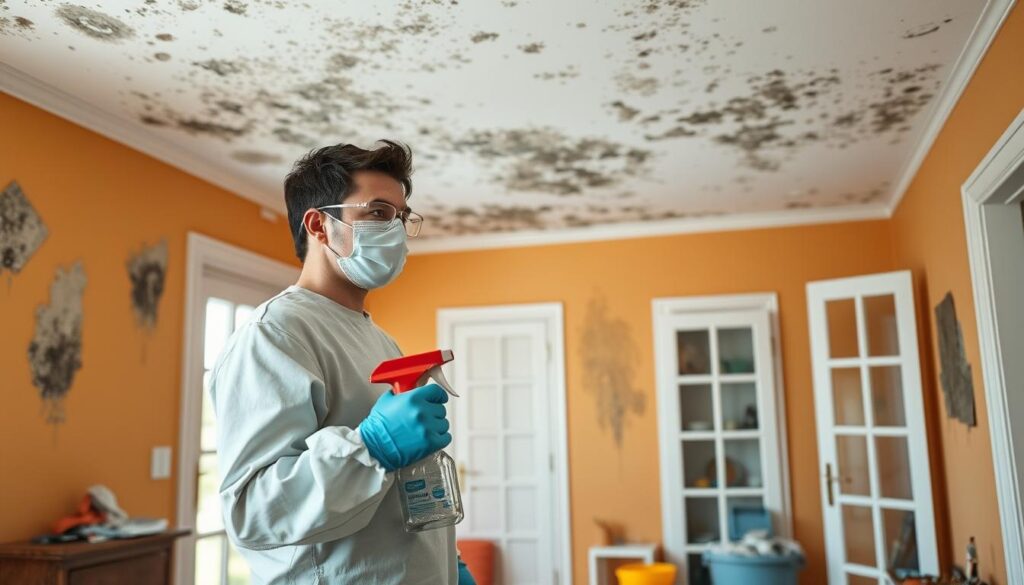
Indoor mold is a health hazard that needs quick action. This guide explains how to prevent and safely remove mold from your home. You’ll learn to protect your living space and keep it mold-free12.
Mold loves damp places like bathrooms, kitchens, and basements1. It shows up as green, black, or white spots on surfaces. These spots often point to moisture problems1.
Catching mold early is key for good inspection and removal2. Experts say to keep indoor humidity between 30 and 50% to stop mold growth2.
Fix moisture sources and use proper ventilation. These steps can greatly lower your home’s mold risk1.
Key Takeaways
- Mold grows rapidly in humid, warm environments
- Different mold types require specific removal approaches
- Regular home moisture control prevents mold growth
- Protective gear is essential during mold removal
- Professional help is recommended for extensive mold infestations
Understanding Common Types of Mold in House
Mold can invade your home silently, creating health risks. Knowing different mold types is crucial for protecting your family’s health. It helps maintain a safe living environment.
- Allergenic Mold: Low to moderate threat3
- Pathogenic Mold: Moderate to high threat3
- Toxigenic Mold: High to extreme threat3
Common Mold Species in Homes
Recognizing house mold symptoms helps identify potential risks early. Here are some common mold types:
| Mold Type | Characteristics | Health Risks |
|---|---|---|
| Alternaria | Common in dry, warm climates4 | Allergic rhinitis, asthma triggers4 |
| Aspergillus | Found in air and HVAC systems5 | Allergic reactions, lung inflammation4 |
| Penicillium | Common in fabrics and damp materials4 | Asthma and sinus infections3 |
Identifying Black Mold Risks
Black mold testing is vital for detecting dangerous mold species. Stachybotrys chartarum, often called black mold, can cause severe respiratory issues.
It requires immediate professional intervention. Protect your health by understanding the mold in your home.
Protect your health by understanding the mold lurking in your home.
Mold testing helps identify specific species and their potential health impacts. Here’s a breakdown of mold types5:
– 57% of molds are allergenic
– 29% are toxigenic
– 14% are pathogenic
Notice persistent symptoms like sneezing, coughing, or skin rashes? Consult a professional for thorough mold testing and removal.
Safe and Effective Mold Removal Methods
Mold remediation requires a smart mix of natural and chemical cleaning solutions. Different surfaces need specific treatments for safe removal6. Strategic planning is key to tackling mold in your home.
Natural mold cleaners offer an eco-friendly defense against mold. White vinegar is a top choice, killing over 80% of mold species7. It’s safe, cheap, and works on many surfaces.
- Vinegar solution: Spray directly on affected areas
- Baking soda: Helps absorb odors and prevent recurrence7
- Bleach solution: 1 cup bleach per gallon of water for hard surfaces
For effective mold remediation, follow these steps:
- Identify the mold-affected area
- Choose appropriate cleaning method based on surface type
- Thoroughly dry the cleaned area to prevent regrowth6
Pro tip: For areas larger than 10 square feet, consult a professional mold remediation specialist6.
Different surfaces need unique cleaning approaches. Porous materials like drywall need gentle cleaning. Wood surfaces might need sanding before treatment.
Always dry surfaces thoroughly after cleaning. This step is crucial to stop mold from growing back6.
Prevent moisture to stop mold growth. Keep indoor humidity below 60%. Fix water leaks quickly to create a mold-unfriendly environment6.
Conclusion
Proactive mold prevention is key to effective home maintenance. Protect your living space by controlling humidity and minimizing health risks8. Keep indoor humidity between 30-50% to prevent mold growth and ensure a healthy environment9.
Include regular inspections and moisture management in your home routine. Use dehumidifiers in basements and ensure proper ventilation to reduce mold risks8. Check water-prone areas and address moisture issues within 48 hours to prevent mold8.
For thorough mold prevention, check out the WebMD mold guide. Install exhaust fans in kitchens and bathrooms. Ensure proper home drainage and quickly repair water damage9.
Stay vigilant and use these strategies to create a healthier home. Your efforts can protect your family from mold-related health issues10. Mold prevention is ongoing.
Regular cleaning and monitoring humidity levels are crucial. Address moisture sources promptly. Your actions can prevent mold growth and safeguard your family’s well-being.
FAQ
What are the most common types of mold found in houses?
Houses often harbor several mold types. Cladosporium appears blackish-brown to gray-green. Aspergillus grows both indoors and outdoors. Penicillium thrives on decaying materials. Stachybotrys, or black mold, favors high-cellulose materials like drywall and wood.
What are the symptoms of mold exposure?
Mold exposure can trigger various health issues. Common symptoms include sneezing, coughing, and shortness of breath. Skin rashes and respiratory irritation may also occur. People with allergies or weak immune systems might face more severe reactions.
How can I prevent mold growth in my home?
Keep humidity levels between 30-50% using dehumidifiers. Ensure proper ventilation and clean regularly. Seal cracks and leaks to prevent moisture buildup. Use exhaust fans in bathrooms and kitchens to reduce dampness.
What cleaning solutions are effective for removing mold?
White vinegar works well for mold removal. A bleach solution (1 cup per gallon of water) is also effective. For hard surfaces, try detergent and water. Always dry the area thoroughly after cleaning.
When should I call a professional for mold removal?
Seek professional help if mold covers over 10 square feet. Call experts for extensive water damage. Contact specialists if you experience significant health symptoms related to mold exposure.
What protective gear should I wear when removing mold?
Safety is crucial when dealing with mold. Wear an N-95 respirator to protect your lungs. Use rubber gloves to shield your hands. Don goggles without ventilation holes to safeguard your eyes.
How do I know if I have a mold problem?
Musty odors often signal mold growth. Look for visible green, black, or white spots. Persistent allergy symptoms may indicate a problem. Check for moisture in basements, bathrooms, and kitchens.
Can mold grow on all surfaces?
Mold thrives on various surfaces with moisture and organic content. It can grow on carpets, curtains, and wallpaper. Wood and drywall are also vulnerable. Porous materials are especially prone to mold growth.
Source Links
- How to Get Rid of Mold – https://www.homedepot.com/c/ah/how-to-get-rid-of-mold/9ba683603be9fa5395fab907c52351c
- The Right Way to Get Rid of Mold in Your Home, According to Experts – https://www.marthastewart.com/273648/mold-tips
- 20 Most Common Types of Mold in Homes: Identification & Health Complications – https://www.airpf.com/types-of-mold-in-homes-identification/
- Types of Mold in Homes & Mold Identification Photos – https://www.euro-maids.com/blog/12-different-types-of-mold-found-in-houses
- 10 Common Molds Found in the Home – https://www.familyhandyman.com/list/common-types-of-mold-in-the-home/?srsltid=AfmBOoqT-rUht4JHTi36MC4zDS2k3w3oy3V6lk9kAs4lDcH6dAhsUrFL
- Effective Methods to Get Rid of Mold in Your Home or Office – https://www.puroclean.com/scottsdale-az-puroclean-restoration-specialists/blog/effective-methods-to-get-rid-of-mold-in-your-home-or-office/
- PDF – https://www.beyondtoxics.org/wp-content/uploads/GreatNaturalMoldCleaners-Instead-of-Bleach.pdf
- Mold and Mildew – https://ehsc.oregonstate.edu/resources/mold-and-mildew
- Preventing Mold in Your Home – https://extension.uga.edu/publications/detail.html?number=C1047-1&title=preventing-mold-in-your-home
- MMIMH_112017_ADA – https://www.cdph.ca.gov/Programs/CCDPHP/DEODC/EHIB/CPE/CDPH Document Library/Mold/MMIMH_English.pdf

