
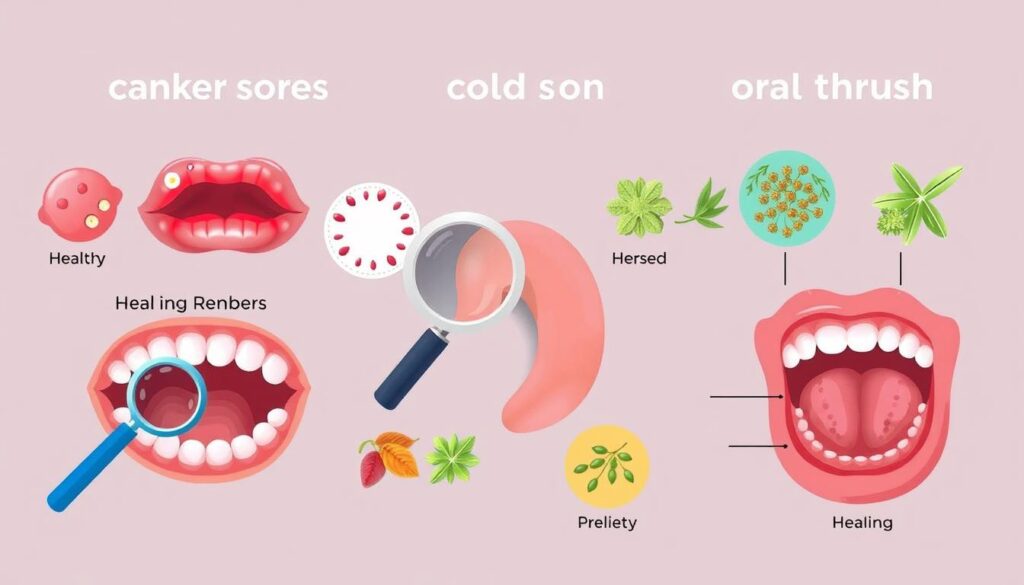
Mouth sores can be a real pain. These oral ulcers affect about 25% of people1. They can make eating, talking, and everyday life tough.
Oral sores come in different types and sizes. Some heal quickly, while others stick around longer. They can pop up on your lips, cheeks, tongue, or other soft mouth tissues2.
These pesky ulcers might hint at bigger health issues. They could signal nutritional problems or infections. Understanding their causes can help you manage mouth pain better.
Key Takeaways
- Mouth sores affect about 25% of people
- Some sores heal within 1-2 weeks naturally
- Multiple factors can trigger oral ulcers
- Over-the-counter treatments can provide relief
- Persistent sores may require medical attention
Understanding Different Types of Mouth Sores
Mouth sores can be uncomfortable and painful conditions affecting various parts of your oral cavity. These oral lesions come in different forms, each with unique characteristics and causes3. Knowing these variations helps you identify and manage them better.
Canker Sores and Aphthous Ulcers
Canker sores, or aphthous ulcers, are small, oval-shaped ulcers inside the mouth. They look pale or yellow with a red outer ring3. Women are more likely to get these non-contagious sores3.
Several factors can trigger their development:
- Stress
- Hormonal changes
- Weakened immune system
- Nutritional deficiencies
Cold Sores and Herpes Labialis
Cold sores are fluid-filled blisters typically found near the mouth and lips. These highly contagious sores spread through close contact like kissing or sharing utensils4.
The herpes simplex virus (HSV-1) causes cold sores. Stress, fatigue, or hormonal changes can trigger outbreaks.
Oral Thrush and Leukoplakia
Oral thrush appears as creamy white patches in the mouth. It’s most common in older adults and babies4.
Leukoplakia shows up as thick, white patches on the tongue or mouth lining. It’s often linked to tobacco use. Both conditions need professional medical evaluation.
Most mouth sores heal within 10 to 14 days. Severe cases may last up to 6 weeks3. If your oral lesions persist or have other symptoms, see a doctor3.
Common Causes and Risk Factors of Oral Lesions
Mouth ulcers stem from various conditions and lifestyle factors. Understanding these causes helps manage and prevent oral infections5. Recurrent aphthous stomatitis affects about 20% of people, with minor aphthous ulcers being most common6.
Key risk factors for mouth sores include:
- Physical trauma (biting cheek, burns)
- Weakened immune system
- Hormonal changes
- Nutritional deficiencies
- Emotional stress
Medical conditions can trigger oral lesions. Blood disorders, HIV, and autoimmune conditions like Behcet’s syndrome are potential causes5. Drug reactions, especially from cytotoxic agents, can also lead to mouth ulcers5.
Lifestyle and environment impact mouth ulcer development. Smoking, poor oral hygiene, and diet can increase oral infection risk6. Stress and immune system challenges are crucial triggers to watch.
“Prevention and understanding are key to managing oral health effectively.”
Age and gender influence oral lesion occurrence. Desquamative gingivitis is more common in older women5. Herpes simplex virus, causing cold sores, affects 60% to 95% of adults worldwide6.
Recognizing Symptoms and Warning Signs
Mouth sores can signal important health issues. They’re more than just a nuisance. Recognizing their traits and symptoms is key for good oral health7.
These small ulcers often reveal hidden health problems. Your body uses them to communicate important messages.
Physical Characteristics of Mouth Sores
Canker sores are small, shallow ulcers inside the mouth. Cold sores appear as fluid-filled blisters around the lips8.
Oral thrush shows up as white, creamy patches. These patches can be found on inner cheeks, gums, and tongue.
Associated Symptoms
- Persistent pain or burning sensation
- Difficulty eating or swallowing
- Swollen lymph nodes
- Unexplained fever
Stomatitis signs can disrupt your daily life. They may cause unexpected oral discomfort. About 9 in 10 diseases can show symptoms in the mouth7.
When to Seek Medical Attention
Not all mouth sores need a doctor’s visit. However, some cases require professional help.
- Sores lasting longer than two weeks
- Recurring mouth ulcers
- Sores interfering with eating or speaking
- High fever accompanying mouth sores
Persistent symptoms could indicate more serious underlying health conditions.
| Symptom Type | Potential Concern | Action Recommended |
|---|---|---|
| White patches | Potential oral thrush | Medical evaluation |
| Unexplained bleeding | Possible infection | Immediate consultation |
| Multiple sudden sores | Underlying health issue | Professional assessment |
Your mouth health reflects your overall wellness. Watch for stomatitis signs and mouth sore symptoms. This vigilance can help catch health issues early7.
Conclusion
Proactive awareness about mouth sores is key for optimal dental health. Most ulcers are harmless and heal on their own. Understanding their causes and treatments is vital for oral wellness. Effective mouth sore treatment starts with identifying underlying factors9.
Prevent oral lesions through regular dental hygiene, balanced diet, and stress management. High-quality toothbrushes and clean mouths can reduce painful ulcer risks9. Consult a healthcare professional if sores last over three weeks10.
Mouth sores can affect your comfort and dental health. Stay alert to symptoms and maintain good oral hygiene. Understanding oral lesions and taking preventive steps helps manage their occurrence.
Professional dental care is crucial for monitoring mouth sores. Regular check-ups and quick attention to unusual symptoms ensure long-term oral wellness. This approach provides peace of mind for your dental health.
FAQ
What are the most common types of mouth sores?
Canker sores, cold sores, oral thrush, and leukoplakia are common mouth sores. Canker sores are small, non-contagious ulcers with white or yellow centers. Cold sores are fluid-filled blisters caused by the herpes simplex virus.
Oral thrush appears as white, creamy bumps caused by Candida overgrowth. These sores can be uncomfortable and may require different treatments.
Are mouth sores contagious?
The contagiousness of mouth sores depends on their type. Cold sores spread easily through direct contact. Canker sores aren’t contagious and often result from stress or nutritional issues.
Oral thrush can spread, especially in people with weak immune systems. It’s important to know which type you have.
How long do typical mouth sores last?
Most mouth sores heal within 1-2 weeks. Canker sores and cold sores usually clear up in 7-14 days. If a sore lasts longer or occurs often, see a doctor.
What are the main causes of mouth sores?
Mouth sores have various causes. These include trauma, stress, nutritional deficiencies, hormonal changes, and allergies. Weakened immune systems, infections, tobacco use, and certain medical conditions can also cause them.
When should I see a doctor about a mouth sore?
See a doctor if your mouth sore:
– Lasts longer than two weeks – Interferes with eating or speaking
– Occurs frequently – Is accompanied by a high fever – Involves white patches that can’t be scraped off
– Causes unexplained bleeding – Appears suddenly with multiple sores
How can I prevent mouth sores?
To prevent mouth sores:
– Maintain excellent oral hygiene – Manage stress levels – Eat a balanced diet rich in vitamins
– Avoid trigger foods (spicy or acidic)
– Use lip protection with sun protection
– Quit smoking – Manage underlying health conditions
Are mouth sores a sign of serious health problems?
Most mouth sores are harmless and temporary. However, recurring or persistent sores may indicate underlying health issues. These could include nutritional deficiencies, immune problems, or hormonal imbalances.
In rare cases, mouth sores might signal more serious conditions like oral cancer. If you’re worried, consult a healthcare professional for proper evaluation.
Source Links
- Mouth Sores: Pictures, Causes, Types, Symptoms, and Treatments – https://www.healthline.com/health/mouth-sores
- Mouth sores: MedlinePlus Medical Encyclopedia – https://medlineplus.gov/ency/article/003059.htm
- Mouth sores Information | Mount Sinai – https://www.mountsinai.org/health-library/symptoms/mouth-sores
- 17 Oral Health & Mouth Problems – https://www.webmd.com/oral-health/ss/slideshow-mouth-problems
- Mouth ulcers and other causes of orofacial soreness and pain – https://pmc.ncbi.nlm.nih.gov/articles/PMC1118165/
- Common Oral Lesions – https://www.aafp.org/pubs/afp/issues/2022/0400/p369.html
- Oral Health Signs You Should Never Ignore – https://www.webmd.com/oral-health/oral-warnings
- Mouth Sores – https://mvpediatrics.com/Mouth-Sores
- Mouth ulcers – Oral Health Foundation – https://www.dentalhealth.org/mouth-ulcers
- Oral Ulcers Presentation in Systemic Diseases: An Update – https://pmc.ncbi.nlm.nih.gov/articles/PMC6953949/

