
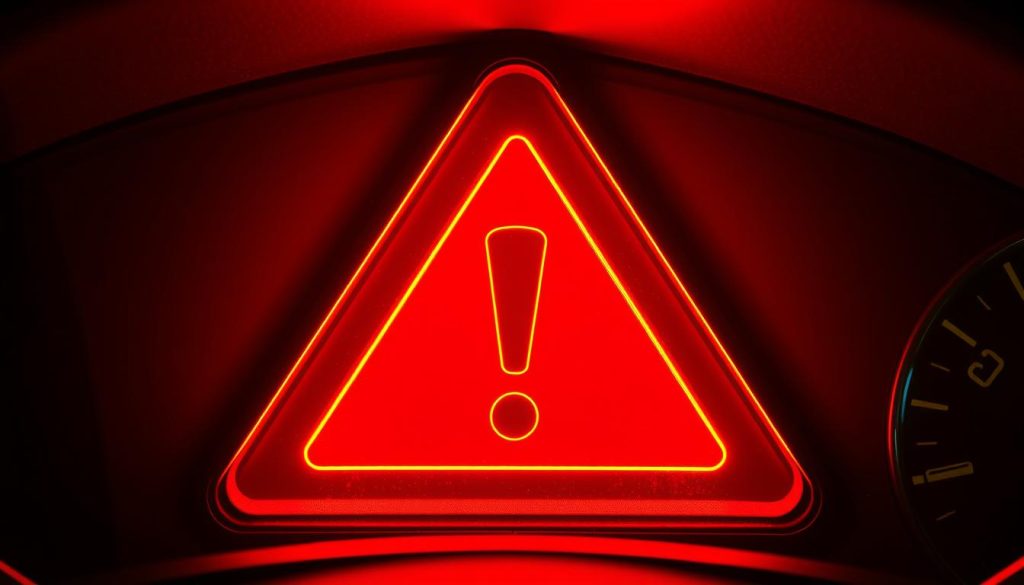
A triangle with an exclamation mark on your car’s dashboard is a critical warning light. It’s a signal that demands your immediate attention. Many drivers aren’t sure what this symbol means.
This triangle serves as a general alert for potential vehicle problems. A yellow triangle suggests your car needs service soon. A red triangle indicates an urgent service requirement.
Most drivers don’t understand this warning’s importance. About 70% of people can’t interpret this dashboard light correctly. Ignoring it can lead to bigger issues and higher repair costs.
Key Takeaways
- The triangle warning light is a universal automotive safety symbol
- Color indicates the severity of potential vehicle issues
- Immediate attention is crucial to prevent costly repairs
- Most drivers are unfamiliar with dashboard warning lights
- Consulting your vehicle’s manual can provide crucial insights
Understanding the Triangle with Exclamation in Car Warning Light
The triangle warning light on your dashboard is a crucial vehicle maintenance alert. It can signal minor issues or serious mechanical problems. Knowing these engine diagnostic icons is vital for your car’s health and safety.
Decoding Warning Light Colors
Car warning lights use a color-coded system for on-board diagnostics codes:
- Yellow/Amber Triangle: Indicates non-critical issues that require attention3. These might include:
- Low tire pressure
- Light bulb problems
- Upcoming maintenance service
- Red Triangle: Signals urgent or dangerous problems that demand immediate action3:
- Engine overheating
- Brake system failures
- Transmission issues
- Airbag system malfunctions
Common Warning Light Triggers
Many factors can activate the triangle warning light. A drop in tire pressure below 25% or 8 psi often causes this.
Low oil pressure, due to leaks or clogged filters, can also trigger the warning. Some cars might show the light for Vehicle Stability Assist (VSA) system issues3.
Why Immediate Attention Matters
Ignoring the warning light could lead to more damage or safety risks. Experts suggest visiting a mechanic quickly for a proper diagnosis.
Mechanics use special tools like OBD-II scanners to read exact fault codes1. This helps them pinpoint the problem and fix it efficiently.
Regular maintenance, like oil changes and fluid top-ups, can prevent many warning light issues. Always check your car’s manual for specific guidance on warning indicators.
What to Do When You See This Warning Symbol
A triangle with an exclamation mark on your dashboard needs immediate attention. This symbol could indicate various vehicle malfunctions. The general warning light often signals an unspecified system issue, requiring quick action4.
Pull over safely and check your situation. Consult your car’s manual for guidance on service reminders. Ignoring dashboard lights can lead to serious problems5.
Listen for unusual sounds or look for other warning signs. These might indicate a need for professional help.
Figure out if the warning is routine maintenance or something more serious. Some lights show non-urgent problems that need fixing4. For maintenance alerts, you can often reset the light yourself.
If the warning continues or you’re unsure, consult a certified mechanic. This is always the safest approach5.
Paying attention to car alerts can prevent costly repairs. It also ensures your vehicle’s long-term performance. Modern cars have advanced warning systems to protect you and your vehicle6.
FAQ
What does the triangle with an exclamation mark mean on my car’s dashboard?
The triangle with an exclamation mark is a general warning light on your car’s dashboard. It shows possible issues with your vehicle. The color matters – yellow means less urgent, while red needs immediate attention.
What are the different colors of this warning light, and what do they mean?
The color of the triangle with exclamation mark tells you how serious the problem is. Yellow or orange means a minor issue or maintenance reminder. Red signals a critical problem needing quick action.
Green, white, or blue are often used for informational or system status indicators.
What are the most common reasons this warning light might come on?
Common triggers include low fluid levels and tire pressure issues. Engine management system problems and brake system warnings can also cause it. Routine maintenance reminders and electronic stability control alerts are other possible reasons.
Is it safe to continue driving when this warning light is on?
It depends on the color and how serious the warning is. For yellow warnings, you can usually drive carefully but fix it soon. For red warnings, pull over safely right away.
Check your owner’s manual and assess the situation. If you’re not sure about the problem, contact a professional.
How can I reset the warning light?
Resetting methods are different for each vehicle. For maintenance reminders, check your owner’s manual. Some cars need a professional diagnostic tool.
Disconnecting the battery briefly can sometimes reset the light. Always fix the underlying issue before trying to reset.
What should I do if the warning light persists?
Don’t ignore a persistent warning light. Check for other dashboard warnings and inspect basic systems. Schedule a professional diagnostic check if needed.
Use an OBD-II scanner for more detailed information. If you’re unsure, talk to a certified mechanic.
Can I diagnose the issue myself?
You can do some basic checks yourself. Use an OBD-II scanner to read diagnostic codes. Check fluid levels and tire pressure.
Look for obvious mechanical issues. For complex or ongoing warnings, get a professional diagnosis. Some newer cars need special diagnostic equipment.
Source Links
- Triangle with Exclamation Point: Dashboard Warning Explained – https://www.wikihow.com/Triangle-with-Exclamation-Point
- Triangle with Exclamation Point: Honda Warning Light Meaning – https://www.wikihow.com/Triangle-with-Exclamation-Point-Honda
- Triangle with an Exclamation Point Meaning & How to Turn It Off – https://www.autonationmobileservice.com/i/blog/triangle-with-exclamation-point-meaning/
- Car Dashboard Warning Lights Explained – https://www.evanshalshaw.com/blog/drivesafe-car-warning-lights-explained/?srsltid=AfmBOoqS8VTzjFMSMl8dmJGC77n9bTLE6MJLiuIqEaM0j3BjML9-Gegk
- Car Dashboard Warning Lights: symbols and their meanings – https://www.warrantydirect.co.uk/blog/car-dashboard-warning-lights-symbols-and-meanings.html
- Here’s what all those dashboard warning lights mean – https://www.topgear.com/car-news/top-gear-advice/heres-what-all-those-dashboard-warning-lights-mean

