
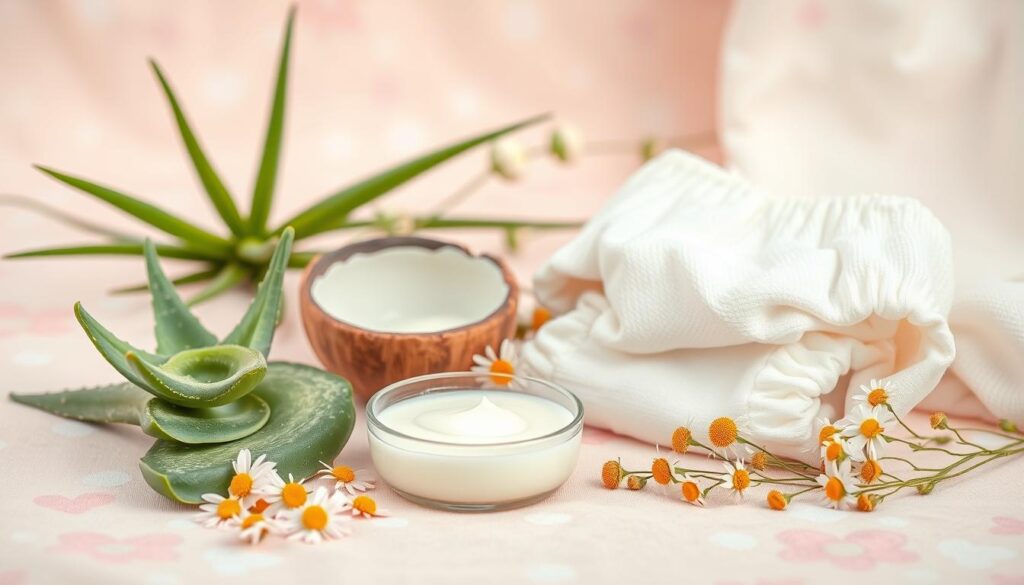
Diaper rash can be tough for parents and babies. Effective Baby Skin Care can provide quick relief to your little one. Many Natural Remedies work well without expensive medications1.
Diaper rash affects about 20% of babies in the U.S. It’s a common skin issue parents often face1. Most cases happen due to long exposure to moisture from urine, stool, or sweat1.
Your baby’s diaper area needs special care to prevent rashes. Tight diapers, sensitive skin, and new foods can increase rash risk2. Changing diapers often, even when slightly wet, is key to avoiding irritation2.
Key Takeaways
- Diaper rash affects about 20% of infants
- Moisture is the primary cause of diaper rash
- Frequent diaper changes help prevent rash
- Natural remedies can effectively treat mild cases
- Proper skin care is essential for prevention
Understanding Diaper Rash: Causes and Symptoms
Diaper rash is a common issue for many babies. It can cause discomfort and distress for your little one. Good baby hygiene is crucial for preventing this skin problem3.
Common Triggers and Risk Factors
Several factors can lead to diaper rash. The main causes include:
- Prolonged exposure to wet or soiled diapers3
- Skin sensitivity and chafing4
- Introduction of new foods
- Antibiotic use
- Tight diaper fitting
Babies aged 6-9 months are more likely to get diaper rash. Frequent diaper changes and new foods can increase the risk3.
Signs of Infection to Watch For
Some diaper rashes may indicate a serious infection. Look out for these warning signs:
- Red bumps or blisters
- Pus-filled sores
- Fluid seeping from red areas
- Persistent rash lasting more than 2-3 days4
- Fever or unusual fussiness
Pro tip: If the rash doesn’t improve or shows signs of infection, see your pediatrician right away.
How Different Skin Tones Show Diaper Rash
Diaper rash can look different on various skin tones. On darker skin, it might appear as dark brown or purplish areas. Close observation is key for early detection and treatment.
Use zinc oxide ointment as a moisture barrier to prevent diaper rash. Regular cream application can protect your baby’s skin and promote good hygiene3.
Effective Home Treatments for Diaper Rash
Infant skin irritation can be tough for parents to handle. Diaper area inflammation needs gentle, effective care5. Treating nappy rash involves keeping baby’s skin clean, dry, and protected6.
- Change diapers frequently to minimize moisture exposure5
- Allow diaper-free time to increase airflow and promote healing6
- Use gentle, fragrance-free barrier creams
- Clean the area with soft, warm water
Natural remedies can soothe your baby’s sensitive skin. Here are some comforting options:
- Coconut oil for its antimicrobial properties
- Breast milk as a natural healing agent
- Aloe vera gel for cooling inflammation
| Treatment | Benefits | Application |
|---|---|---|
| Zinc Oxide Cream | Creates protective barrier | Apply thin layer with each diaper change |
| Petroleum Jelly | Locks in moisture | Use sparingly on clean, dry skin |
Remember, prevention is always better than cure when managing diaper rash5.
Watch for signs of infection like blisters or open sores. If these appear, talk to your pediatrician right away.
For more info on diaper rash treatments, check out the Mayo Clinic’s comprehensive guide6.
Conclusion
Diaper rash prevention is crucial for your baby’s skin health. Understanding causes and using proactive strategies can reduce diaper dermatitis. Disposable diapers with superabsorbent materials help minimize skin irritation7.
Breathable diaper designs can cut candidal infection rates by up to 50%7. Natural relief starts with consistent care routines. Frequent changes, gentle cleansing, and protective barrier creams are key steps.
40-75% of persistent rashes may involve Candida albicans8. Keep a close eye on your baby’s skin. Consider zinc oxide paste or dexpanthenol ointment for a protective barrier7.
If symptoms persist, talk to your pediatrician. Diaper rash occurrence varies across populations9. This shows the need for personalized care for optimal baby skin health.
Most diaper rashes can be managed with attentive care. Stay proactive and patient. Your baby’s skin will thank you!
FAQ
What causes diaper rash?
Diaper rash often results from prolonged contact with moisture, friction, and irritants. Common triggers include tight diapers, sensitive skin, and antibiotics. Babies aged 6-9 months are more prone, especially when starting solid foods.
How can I prevent diaper rash?
Change diapers frequently and keep the area clean and dry. Use a zinc oxide barrier cream and allow diaper-free time. Avoid fragranced products and ensure diapers aren’t too tight.
Change diapers immediately after bowel movements or when wet. Use gentle cleaning methods to protect your baby’s sensitive skin.
What are some natural remedies for diaper rash?
Natural remedies include breast milk, coconut oil, aloe vera, and witch hazel. Oatmeal baths can soothe and reduce inflammation. Marigold and bentonite clay are also effective.
Always pat the area dry before applying a thin layer of natural remedy. Follow up with a barrier cream for added protection.
When should I see a doctor about diaper rash?
Consult a doctor if the rash lasts more than 3-4 days or develops open sores. Seek help if you notice signs of infection like blisters, fever, or swelling.
Professional advice is recommended if your baby seems unusually fussy or home treatments don’t help.
How does diaper rash appear on different skin tones?
On darker skin, diaper rash may look dark brown or purplish instead of bright red. For black and brown skin, it might appear purple or ashen grey.
The underlying symptoms remain the same. Pay attention to texture, discomfort, and other signs of irritation.
What barrier creams are recommended for diaper rash?
Recommended creams include Desitin, Triple Paste, Balmex, and Vaseline. Look for products with zinc oxide or petroleum jelly. These create a protective barrier against moisture and friction.
Can diaper rash be a sign of something more serious?
Most diaper rashes are mild, but persistent or severe cases may indicate underlying issues. Watch for signs like fever, blisters, spreading rash, or unusual discharge.
If you’re unsure or concerned, always consult your pediatrician for proper diagnosis and treatment.
Source Links
- 4 Home Remedies for Diaper Rash That Actually Work – https://www.verywellhealth.com/home-remedies-for-diaper-rash-8611089
- Diaper Rash Treatment Tips: Home Remedies and More – https://www.healthline.com/health/home-remedies-diaper-rash
- Diaper rash: Home treatments usually work-Diaper rash – Symptoms & causes – Mayo Clinic – https://www.mayoclinic.org/diseases-conditions/diaper-rash/symptoms-causes/syc-20371636
- Diaper Rash Causes & Prevention (for Parents) – https://kidshealth.org/en/parents/diaper-rash.html
- Diaper Rash: Home Care (for Parents) – https://kidshealth.org/en/parents/diaper-rash-sheet.html
- Home Remedies for Diaper Rash | Pampers – https://www.pampers.com/en-us/baby/diapering/article/diaper-rash-home-remedies
- Emergency Department Care, Consultations, Medical Care – https://emedicine.medscape.com/article/801222-treatment
- Diaper Rash: Practice Essentials, Pathophysiology, Etiology – https://emedicine.medscape.com/article/801222-overview
- Diaper dermatitis prevalence and severity: Global perspective on the impact of caregiver behavior – https://pmc.ncbi.nlm.nih.gov/articles/PMC7027557/

