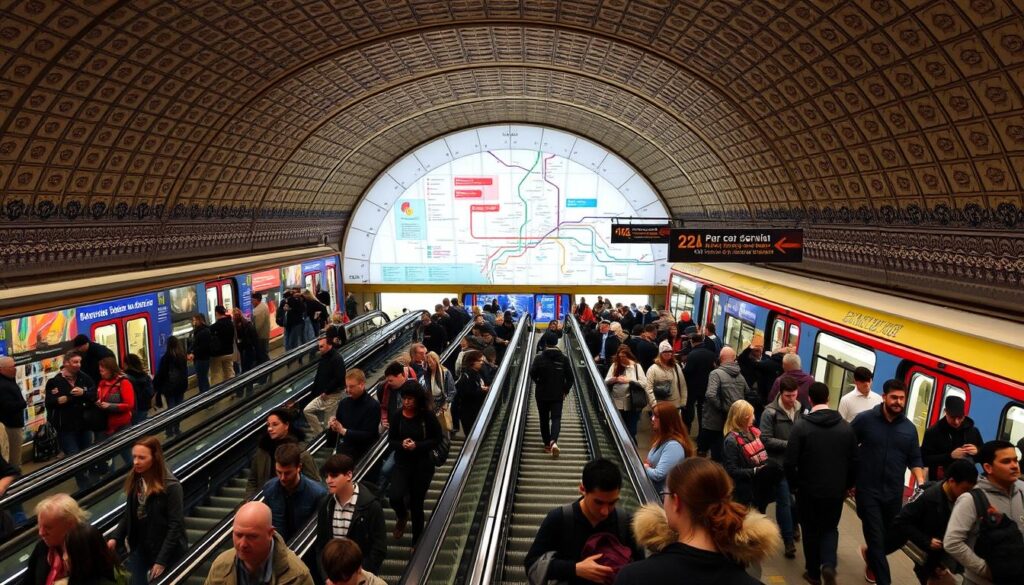
European subway networks can make your travels easier and more exciting. These metro systems offer quick and handy transport for everyone. Knowing how they work in cities like London, Paris, or Berlin can greatly improve your trip.
Most European subways run from early morning to midnight. They cover large urban areas efficiently. The systems differ between cities, with some having many lines and others fewer.
Trains usually come often, but times can vary. Larger stations have multiple exits marked by streets or landmarks. Electronic signs show when trains will arrive.
Planning ahead helps when using these networks. For the best directions, try downloading apps like Citymapper1. These tools can make your underground journeys much smoother2.
Key Takeaways
- European subway systems are comprehensive and efficient
- Most metros operate from early morning to midnight
- Digital apps can help you navigate complex transit systems
- Ticket validation varies by city
- Electronic signs provide real-time train information
Understanding the Basics of Subway Systems
Rapid transit systems have transformed urban mobility. They connect millions of people daily across bustling cities. These networks provide efficient commuter rail solutions in urban landscapes.
Subway systems are the lifelines of modern cities. They’re more than just underground transportation. Let’s explore why these networks are crucial for urban movement.
What Is a Subway?
A subway is a fast transit system that usually runs underground. It connects various parts of a city quickly and efficiently.
These networks typically feature:
- Underground and surface train routes
- Multiple interconnected lines
- Stations strategically placed throughout urban areas
Common Features of European Subways
European subway systems have unique, user-friendly characteristics3. Most major European cities have extensive subway networks. Stations are often within walking distance of key urban locations.
For example, the Paris Métro has stations close to almost every building3. Most are within 547 yards of city structures.
“Subway systems are the arteries of urban life, pumping people through the heart of the city.”
Safety and Etiquette Tips
Navigating a subway system requires knowing some unwritten rules. Here are essential tips to help you travel like a local:
- Stand on the right side of escalators
- Keep your belongings close
- Offer seats to those who need them more
- Maintain a reasonable noise level
Pro tip: Always stay aware of your surroundings. Keep your personal belongings secure. Many subway systems have surveillance for passenger safety4.
These basics will help you explore urban transit networks confidently. You’ll make the most of your city travel experiences.
Key European Subway Networks to Explore
Urban exploration through mass transit reveals European city cultures. Subway systems showcase urban design and historical innovation. They’re living museums of city life.
Three iconic subway networks stand out. Each has unique features and historical importance. Let’s explore these underground marvels.
The London Underground: A Historic Journey
The London Underground, or Tube, is a marvel of urban transit. It’s the world’s oldest metro system, established in 1863.
The Tube has 272 stations across 250 miles. It spans 11 lines and serves over four million passengers daily5.
- Iconic “Mind the Gap” warning
- Extensive network covering metropolitan London
- Historical significance in urban transportation
Paris Métro: A Cultural Expedition
The Paris Métropolitain blends transportation with art. It boasts 308 stations on 16 lines since 19005.
Art Nouveau station entrances make city exploration visually stunning. The Metro is a key part of Paris’s cityscape.
“Every station tells a story, every tunnel whispers history” – Paris Metro enthusiast
Berlin U-Bahn: Engineering Excellence
Berlin’s U-Bahn is a model of efficient mass transit. Most stations are accessible with elevators and ramps.
The network offers smooth travel through Germany’s capital. It’s a great way to explore Berlin’s vibrant culture.
| Network | Stations | Daily Passengers |
|---|---|---|
| London Underground | 272 | 4 million |
| Paris Métro | 308 | Estimated 4.5 million |
| Berlin U-Bahn | 173 | 1.5 million |
These subway systems offer unique views of urban life. They turn city travel into a cultural adventure. Recent research confirms their impact on urban exploration.
Tips for Navigating Subway Systems Like a Pro
Mastering public transport in European cities needs smart planning and navigation skills. Your urban transit experience can improve with key strategies for tickets, maps, and tech. Travel planning resources make subway travel smooth6.
Ticket Purchasing Strategies
Your ticket strategy can save money on urban transit. Multi-day passes or rechargeable travel cards offer flexibility and potential savings. Many cities have contactless payment systems or digital ticket apps7.
Decoding Subway Maps
Understanding map symbols and color-coded routes makes subway navigation easier. Watch for station signs showing train directions. Learn to spot express versus local train markings6.
Station maps near exits help you orient quickly in new places. This makes your public transport experience smoother and more confident7.
Digital Navigation Tools
Smartphone apps like Google Maps, Citymapper, and local transit apps enhance urban transit. These tools give real-time updates, route planning, and info on schedules and disruptions6.
Using digital navigation resources reduces uncertainty in complex subway networks. You’ll travel with greater ease through unfamiliar urban environments7.
FAQ
How early do European subway systems typically start running?
Most European subways run from 6 a.m. to midnight. Trains come often throughout the day. Check local schedules before your trip for exact times.
What are the different names for subway systems in Europe?
European subway names vary by country. France calls it Metro, while Germany and Austria use U-Bahn. Oslo has T-bane, Stockholm has T-bana, and Copenhagen has S-tog. London’s subway is known as the Tube.
How can I avoid pickpocketing on European subway systems?
Stay alert in busy areas and keep your stuff close. Use front pockets or secure bags. Don’t show off pricey items or lots of cash.
Think about using a money belt or hidden pouch for extra safety. Always be aware of what’s going on around you.
What is the best way to purchase subway tickets?
Buy day passes or multi-day tickets to save money. Try reloadable cards like London’s Oyster Card. Many cities offer contactless payment and mobile ticketing.
Always validate your ticket to avoid fines during random checks.
Are European subway systems accessible for people with mobility challenges?
Modern European subways are getting more accessible. Berlin’s U-Bahn has elevators or ramps in most stations. Accessibility varies by city.
Check transit websites for detailed info on accessibility features.
What apps can help me navigate subway systems in European cities?
Popular apps include Citymapper, local transit apps, and Google Maps. These provide real-time directions in most European cities. They help buy tickets, find routes, and navigate complex subway systems easily.
What is the typical etiquette on European subway systems?
Stand on the right side of escalators. Offer seats to those who need them. Keep conversations quiet. Let people exit before you enter the train.
Rules may slightly differ in each city, but these basics apply to most European subways.
How do I read a subway map effectively?
Look for color-coded lines and transfer points. Note end stations to know train directions. Check neighborhood maps at exits to find your way.
Many maps show key landmarks and transfer stations to help you navigate better.
Source Links
- City Transit Tips for Europe – https://www.ricksteves.com/travel-tips/transportation/city-transit/city-transit-tips
- Riding Europe’s Subways – https://www.ricksteves.com/travel-tips/transportation/city-transit/riding-europes-subways
- How Subways Work – https://science.howstuffworks.com/engineering/civil/subway.htm
- NYC Subway System: The Basics – https://www.limcollege.edu/blog/nyc-subway-system-basics
- 18 of the world’s best metro systems | CNN – https://www.cnn.com/travel/worlds-best-subways-metros/index.html
- How to Navigate New York’s Subway System Like a Pro – Love At First Flight – https://loveatfirstflighttravel.com/2023/05/11/how-to-navigate-new-yorks-subway-system-like-a-pro/
- How to Use the NYC Subway System | Metro Map, Lines + More – https://freetoursbyfoot.com/use-new-york-subway/