
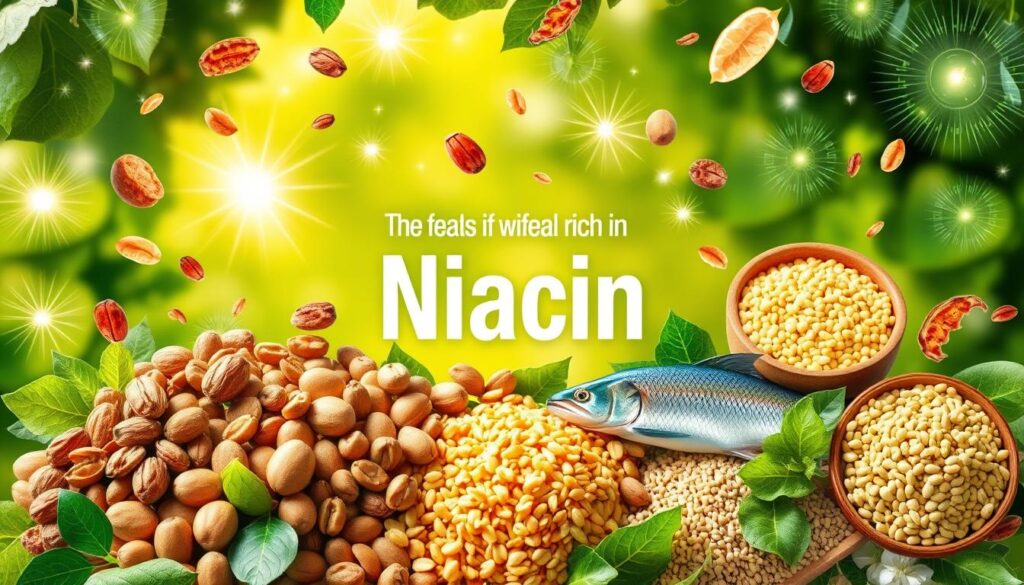
Niacin, or Vitamin B3, is a game-changer for your health. This essential nutrient keeps your body running smoothly. It offers amazing benefits that go beyond basic nutrition1.
Niacin comes in two forms: nicotinic acid and niacinamide. It’s a water-soluble vitamin that turns food into energy. Your body needs it for hundreds of processes2.
Knowing about Niacin can help you make smart food choices. It can boost energy and support heart health. This vitamin is a key player in overall wellness1.
Key Takeaways
- Niacin is essential for converting food into energy
- Two primary forms exist: nicotinic acid and niacinamide
- Supports over 400 biochemical reactions in the body
- Can be obtained through diet and supplementation
- Plays a crucial role in maintaining overall metabolic health
Understanding Niacin and Its Essential Functions
Niacin is a crucial nutrient for your body’s energy metabolism and cellular health. This powerful vitamin is key to maintaining your overall wellness.
It’s more than just another supplement. Niacin plays a vital role in keeping you healthy and energized.
What Makes Niacin Unique
Niacin is different from other B vitamins. It’s a critical NAD precursor supporting over 400 enzymatic reactions in your body3.
Its ability to function as a coenzyme is exceptional. This makes it essential for many biological processes in your body.
- Supports energy metabolism
- Aids in DNA repair
- Provides antioxidant protection
How Niacin Works in Your Body
Your body changes niacin into vital coenzymes. These help turn food into energy. The coenzymes are key in cellular respiration and metabolic functions3.
Recommended Daily Intake Guidelines
| Age Group | Niacin Recommendation |
|---|---|
| Adult Males | 16 mg per day4 |
| Adult Females | 14 mg per day4 |
| Pregnant Women | 18 mg per day |
You can get niacin from various food sources. Turkey, beef liver, and chicken breast are excellent natural sources.
Foods like peanuts, fortified cereals, and lentils also provide niacin3. These can help you meet your daily needs.
“Niacin is not just a vitamin, it’s a vital component of your body’s complex metabolic machinery.”
Key Health Benefits of Niacin
Niacin offers powerful health benefits that can transform your overall wellness. This essential vitamin supports multiple body systems, from heart to brain5. Let’s explore how niacin can boost your health remarkably.
Cholesterol Lowering Powerhouse
Niacin excels at managing cholesterol levels. It can boost HDL (good) cholesterol by 15% to 35%. At the same time, it lowers LDL (bad) cholesterol by 5% to 25%5.
For those struggling with high triglycerides, niacin offers hope. It can decrease triglyceride levels by up to 25%6.
Blood Pressure and Cardiovascular Support
Your heart can greatly benefit from niacin. Studies show it may lower blood pressure significantly5. Niacin helps widen blood vessels, potentially improving circulation and heart health7.
Brain Function Enhancement
Niacin plays a crucial role in brain function. It shows promise in preventing age-related cognitive decline5. Research suggests potential benefits for mental health, including protection against Alzheimer’s disease5.
Skin Health Protection
Your skin can also benefit from niacin. It helps protect cells from damage. Niacin may reduce the risk of certain skin conditions7.
By supporting cellular health, niacin helps maintain your skin’s natural defenses.
| Niacin Benefit | Potential Impact |
|---|---|
| Cholesterol Management | 15-35% HDL increase, 5-25% LDL decrease |
| Triglyceride Reduction | Up to 25% decrease |
| Brain Function | Potential cognitive decline prevention |
Niacin offers impressive health benefits. However, talk to your doctor before starting any supplements. For more info about niacin, visit the Cleveland Clinic’s health resources.
“Niacin: A small vitamin with potentially big health impacts” – Nutrition Experts
Conclusion
Niacin plays a vital role in maintaining optimal health. Niacin supplements can help, but they’re not for everyone8. Your body’s needs determine if you require extra vitamin B3, especially for preventing pellagra8.
When exploring flush-free niacin, talk to your doctor. Some people may need supplements, especially those with dietary restrictions or health issues9. Adults typically need 14-18 mg of niacin daily9.
Too much niacin can be risky. High doses may affect cholesterol levels and heart health10. Research shows niacin’s impact on lipid profiles, but its heart disease prevention benefits are unclear10.
Focus on a balanced diet and professional advice when considering niacin supplements. Your health journey is unique. Understanding niacin’s benefits and limits helps you make smart choices for your well-being.
FAQ
What exactly is niacin?
Niacin, or Vitamin B3, is a crucial water-soluble nutrient. It comes in two forms: nicotinic acid and niacinamide. Niacin plays a vital role in over 400 biochemical reactions in our bodies.
How can I get enough niacin in my diet?
Niacin is found in meat, poultry, fish, nuts, legumes, and fortified cereals. Adult men need about 16 mg daily, while women require 14 mg. Eating a varied diet helps ensure you get enough niacin.
What are the main health benefits of niacin?
Niacin improves blood cholesterol levels and may reduce blood pressure. It boosts brain function and protects skin health. Niacin also supports overall energy metabolism in the body.
It can increase HDL (good) cholesterol while reducing LDL (bad) cholesterol and triglycerides.
Can niacin help lower cholesterol?
Yes, high doses of niacin can effectively manage cholesterol levels. Doses of 1500 mg or more are sometimes used for high cholesterol. However, this treatment should only be done under a doctor’s supervision.
What happens if I have a niacin deficiency?
Niacin deficiency can cause pellagra, a condition with various symptoms. These include skin rash, bright red tongue, and digestive issues. Depression, fatigue, and memory loss may also occur.
Severe deficiency is rare in Western countries but can happen in malnourished individuals.
Are there any side effects of taking niacin supplements?
Niacin supplements can cause side effects like skin flushing, liver problems, and stomach issues. High doses may lead to more serious complications. Always consult a doctor before starting niacin supplements.
Is niacinamide the same as niacin?
Niacinamide and nicotinic acid are both forms of Vitamin B3. However, they have slightly different properties. Niacinamide doesn’t usually cause skin flushing like nicotinic acid does. It’s often used in skincare products and supplements.
How does niacin support brain health?
Niacin is vital for brain function, supporting energy metabolism and cognitive processes. Research suggests it may help treat certain types of schizophrenia. It could also potentially aid in preventing Alzheimer’s disease.
Source Links
- Niacin (Vitamin B3): Benefits, Dosage, and more – https://www.healthline.com/nutrition/niacin-benefits
- Niacin (Vitamin B3) – https://www.webmd.com/diet/supplement-guide-niacin
- Office of Dietary Supplements – Niacin – https://ods.od.nih.gov/factsheets/Niacin-HealthProfessional/
- Niacin – https://www.mayoclinic.org/drugs-supplements-niacin/art-20364984
- 10 benefits of niacin, also known as vitamin B3 – https://www.singlecare.com/blog/niacin-benefits/
- Niacin to improve cholesterol numbers – https://www.mayoclinic.org/diseases-conditions/high-blood-cholesterol/in-depth/niacin/art-20046208
- NIACIN AND NIACINAMIDE (VITAMIN B3): Overview, Uses, Side Effects, Precautions, Interactions, Dosing and Reviews – https://www.webmd.com/vitamins/ai/ingredientmono-924/niacin-and-niacinamide-vitamin-b3
- What is the mechanism of Niacin? – https://synapse.patsnap.com/article/what-is-the-mechanism-of-niacin
- Niacin and Oxidative Stress: A Mini-Review | ClinMed International Library – https://clinmedjournals.org/articles/jnmdc/journal-of-nutritional-medicine-and-diet-care-jnmdc-2-014.php
- Niacin, an old drug with a new twist – https://pmc.ncbi.nlm.nih.gov/articles/PMC3770072/

