
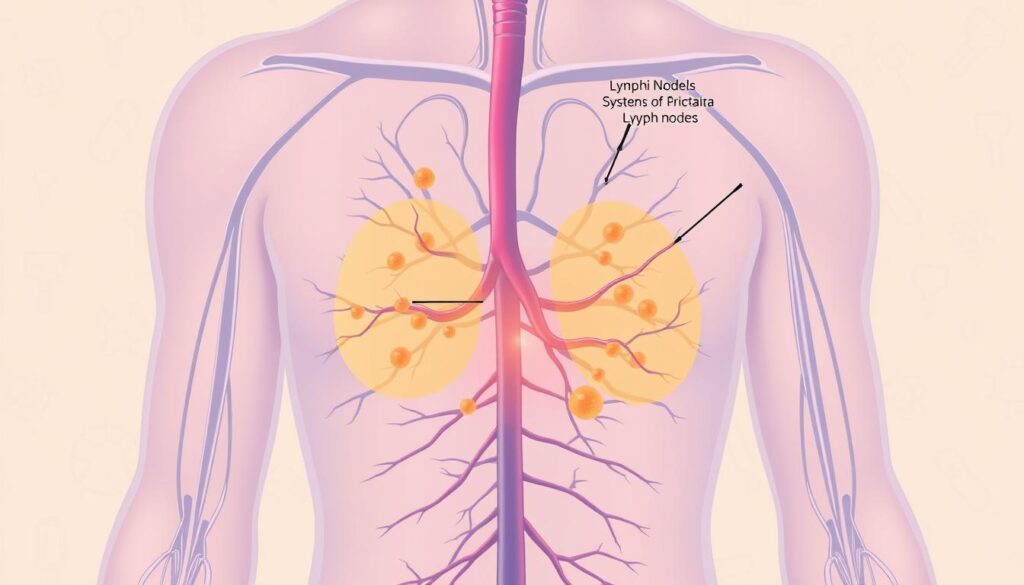
Non-Hodgkin lymphoma is a complex cancer affecting the lymphatic system. It disrupts the body’s immune defenses and has multiple subtypes impacting lymphocytes1. This challenging condition requires thorough understanding for effective management2.
The risk of developing this lymphoma increases after age 602. Viral infections, chemical exposures, and immune suppressants can influence potential diagnosis1.
B-cell lymphomas make up about 85% of all non-Hodgkin lymphoma cases2. Diffuse large B-cell lymphoma is the most common subtype in the United States2. It accounts for nearly 30% of diagnosed cases.
Key Takeaways
- Non-Hodgkin lymphoma affects the lymphatic system’s immune response
- B-cell lymphomas represent the majority of cases
- Risk increases with age, particularly after 60
- Multiple subtypes exist with varying characteristics
- Comprehensive understanding is crucial for early detection
Understanding Non-Hodgkin Lymphoma and Your Immune System
Your lymphatic system shields you from infections and maintains your health. It’s crucial to grasp how non-Hodgkin lymphoma affects this complex network. Understanding this connection helps explain the disease’s impact on your immune system.
The Lymphatic System: Your Body’s Defense Network
The lymphatic system is vital for immunity. It consists of interconnected organs and vessels3.
Key lymph tissue sites include:
- Lymph nodes
- Spleen
- Bone marrow
- Thymus
- Adenoids and tonsils
- Digestive tract
These parts work together to fight infections. They protect your body from harmful invaders3.
Non-Hodgkin Lymphoma: Types and Characteristics
Non-Hodgkin lymphoma is a complex disease. It has over 60 subtypes based on location and lymphocyte features4.
The two main classifications are:
- B-cell lymphomas (more common)
- T-cell lymphomas
Understanding Lymphoma Progression
Lymphomas are grouped by growth rate3:
- Indolent lymphomas: Slow-growing and may not need immediate treatment
- Aggressive lymphomas: Rapidly spreading and typically requiring quick intervention
The World Health Organization classifies lymphomas using complex factors. These include lymphocyte type, microscopic appearance, and specific cellular traits3.
Key Risk Factors
Several factors may increase your non-Hodgkin lymphoma risk4:
- Age over 60
- Exposure to certain chemicals
- Compromised immune system
- Previous radiation or chemotherapy
- Specific viral infections
Having risk factors doesn’t guarantee lymphoma development. Some people without known risks may still be diagnosed4.
“Understanding your body’s lymphatic system is the first step in comprehending lymphoma’s complex nature.” – Cancer Research Experts
Medical research explores new lymphoma treatments. Immunological therapies show promising results in managing the disease5.
Key Signs and Early Warning Symptoms
Early detection of lymphoma symptoms is vital for prompt diagnosis and treatment. Non-Hodgkin lymphoma has several key warning signs you shouldn’t ignore6. Painless swollen lymph nodes often appear in the neck, armpits, or groin areas7.
- Painless swelling of lymph nodes7
- Unexplained fever6
- Night sweats8
- Unintentional weight loss8
- Extreme fatigue6
Symptoms may vary depending on the lymphoma’s location. B symptoms are crucial in assessing disease progression8. These include high fever, significant weight loss, and persistent night sweats6.
If you experience persistent, unexplained symptoms, consult your healthcare provider promptly6.
These symptoms might seem scary, but they don’t always mean lymphoma6. Still, quick action is key for effective treatment.
| Symptom Category | Specific Symptoms |
|---|---|
| Systemic Symptoms | Fever, Weight Loss, Night Sweats |
| Lymph Node Symptoms | Painless Swelling in Neck, Armpits, Groin |
| Additional Warning Signs | Fatigue, Loss of Appetite, Chest Pain |
Conclusion
Modern medicine has revolutionized lymphoma treatment. Your journey through non-Hodgkin lymphoma requires personalized care. Many patients see significant life quality improvements with tailored medical interventions9.
Innovative therapies offer new hope. R-miniCHOP has shown 100% success in elderly patients during multicenter trials. Your medical team will create a plan based on your lymphoma type and overall health9.
Research continues to advance lymphoma management. PET-CT staging accurately identifies disease progression. Targeted therapies provide more precise treatment approaches9.
Early detection and proactive care can greatly impact treatment outcomes. Advanced research and personalized strategies help patients navigate this journey successfully. Stay informed and maintain open communication with your healthcare providers9.
FAQ
What is Non-Hodgkin Lymphoma?
Non-Hodgkin lymphoma is a cancer affecting the lymphatic system. It occurs when lymphocytes develop abnormal DNA changes, causing rapid multiplication and tumor formation. There are over 70 types, with B-cell lymphomas making up about 85% of cases.
What are the main symptoms of Non-Hodgkin Lymphoma?
Common signs include painless swollen lymph nodes in the neck, armpits, or groin. You might experience unexplained fever, night sweats, and unintentional weight loss.
Other symptoms may include fatigue, loss of appetite, and abdominal pain or swelling. In some cases, you might have difficulty breathing or thinking clearly.
Who is most at risk for developing Non-Hodgkin Lymphoma?
Your risk increases with age, especially after 60. Other factors include a weakened immune system and certain viral infections.
Exposure to specific chemicals and immunosuppressive medications can also raise your risk. It’s slightly more common in men and older adults.
How is Non-Hodgkin Lymphoma diagnosed?
Diagnosis involves a comprehensive medical evaluation, including physical exams and blood tests. Imaging studies like CT or PET scans and a lymph node biopsy are also used.
Your doctor will determine the specific type and stage of lymphoma. This helps develop the most effective treatment plan for you.
What are the treatment options for Non-Hodgkin Lymphoma?
Treatment depends on the specific type and stage of lymphoma. Options may include chemotherapy, radiation therapy, targeted therapies, and stem cell transplantation.
Some patients receive a combination of treatments. The goal is to eliminate cancer cells while maintaining your overall health.
What is the prognosis for Non-Hodgkin Lymphoma?
The overall five-year survival rate is about 73%. This varies depending on the specific type and stage of lymphoma.
Many patients achieve remission or long-term disease control with proper treatment. Ongoing medical research continues to improve treatment options and outcomes.
Are there different types of Non-Hodgkin Lymphoma?
Yes, there are two main types based on affected cells: B-cell and T-cell lymphomas. B-cell lymphomas are more common.
They can be aggressive (fast-growing) like diffuse large B-cell lymphoma, or indolent (slow-growing) like follicular lymphoma. Each type needs a specific treatment approach.
Can Non-Hodgkin Lymphoma be prevented?
You can’t completely prevent Non-Hodgkin Lymphoma, but you can reduce your risk. Maintain a healthy lifestyle and avoid known environmental risk factors.
Managing underlying health conditions and getting regular check-ups is important. If you have concerns, talk to a healthcare professional for personalized advice.
Source Links
- Non-Hodgkin lymphoma – Symptoms and causes – https://www.mayoclinic.org/diseases-conditions/non-hodgkins-lymphoma/symptoms-causes/syc-20375680
- Non-Hodgkin Lymphoma: Types, Causes, Symptoms & Treatment – https://my.clevelandclinic.org/health/diseases/15662-non-hodgkin-lymphoma
- What Is Non-Hodgkin Lymphoma?| Types of Non-Hodgkin Lymphoma – https://www.cancer.org/cancer/types/non-hodgkin-lymphoma/about/what-is-non-hodgkin-lymphoma.html
- Understanding Non-Hodgkin’s Lymphoma – Baptist Health – https://www.baptisthealth.com/blog/cancer-care/understanding-non-hodgkin-s-lymphoma
- Harnessing the power of the immune system in non-Hodgkin lymphoma: immunomodulators, checkpoint inhibitors, and beyond – https://pmc.ncbi.nlm.nih.gov/articles/PMC6142557/
- Blood Cancer UK | Lymphoma symptoms and signs – https://bloodcancer.org.uk/understanding-blood-cancer/lymphoma/lymphoma-symptoms-signs/
- Lymphoma – Symptoms and causes – https://www.mayoclinic.org/diseases-conditions/lymphoma/symptoms-causes/syc-20352638
- Signs and Symptoms of Hodgkin and Non-Hodgkin Lymphoma | MyLymphomaTeam – https://www.mylymphomateam.com/resources/symptoms-of-lymphoma
- Non-Hodgkin Lymphoma (NHL): Practice Essentials, Background, Pathophysiology – https://emedicine.medscape.com/article/203399-overview

