
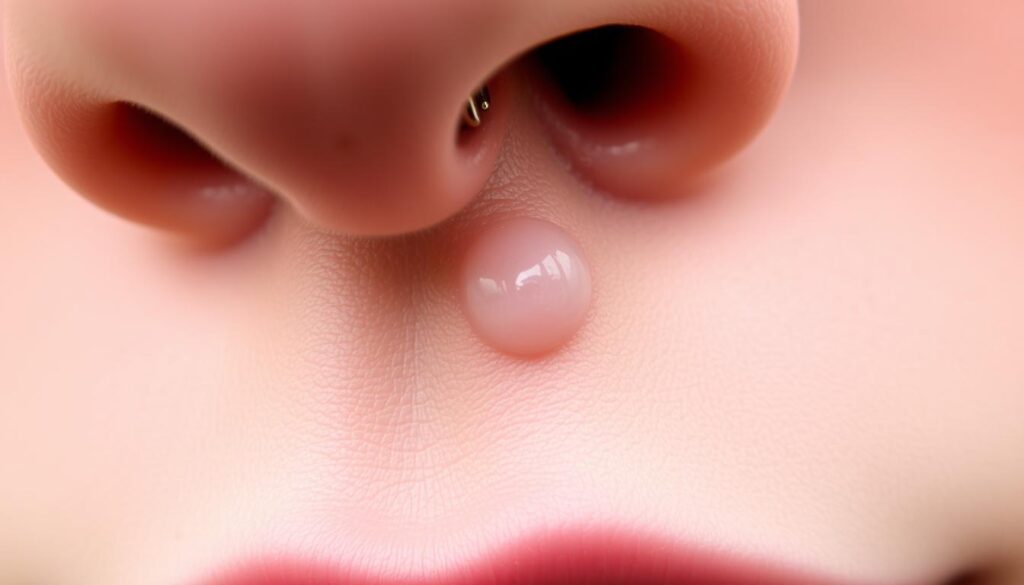
Nose piercing bumps can be frustrating for those getting body modifications. New piercings might develop unexpected issues that need careful attention. Proper aftercare is vital for healing nose piercing irritation1.
Several factors can cause nose piercing bump complications. These include allergic reactions, infections, and tissue trauma. The bumps may appear as small, red formations that cause discomfort.
Most nose piercings take two to four months to fully heal2. Your piercing’s success depends on several key factors. Using hypoallergenic jewelry made from surgical stainless steel or titanium can reduce adverse reactions3.
Proper cleaning and careful handling are crucial. These practices help prevent complications that might lead to persistent bumps or infections.
Key Takeaways
- Nose piercing bumps can result from multiple causes
- Proper aftercare is critical for healing
- Hypoallergenic metals reduce infection risks
- Healing time varies between 2-4 months
- Professional consultation is recommended for persistent issues
Understanding Nose Piercing Bump Types
Nose piercings can lead to unexpected bumps, causing concern for many. Knowing these bump types is key for proper care and treatment4.
Pyogenic Granulomas: Vascular Lesions
Pyogenic granulomas are harmless vascular growths after nose piercings. They appear as small, red or purple fleshy bumps5.
- Size ranges from 5-10 millimeters in diameter
- Often develop weeks after the initial piercing
- Caused by tissue overgrowth and inflammation
Keloids and Hypertrophic Scars
Keloids and hypertrophic scars are two types of nose ring bumps. Keloids grow beyond the wound site, while hypertrophic scars stay within it5.
Key differences include:
- Keloids can grow from pimple-sized to football-sized
- More common in individuals with darker skin tones
- Hypertrophic scars typically develop within weeks
Pustules and Infection Indicators
Pustules are small, pus-filled bumps that may signal a nose stud infection. They can point to deeper issues needing attention4.
Watch for symptoms like swelling, redness, and unusual discharge around your nose piercing.
Knowing these bump types helps you spot problems early. This knowledge aids in getting the right care for your nose piercing6.
Common Causes and Risk Factors of Piercing Complications
Nose piercings can develop issues due to various factors. Understanding these risks helps protect your new piercing. You can minimize potential problems by being informed7.
- Improper piercing technique
- Unsterile instruments
- Inadequate aftercare practices
- Allergic reactions to jewelry materials
Nickel-based jewelry can cause allergic reactions. These reactions may lead to itching, redness, and blistering7. Your skin type and genes can affect the chances of swelling or bumps8.
| Risk Factor | Potential Complication |
|---|---|
| Mechanical Stress | Pustule Formation8 |
| Bacterial Exposure | Infection Risk7 |
| Jewelry Material | Allergic Reactions |
To reduce complications, follow these key guidelines:
- Choose high-quality, hypoallergenic jewelry
- Maintain strict hygiene practices
- Avoid touching or twisting the piercing7
- Clean the piercing regularly with saline solution
Professional piercers emphasize that careful attention during the initial healing period can dramatically reduce the risk of developing problematic bumps8.
Some people are more likely to develop keloids. This is especially true for those with darker skin tones9. Knowing these risks helps you take steps for smooth healing.
Treatment Methods and Home Remedies
Nose piercing bumps can be tricky to handle. Luckily, there are many ways to treat these issues. The right approach can make a big difference in your recovery10.
Professional Medical Interventions
When home remedies don’t work, it’s time for professional help. Dermatologists suggest several medical treatments for nose piercing problems:
- Steroid injections to reduce inflammation
- Cryotherapy for stubborn bumps
- Laser treatments to minimize scarring
- Surgical excision for persistent growths10
Saline Solution Applications
Cleaning your piercing with saline solution is gentle and effective. Good hygiene can prevent about 30% of nose piercing infections11. Warm compresses and careful cleaning help reduce swelling and promote healing.
Jewelry Material Considerations
Your choice of jewelry is crucial in avoiding complications. Hypoallergenic materials like titanium or 14k gold can reduce allergy risks. Only 5% of nose piercing infections come from jewelry allergies11.
| Bump Type | Prevalence | Recommended Treatment |
|---|---|---|
| Granulomas | 10% | Saline cleaning, potential medical intervention |
| Keloids | 15% | Steroid injections, laser treatment |
| Allergic Reactions | 5% | Hypoallergenic jewelry replacement |
Alternative Treatment Options
Consider these other treatments for nose piercing bumps:
- Pressure therapy
- Silicone gel sheets
- Topical medications
- Tea tree oil (diluted)
If bumps are painful or won’t go away, see a doctor. This helps prevent serious problems11.
Conclusion
Proper nose piercing aftercare is key to avoiding complications. Your journey can be smooth with the right care and quick action. Preventing piercing bumps involves keeping things clean and choosing jewelry that won’t irritate1213.
Most nose piercing bumps can be treated with gentle methods. Expert advice and home remedies can help manage and reduce bumps14. Natural solutions like tea tree oil, saline, and warm compresses can aid healing and lessen swelling14.
Your dedication to aftercare shapes your piercing experience. If problems persist or you notice severe symptoms, seek professional help. With care and smart choices, you can rock a healthy nose piercing13.
FAQ
What causes a nose piercing bump?
Nose piercing bumps can stem from various factors. These include inflammation, infections, poor aftercare, and trauma to the site. Allergic reactions to jewelry or genetic predisposition can also play a role.
Poor piercing technique and unsterile instruments are common culprits. Excessive cleaning or fiddling with the jewelry can cause irritation too.
How can I tell if my nose piercing bump is serious?
Look out for persistent pain, throbbing, or burning sensations. Unusual tenderness, unpleasant odor, or green/yellow pus are also red flags. These symptoms might signal an infection or other serious issue.
If you notice these signs, seek help. Consult a professional piercer or healthcare provider for proper diagnosis and treatment.
Are all nose piercing bumps the same?
No, nose piercing bumps come in different types. Pyogenic granulomas appear as red or purple fleshy growths. Keloids are raised scars that grow beyond the original wound.
Hypertrophic scars stay within the piercing site. Pustules are small, pus-filled bumps that may indicate an infection.
What are the best treatment options for a nose piercing bump?
Treatment varies based on the bump type. Home remedies include saline solution cleaning and warm compresses. Tea tree oil can also help.
Professional treatments may involve steroid injections, cryotherapy, or laser treatments. Surgical excision is sometimes necessary. Switching to hypoallergenic jewelry can resolve allergic reactions.
How can I prevent nose piercing bumps?
Follow proper aftercare to prevent nose piercing bumps. Clean regularly with sterile saline solution. Avoid touching or traumatizing the site.
Use high-quality hypoallergenic jewelry and be gentle during healing. Avoid over-cleaning or using harsh chemicals. Choose a reputable piercer who uses sterile techniques.
Are some people more prone to developing piercing bumps?
Yes, certain factors increase the risk of piercing bumps. People with darker skin are more prone to keloids. Those with nickel allergies may face more complications.
Genetic predisposition, skin type, and overall health also play a role. These factors can impact your susceptibility to piercing bumps.
What should I do if I suspect an infection?
Don’t remove the jewelry if you suspect an infection. This can trap bacteria and worsen the condition. Clean the area with saline solution and avoid touching it.
Consult a professional piercer or healthcare provider. They can diagnose the issue and recommend appropriate treatment to prevent complications.
How long do nose piercing bumps typically take to heal?
Healing time varies depending on the bump type. Hypertrophic scars often develop within weeks and may gradually improve. Keloids can take up to a year to appear.
Keloids are more challenging to treat. With proper care and treatment, most nose piercing bumps can be managed effectively.
Source Links
- If your nose piercing caused a bump, here’s what it could mean and how to remove it – https://www.businessinsider.com/guides/beauty/nose-piercing-bump
- Nose Piercing: Risks, Aftercare, and Safety – https://www.webmd.com/beauty/nose-piercing-safety
- Why Do I Have a Bump on My Nose Piercing? – https://health.clevelandclinic.org/how-to-get-rid-of-nose-piercing-bump
- What Is This Nose Piercing Bump and How Can I Get Rid of It? – https://www.healthline.com/health/nose-piercing-bump
- Causes of a Nose Piercing Bump and How to Get Rid of It – https://www.verywellhealth.com/nose-piercing-bump-7498020
- Nose Piercing Bumps – What Are They, and How to Get Rid of Them? – https://pierced.co/blogs/all/nose-piercing-bumps-what-are-they-and-how-to-get-rid-of-them
- Piercing precautions: Get the facts – https://www.mayoclinic.org/healthy-lifestyle/adult-health/in-depth/piercings/art-20047317
- Nose Piercing Bumps: Causes and Treatments – https://centreforsurgery.com/nose-piercing-bumps-causes-and-treatments/
- Common complications of body piercing – https://pmc.ncbi.nlm.nih.gov/articles/PMC1071670/
- 10 Ways to Get Rid of Piercing Bumps, According to Pros – https://www.byrdie.com/bump-on-piercing-4788187
- How Do I Treat an Infected Nose Piercing? 8 Tips – https://www.medicinenet.com/how_do_i_treat_an_infected_nose_piercing/article.htm
- How to Get Rid of Nose Piercing Bumps: Overnight Remedies That Actually Work – https://www.pierceduniverse.com/blogs/news/how-to-get-rid-of-nose-piercing-bumps-overnight-remedies-that-actually-work?srsltid=AfmBOopDMDPtvUPpuai_ZkxKBr1wk8jWMiImP4sWNC2_vzpT48C-0Wmi
- The Nose Piercing Bump Go-To Guidebook | Boelry – https://www.boelry.com/blog/nose-piercing-bump
- How to Get Rid of a Nose Ring Bump Fast: Expert Tips – https://www.wikihow.com/Get-Rid-of-a-Nose-Ring-Bump

