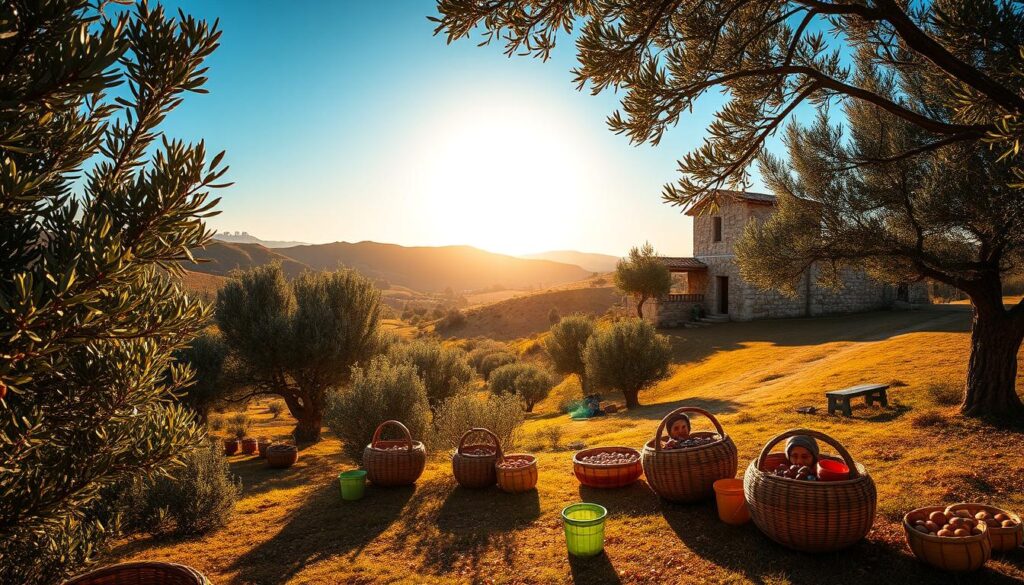
Olive harvesting in Greece is a cherished tradition that spans centuries. It’s a practice deeply rooted in the country’s culture and history. From the Peloponnese hills to sunny islands, olive trees tell stories of resilience and passion12.
The olive picking season kicks off in late October across Greece’s varied landscapes2. Generations of farmers tend to olive groves with great care. These trees stand as living proof of Greece’s rich agricultural heritage.
The Peloponnese region is home to ancient Koroneiki olive groves1. Skilled workers handpick these olives to create award-winning extra-virgin olive oil. This meticulous process ensures the highest quality product.
Greece leads the world in extra virgin olive oil production2. The harvesting process turns humble olives into valuable “liquid gold”. For Greeks, olive cultivation is more than farming – it’s a lifestyle1.
Key Takeaways
- Olive harvesting in Greece is a time-honored tradition spanning centuries
- The harvest season typically runs from late October to early spring
- Peloponnese region is known for its exceptional Koroneiki olive groves
- Handpicking olives remains a crucial part of the harvesting process
- Greece leads the world in extra virgin olive oil production
The Importance of Olive Harvesting in Greece
Greece’s olive culture is the heart of its agricultural heritage. Olive products represent a way of life that has sustained communities for millennia. This rich tradition tells a story of resilience and cultural identity.
History of Olive Cultivation
Olive cultivation in Greece dates back thousands of years. Greeks pioneered sophisticated olive pressing techniques, turning simple fruit into liquid gold3.
The Peloponnese region produces about 65% of Greece’s olive oil. This highlights its significant economic impact3.
Diverse Olive Varieties
Greece boasts an impressive array of olive varieties. Each type has its own unique characteristics:
- Koroneiki: Yields 6-7 liters of golden-green olive oil with a fruity flavor3
- Kalamata: Hand-harvested when fully ripe, with a light fruity sweetness3
- Chalkidiki: Bright green olives with a slightly bitter taste3
- Manaki: Produces olive oil with a soft, ripe fruit-like flavor3
Economic Impact on Communities
Olive harvesting drives the economy in rural Greek communities. The olive industry provides income for countless families. Many households rely on olive farming as their main economic activity3.
“Olive trees are not just crops; they are the lifeline of our communities.” – Greek Olive Farmer
| Region | Olive Production Contribution |
|---|---|
| Peloponnese | 65% |
| Crete | Significant Portion |
| Aegean Islands | Substantial Contribution |
| Ionian Islands | Notable Production |
Greece’s olive industry showcases agricultural expertise and cultural pride. It continues to thrive from ancient times to the present day.
The Olive Harvesting Process
Olive harvest is a delicate art requiring precision and careful timing. It involves gathering these precious fruits from the olive grove. Understanding this process is key to appreciating olive cultivation.
Optimal Timing for Olive Harvest
Picking olives at the right time is crucial for high-quality olive oil. In Mediterranean regions, harvest usually occurs from October to February.
Farmers often choose to pick olives when they’re partially green. This is about 2-3 weeks before full ripeness, capturing maximum aromatic potential.
Harvesting Tools and Techniques
Your olive harvesting strategy can vary based on grove size and resources. Traditional methods include:
- Hand-picking olives directly from trees
- Using portable tree shakers4
- Employing specialized rakes to gently collect fruits
Mechanical harvesting has gained popularity, offering several benefits:
- Increased efficiency
- Reduced labor costs
- Minimal damage to olive trees4
Sustainable Olive Farming Practices
Modern olive groves are adopting eco-friendly techniques. These protect both the environment and fruit quality. Sustainable olive farming balances resource management with minimal environmental impact.
The key to exceptional olive oil lies not just in harvesting, but in understanding the delicate balance between nature and cultivation.
| Harvesting Region | Harvest Period | Typical Harvesting Method |
|---|---|---|
| Spain | October-March | Mechanical and Manual |
| Greece | October-February | Traditional Hand-Picking |
| Italy | October-November | Mixed Techniques4 |
Each olive harvest is unique. It reflects the region’s characteristics and the farmers’ dedication. The process showcases the art of olive cultivation.
Enjoying the Fruits of Your Labor
Your Greek culinary adventure starts after an amazing olive harvest. Your efforts turn into joyful experiences that honor Greece’s olive culture. This rewarding journey goes beyond just eating olives5.
Greece offers a chance to taste many olive types from places like Kranidi and Sitia. You’ll discover unique flavors in each region’s olive oil. At luxury resorts like Costa Navarino, you can join olive pressing workshops6.
These workshops teach old methods and let you try fresh olive products. You’ll learn how to make olive oil and taste the results.
Join local harvests to connect with Greek farming history. Small family farms on islands like Syros welcome visitors to pick olives. You’ll see how families have mastered olive growing over generations5.
Cooking classes with fresh olives help you understand Greek food better. Local tavernas and cooking schools show how to use olive oil in tasty dishes. Each meal becomes a tribute to hard work and farming tradition7.
FAQ
When is the olive harvest season in Greece?
Greece’s olive harvest typically runs from October to January. Some regions continue until late spring. The timing varies based on local climate and desired end product.
Olives are usually picked when they change from green to purple-black.
What makes Greek olive oil special?
Greece leads the world in extra virgin olive oil production. Their cultivation history spans over 5,000 years. Greek olives, like Kalamata and Koroneiki, are known for exceptional quality.
These olives have low acidity and rich flavor profiles. Quick harvesting and pressing ensure the highest quality oil.
How are olives traditionally harvested in Greece?
Traditional Greek harvesting involves hand-picking or using poles to knock olives onto nets. In Corfu, olives naturally fall onto nets. While traditional methods persist, some farms now use modern tools.
Can tourists participate in olive harvesting?
Yes! Many olive farms and resorts offer immersive harvesting experiences. You can join local families during harvest season. Places like Costa Navarino and Syros offer olive picking and oil pressing opportunities.
What sustainable practices are used in Greek olive farming?
Greek farmers increasingly use organic cultivation methods and water conservation techniques. They also practice integrated pest management. These approaches help control pests and maintain olive grove health.
What are some popular Greek olive varieties?
Kalamata olives from the Peloponnese are known for their distinctive flavor. Koroneiki olives are prized for producing high-quality oil. Each Greek region boasts unique olive types, contributing to the country’s rich diversity.
How important is olive cultivation to the Greek economy?
Olive cultivation is vital to Greece’s economy, especially in rural areas. Many households depend on olive farming for income. The industry drives economic growth and supports agricultural exports.
What culinary experiences can I enjoy with Greek olives?
You can enjoy tasting sessions of various olive varieties. Participate in cooking classes using freshly pressed olive oil. Dine in local tavernas showcasing traditional Greek cuisine.
Regions like Kranidi, Sitia, and Kolymbari offer exceptional olive and oil experiences.
Source Links
- Celebrate the Traditional Olive Harvest in Greece – https://traveler.marriott.com/greece/celebrate-greek-olive-harvest/
- Harvest Week: An Olive Grove of One’s Own – https://culinarybackstreets.com/cities-category/athens/2017/harvest-week-2/
- Olive Harvest in Greece – Greek Olive Oil Production – Harvest Tours – https://eskapas.com/olive-harvest-in-greece/
- How olives are harvested – https://www.moresil.com/en/how-olives-are-harvested/
- Psalms 128:2 – You will eat the fruit of your labor; blessings an… – https://www.biblestudytools.com/psalms/128-2.html
- Bible Gateway passage: Ecclesiastes 5:18-20 – New English Translation – https://www.biblegateway.com/passage/?search=Ecclesiastes 5:18-20&version=NET
- Psalm 128:3 – Blessed Are All who Walk in His Ways – https://biblehub.com/psalms/128-3.htm