
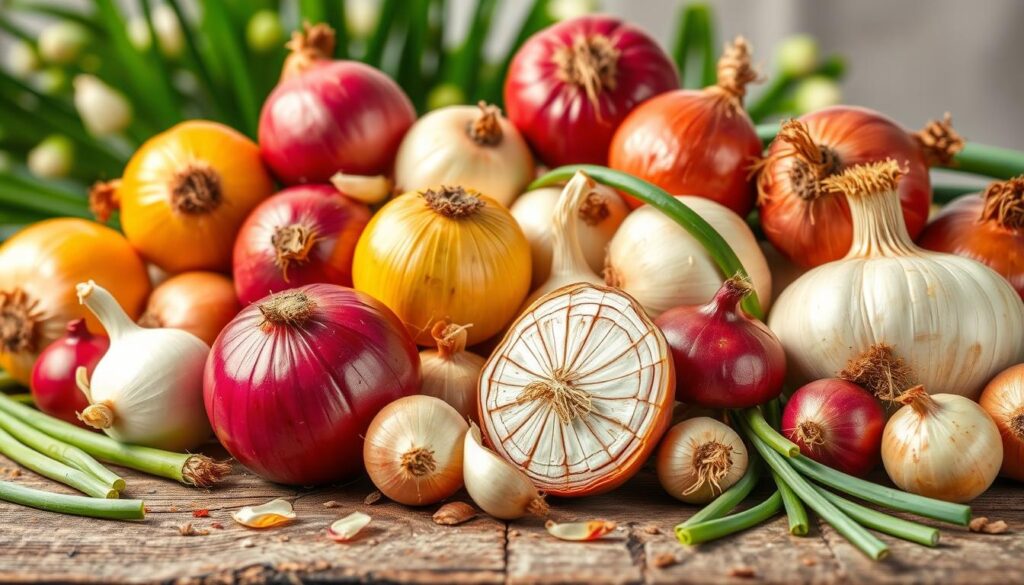
Dive into the world of alliums! These tear-inducing aromatics are more than just kitchen staples. They’re nutritional powerhouses packed with flavor and versatility. Onions can elevate any dish, from pungent red to mild sweet varieties1.
Onions are part of the Allium family. They come in many types, each with unique traits. These versatile veggies suit every cooking style1.
One medium chopped onion yields about one cup. That’s a lot of delicious goodness in a small package1.
Onions do more than enhance flavor. They offer remarkable health benefits due to their nutrient density1. These veggies add depth to recipes and support overall wellness.
Key Takeaways
- Onions are versatile alliums with multiple flavor profiles
- Different onion varieties suit different culinary techniques
- Onions offer significant nutritional benefits
- Proper storage can extend onion freshness
- Cooking methods can dramatically change onion flavor
Understanding Different Types of Onions
The produce section offers a fascinating world of onions. Each type brings unique characteristics and flavors to your cooking2. From kitchen staples to specialized varieties, onions add personality to dishes.
Yellow Onions: The Versatile Champion
Yellow onions are the kings of the culinary world. They make up about 90% of storage onions grown in the U.S2. These onions caramelize beautifully and handle long, slow cooking well3.
- Perfect for soups and stews
- Excellent for caramelizing
- Strong, classic onion flavor
Red Onions: A Colorful Culinary Delight
Red onions add vibrant color and unique flavor to dishes. They shine in salads and grilling4. Their peppery taste is sweetest from March to September3.
White Onions: Crisp and Light
White onions offer a milder profile ideal for Latin American cuisine. They’re often used in pico de gallo and huevos rancheros2. Their slightly sweet taste suits raw preparations well4.
Sweet Onions: Mild and Delectable
Walla Walla and Vidalia onions have less sulfur and more water. They’re less pungent, making them great for raw eating2. These onions also work well in onion rings and stuffed dishes.
| Onion Type | Best Uses | Flavor Profile |
|---|---|---|
| Yellow Onions | Soups, Stews, Caramelizing | Strong, Classic |
| Red Onions | Salads, Grilling, Pickling | Peppery, Sweet |
| White Onions | Mexican Cuisine, Raw Dishes | Mild, Slightly Sweet |
| Sweet Onions | Salads, Rings, Stuffing | Mild, Crisp |
“The right onion can transform a good dish into an extraordinary culinary experience.”
Shallots enhance delicate sauces, while chives make great garnishes. Leeks add flavor to hearty soups, and garlic provides depth. Knowing onion varieties will boost your cooking skills.
Essential Guide to Selecting and Storing Onions
Picking the right onions and storing them well can elevate your cooking. Good onion care keeps their flavor and nutrition intact. This guide will help both home cooks and chefs.
Look for these traits when choosing onions:
- Firm, heavy bulbs with dry, papery skin
- No soft spots or visible bruising
- Clean, fresh scent without musty odors
Proper storage keeps onions fresh longer. Pungent onions can last 10 to 12 months when stored right5. Keep them in a dark, cool space between 35 to 40 degrees Fahrenheit.
Mild onions like Vidalia or Walla Walla don’t last as long. Use these within a few weeks5.
“The key to long-lasting onions is understanding their unique storage requirements.” – Culinary Expert
Try these storage tips for best results:
- Store in a well-ventilated area
- Keep away from potatoes to prevent premature sprouting
- Use a mesh bag or open basket for air circulation
Cut onions need special care. Keep them in a sealed container in the fridge. They’ll stay fresh for 7-10 days.
Freezing is great for longer storage6. About 40% of home cooks freeze extra onions for later use6.
Pro tip: Chill onions for 30 minutes before cutting. Use a sharp knife to reduce tears when chopping.
Health Benefits and Nutritional Value of Onions
Onions are more than just a kitchen staple. These versatile veggies pack a powerful nutritional punch. They can transform your approach to healthy eating with their impressive health benefits.
Nutritional Powerhouse
A medium onion contains an impressive nutritional profile. It provides essential nutrients with just 44 calories. These nutrients support your overall health7.
Here’s a breakdown of its nutritional content:
- Carbohydrates: 10.3g7
- Protein: 1.2g7
- Fiber: 1.9g7
- Vitamin C: 9% of Daily Value7
- Potassium: 3.4% of Daily Value7
Antioxidant Powerhouse
Your body will thank you for adding onions to your diet. Yellow and red onions have more antioxidants than white ones. These powerful compounds can protect against various health conditions7.
Disease-Fighting Properties
Onions aren’t just flavorful—they’re potential disease fighters. High onion intake may lower the risk of several cancers. These include stomach, breast, colon, and prostate cancers8.
The quercetin in onions may help regulate blood sugar. It might also protect your heart7.
Bone and Blood Sugar Health
Onions offer hope for those concerned about bone density. Regular consumption is linked to increased bone density in older women8. Diabetics might find extra benefits from eating onions.
Consuming 100 grams of raw onions daily can lower blood sugar levels. This is great news for people managing diabetes8.
The average person consumes about 20 pounds of onions annually, making them a dietary staple with remarkable health potential9.
Conclusion
Onions are more than just pungent vegetables. They’re a powerhouse of nutrition and flavor that can transform your meals. From yellow to red varieties, these alliums offer unique traits that make them essential in kitchens worldwide10.
The health benefits of onions are impressive. Regular consumption might reduce risks of serious health conditions. They could help lower cancer risks, support bone health, and boost cardiovascular wellness1110.
Onions are packed with essential vitamins and minerals. Adding them to your diet is a smart move for better health. Their nutritional profile makes them a valuable part of any balanced meal plan.
Understanding onions can elevate your cooking skills. They add depth and complexity to dishes, making them a kitchen must-have. Proper selection, storage, and preparation maximize their flavor and nutritional benefits10.
Your culinary adventure with onions is just starting. The possibilities are as endless as their versatility. Explore different ways to use onions and discover their full potential in your cooking.
FAQ
What are the different types of onions?
Several types of onions exist, including yellow, red, white, and sweet varieties. Yellow onions have a strong flavor and caramelize well. Red onions become sweeter when cooked and have a vibrant color.
White onions have a robust flavor and are common in Mexican cuisine. Sweet onions like Vidalia have a mild taste and higher water content.
How do I choose the best onions when shopping?
Look for onions without bruising and with dry skin. They should feel heavy for their size and have no strong scent.
Choose firm onions with no soft spots or signs of sprouting. The best quality onions have crisp, dry outer skins and feel solid.
What’s the best way to store onions?
Store whole onions in a cool, dry, well-ventilated area, away from potatoes. Avoid refrigerating whole onions unless they’re sweet varieties.
Once cut, store onions in a sealed container in the refrigerator for 7-10 days. You can freeze onions for up to six months for longer preservation.
How can I prevent crying when cutting onions?
Chill onions in the refrigerator for 30 minutes before peeling and chopping. Use a sharp knife to minimize cell damage, which releases irritating compounds.
Try cutting onions near a fan or under running water to disperse the irritating gases.
What are the health benefits of eating onions?
Onions are rich in antioxidants like quercetin, which may lower blood pressure and improve heart health. They contain sulfur compounds that could protect against cancer and inhibit harmful microorganism growth.
Onions are low in calories and high in vitamin C, folate, vitamin B6, and potassium.
Can onions help with blood sugar management?
Onions may help regulate blood sugar levels, especially for people with diabetes. They contain compounds that can potentially improve insulin sensitivity and manage blood glucose.
The prebiotic fibers in onions support gut health by feeding beneficial bacteria.
Are there any nutritional differences between raw and cooked onions?
Cooking slightly reduces some nutrients, but onions retain most of their nutritional value. Some cooking methods can actually increase the availability of certain antioxidants.
Whether raw or cooked, onions remain a nutrient-dense food with various health benefits.
Can people with digestive sensitivities eat onions?
Some people might experience digestive issues with onions due to their high fructan content. If you have sensitive digestion, you might want to limit your onion intake.
Try cooking onions, which can make them easier to digest. Always consult a healthcare professional if you have specific dietary concerns.
Source Links
- Onions 101 — Everything you need to know about working with onions – Nature’s Ninja – https://www.naturesninja.org/onionista/onions-101-everything-you-need-to-know-about-working-with-onions/
- All the Types of Onions, and What They’re Best For – https://www.bonappetit.com/story/types-of-onions-what-theyre-best-for?srsltid=AfmBOorjY-xWamGOfcSV7ztpXiXSNANk6EgwTyjxzDNpEk4oGnVR__GP
- 9 Types of Onions and How to Use Them – https://www.tasteofhome.com/collection/types-of-onions/?srsltid=AfmBOoqNgwzbBmrOXyEO65JP2JWBUaBiWdMTaPQq0esunaIjLPLys0F9
- Do You Know These 7 Different Types of Onions? – https://www.thespruceeats.com/uses-for-different-onion-types-4008831
- Learn How to Harvest, Cure, and Store Onions ? | Gardener’s Supply – https://www.gardeners.com/how-to/harvest-cure-store-onions/7366.html?srsltid=AfmBOoobCDHmh-eZjj9lpjhzQxfE_b_gRPnrLaFFSu1v9LDBEFIkDIcg
- How to Harvest and Store Onions – https://www.growveg.com/guides/how-to-harvest-and-store-onions/
- 9 Impressive Health Benefits of Onions – https://www.healthline.com/nutrition/onion-benefits
- Onions 101: Nutrition Facts and Health Effects – https://www.healthline.com/nutrition/foods/onions
- Health Benefits of Onions – https://www.webmd.com/diet/health-benefits-onions
- Onion Health Research – National Onion Association – https://www.onions-usa.org/all-about-onions/onion-health-research/
- Onions: Benefits and nutrition – https://www.medicalnewstoday.com/articles/276714

