
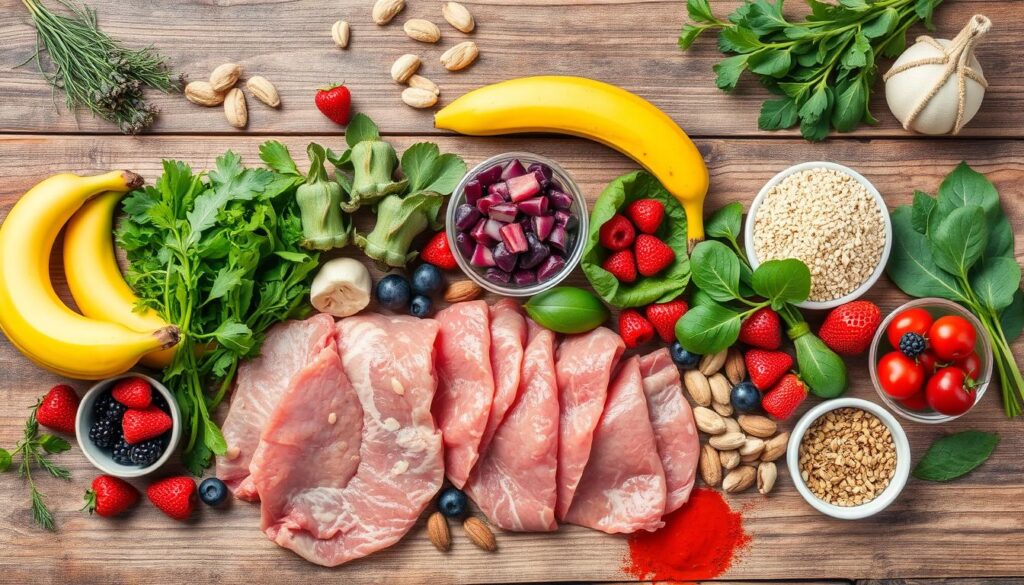
The O-Positive Blood Type Diet offers a unique approach to eating. It aims to match your nutrition with your genetic makeup. This diet is designed for the most common blood type, O-positive1.
The plan focuses on tailoring your food choices to boost wellness. It’s based on your specific blood characteristics2. Dr. Peter D’Adamo developed this revolutionary approach to nutrition.
He suggests that blood type affects how we process food. For O-positive individuals, the diet recommends a protein-rich eating plan. It mirrors the diet of our hunter-gatherer ancestors2.
The diet emphasizes lean meats, fish, and certain vegetables. It also advises limiting some food groups. This approach has gained popularity among health enthusiasts.
However, scientific backing for this diet is limited. Research shows it promotes whole foods and exercise. Yet, it lacks comprehensive scientific proof1.
Your personal health goals should guide your dietary choices. Always consider your individual needs when exploring specialized diets. Consulting healthcare professionals is recommended before making major diet changes.
Key Takeaways
- O-positive blood type is the most common blood type globally
- The diet emphasizes protein-rich foods and whole nutrition
- Personalized nutrition can potentially improve overall health
- Consultation with healthcare professionals is recommended
- Individual metabolic differences play a crucial role in diet effectiveness
Understanding Blood Types and Their Dietary Connection
Your blood type is a unique genetic blueprint. It can influence your health, dietary needs, and overall well-being. Understanding your blood type can help you develop the best diet for O positive blood.
The Science Behind Blood Type O-Positive
Type O blood is the most common blood type worldwide3. These individuals have fascinating genetic traits that impact their health and nutrition. They possess two opposing blood type antibodies, creating a unique biological profile4.
- Highly developed protein and fat digestion capabilities4
- Tendency towards higher stomach acid levels4
- Need for regular cardiovascular exercise4
Dr. D’Adamo’s Blood Type Theory
Dr. Peter D’Adamo proposed a theory linking blood types to dietary responses. His research suggests connections between genetic makeup and nutritional needs. This theory applies to an O positive blood type eating plan.
“Your blood type is a genetic fingerprint that can guide your nutritional choices.”
Prevalence and Characteristics of O-Positive Blood
The O blood type dates back to Cro-Magnon people around 40,000 B.C3. It has a rich evolutionary history. People with this blood type often have unique health considerations.
| Characteristic | Details |
|---|---|
| Exercise Needs | 30-45 minutes of aerobic activity, 4 times weekly4 |
| Potential Health Risks | Higher susceptibility to ulcers and thyroid disorders4 |
| Dietary Cautions | Limit caffeine, which can elevate stress hormones4 |
Research suggests individual dietary responses vary. Consulting healthcare professionals remains the best approach to personalized nutrition. This ensures a tailored diet plan for your specific needs.
O-Positive Blood Type Diet: Essential Foods and Guidelines
The O positive blood type diet can revolutionize your health. It focuses on foods that match your unique metabolic needs. This approach emphasizes lean proteins, fresh veggies, and smart meal planning.
Key food groups for your O positive blood type include:
- Lean meats like beef and lamb5
- Fish including cod, herring, and mackerel5
- Dark leafy vegetables such as spinach and kale
- Specific fruits like plums, prunes, and berries5
Eating for O positive blood type requires careful food choices. Your meals should include high-protein options. It’s best to limit certain grains and dairy products.
A sample day might include:
- Breakfast: Oatmeal with berries and almonds
- Lunch: Grilled beef salad with mixed greens
- Dinner: Baked salmon with roasted vegetables
“Nutrition is not one-size-fits-all, especially for O positive blood types.” – Nutrition Expert
The diet offers potential benefits, but scientific evidence is limited. Always talk to a doctor before changing your diet.
Focus on nutrient-dense foods that boost your metabolism and wellness. Consider adding supplements or speaking with a nutritionist. This ensures you’re getting balanced nutrition.
Foods to Avoid and Dietary Restrictions
The O positive diet requires careful food choices. Knowing which foods to avoid is key for an effective blood type diet. This blood type diet O positive plan can impact your health and metabolism6.
Common Food Triggers for O-Positive Types
Your O positive eating plan should avoid foods that upset your digestion. Key foods to cut out include:
- Wheat and refined carbohydrates6
- Dairy products (due to potential lactose intolerance)6
- Kidney beans and lentils6
- Processed grains that may hinder insulin metabolism6
Alternative Food Choices
If you’re on the O positive diet, try these beneficial alternatives:
Managing Dietary Transitions
Switching to your O positive diet takes time and planning. Gradually introduce new foods while cutting out triggers. Talk to a doctor to ensure a balanced diet that meets your needs8.
“Your diet should be a lifestyle, not a temporary fix” – Nutrition Expert
The blood type diet offers interesting ideas, but science doesn’t fully back it up6. Focus on whole foods and listen to your body’s responses.
Conclusion
The O-Positive Blood Type Diet offers a unique approach to nutrition. It focuses on whole foods and targeted strategies. However, scientific research urges caution when following this diet9. The O positive blood type nutrition principles are intriguing but lack solid scientific backing10.
Your health journey should focus on your individual needs. Seek professional guidance when choosing a diet. Research shows no single blood type diet has proven effective for everyone11.
The U.S. Department of Agriculture suggests a balanced diet with various food groups9. Listen to your body and work with healthcare professionals. The O-Positive Blood Type Diet can be a starting point.
Remember, it shouldn’t replace personalized medical advice. Combine good nutrition, exercise, and individual health factors for optimal wellness. This holistic approach can lead to better overall health.
FAQ
What is the O-Positive Blood Type Diet?
The O-Positive Blood Type Diet is a unique eating plan based on blood types. It suggests high-protein, low-carb foods for O-positive individuals. The diet focuses on lean meats, fish, vegetables, and fruits.
It recommends avoiding wheat, corn, and dairy products. This approach is similar to the paleo diet.
Is there scientific evidence supporting the O-Positive Blood Type Diet?
Scientific proof for this diet’s effectiveness is limited. Some studies link blood types to health risks. However, there’s no solid evidence that eating by blood type improves health.
Experts suggest talking to a doctor before making big diet changes. Your health needs may differ from what the diet recommends.
What are the recommended foods for O-Positive Blood Type?
O-positive types should eat lean meats like beef and lamb. Fish, especially salmon, is also good. Vegetables such as spinach and kale are recommended.
Fruits like berries and figs are great choices. Olive oil is encouraged. The diet focuses on high-protein foods.
It also suggests intense aerobic exercise to complement your diet. This combination aims to boost overall health.
What foods should O-Positive Blood Types avoid?
O-positive people should avoid wheat, corn, and kidney beans. Dairy products, caffeine, and alcohol are also on the no-list. These foods may contain lectins that could affect digestion.
Instead, try gluten-free grains and non-dairy milk options. Herbal teas can replace caffeine-rich drinks.
How do I start the O-Positive Blood Type Diet?
Start by slowly adding recommended foods to your meals. At the same time, cut out restricted items. Keep a food diary to track how your body reacts.
Stay hydrated throughout the day. Consider talking to a nutritionist or doctor. They can help ensure you’re meeting all your nutritional needs.
Can the O-Positive Blood Type Diet help with weight loss?
This diet may help with weight loss. It focuses on whole foods and lean proteins. However, it’s not designed specifically for losing weight.
Weight loss could result from eating fewer processed foods. Remember, everyone’s body reacts differently. Lasting weight management depends on overall lifestyle habits.
Are supplements recommended for O-Positive Blood Types?
The diet suggests specific supplements for O-positive types. These aim to address potential health issues. However, supplement needs vary from person to person.
It’s best to consult a healthcare professional. They can assess your needs through blood tests and health evaluations.
Source Links
- O-Positive Blood Type Diet: What to Eat and Avoid, Benefits, and – https://www.healthline.com/health/O-positive-blood-type-diet
- Should you try the O+ blood type diet? – https://www.singlecare.com/blog/o-positive-blood-type-diet-food-list/
- Does Your Blood Type Impact Your Diet? – https://health.clevelandclinic.org/blood-type-diet
- Blood Type O – https://www.dadamo.com/dadamo2024/show_blog.pl?blood-type-o
- The O positive and negative blood type diet: Does it work? – https://www.medicalnewstoday.com/articles/319303
- Food to Avoid for O Blood Types in Order to Lose Weight | Livestrong.com – https://www.livestrong.com/article/233678-food-to-avoid-for-o-blood-types-in-order-to-lose-weight/
- Here’s What Foods You Should Eat, Based on Your Blood Type – https://www.health.com/blood-type-diet-8663280
- What Is The O Blood Type Diet? – https://www.xcode.life/genes-and-nutrition/o-blood-type-diet/
- Is Eating for Your Blood Type Really a Thing? – https://www.verywellfit.com/the-blood-type-diet-89893
- The Blood Type Diet is Oversold, But Has Some Benefits – Gene Food – https://www.mygenefood.com/blog/blood-type-diet-debunked/
- Advantages & Disadvantages of the Blood Type Diet | Livestrong.com – https://www.livestrong.com/article/539247-advantages-disadvantages-of-the-blood-type-diet/

