
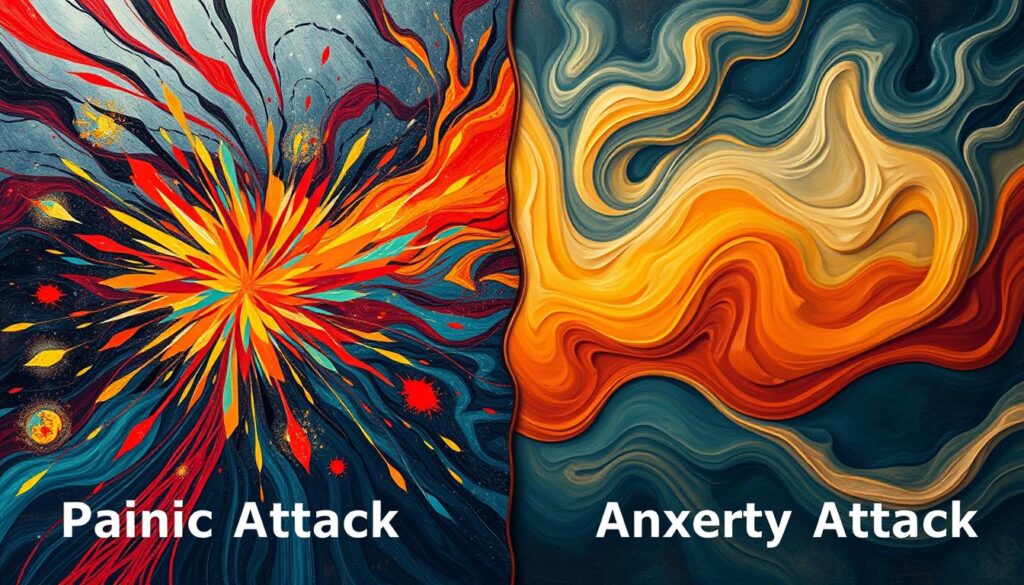
Mental health can be tricky, especially when it comes to panic and anxiety attacks. These terms sound similar but describe different experiences. Let’s explore how they affect your mental and physical health1.
Panic attacks hit suddenly with intense fear. They peak within minutes, causing overwhelming physical and emotional reactions1.
Symptoms may include a racing heart, sweating, and feeling like you’re choking. You might even think you’re losing control1.
Anxiety attacks, however, respond to specific stressors or threats. They can build up over days or weeks2.
This slow burn creates intense worry and tension. Understanding these differences is key to managing both conditions effectively1.
Key Takeaways
- Panic attacks and anxiety attacks are different mental health experiences
- Panic attacks can occur suddenly and peak within minutes
- Anxiety attacks are typically linked to specific stressors
- Both conditions have unique physical and emotional symptoms
- Professional help can provide effective coping strategies
Understanding Panic Attack vs. Anxiety Attack
Panic attacks and anxiety attacks have distinct traits. Knowing these differences can help you manage your mental health better. This knowledge is crucial for your well-being3.
Anxiety affects about 19.1% of U.S. adults yearly4. Many people experience these symptoms. Sadly, only a small number seek professional help4.
What Defines a Panic Attack
Panic attacks are sudden, intense episodes of fear. They can be extremely overwhelming. These attacks have specific features:
- Start abruptly and peak within 10 minutes3
- Can occur without clear triggers3
- Involve severe physical symptoms like heart palpitations and breathing difficulties3
Phobias, social anxiety, or post-traumatic stress disorder can trigger panic attacks5. Dealing with panic attacks often needs professional help and specific strategies.
What Constitutes an Anxiety Attack
Anxiety can build slowly and last for long periods. It differs from panic attacks in key ways:
- Ranging from mild to severe intensity3
- Can be a symptom of various psychiatric disorders3
- Some individuals experience high-functioning anxiety3
Anxiety attacks can be managed with various methods. Therapy, medications, and self-help techniques like deep breathing help5. These approaches can be combined for better results.
“Understanding your mental health is the first step towards healing and resilience.”
Women are twice as likely to have anxiety symptoms4. The Women’s Preventative Services Initiative suggests anxiety screening for all women over 134.
Key Symptoms and Physical Manifestations
Panic and anxiety attacks have similar yet different symptoms. Recognizing these signs can help you manage these challenging experiences better. Panic attacks often come on suddenly with intense physical symptoms.
- Heart palpitations
- Chest pain
- Shortness of breath
- Excessive sweating
- Trembling or shaking
- Feelings of impending doom
Panic attacks are more common than you might think. Each year, 2.7% of U.S. adults face panic disorder6. Women are twice as likely to be diagnosed as men6.
| Panic Attack Characteristics | Typical Duration |
|---|---|
| Peak Intensity | Around 10 minutes |
| Total Attack Length | Few minutes to 20 minutes |
Anxiety symptoms usually build up slowly. They include persistent worry, restlessness, fatigue, and muscle tension7.
Several strategies can help treat panic attacks:
- Psychotherapy
- Medication management
- Lifestyle modifications
- Stress reduction techniques
Effective coping strategies can significantly reduce the impact of panic and anxiety attacks on your daily life.
Ongoing stress, trauma history, and personality traits can increase your risk of these attacks7. Understanding these symptoms helps you seek proper treatment and develop effective coping methods.
Conclusion
Managing anxiety and panic attacks requires a tailored approach. Treatment involves understanding triggers and developing personal coping strategies. Life changes can spark intense emotional responses.
Anxiety relief may include cognitive-behavioral therapy to reframe negative thoughts. Some find success with medication, while others benefit from relaxation techniques. Identifying underlying factors is crucial for effective treatment.
Working with mental health professionals makes coping more manageable. Resources from Michigan Medicine suggest understanding symptoms and triggers can improve management89.
Seeking help is a sign of strength. Everyone’s experience with panic and anxiety is unique. With patience and support, you can develop strategies to minimize these intense episodes.
FAQ
What’s the main difference between a panic attack and an anxiety attack?
Panic attacks are sudden, intense episodes of fear with severe physical symptoms. They’re recognized in the DSM-5-TR. Anxiety attacks are not a formal medical term.
Panic attacks are more intense and have a rapid onset. Anxiety can develop slowly and is often related to perceived threats.
What are the typical symptoms of a panic attack?
Panic attack symptoms include intense fear, heart palpitations, chest pain, and shortness of breath. Other signs are excessive sweating, trembling, and a sense of impending doom.
These physical symptoms can be severe. They might feel like a heart attack, causing significant distress.
How do anxiety attacks differ from panic attacks in symptoms?
Anxiety attack symptoms are usually less intense. They may include persistent worry, restlessness, fatigue, and difficulty concentrating.
Unlike panic attacks, anxiety symptoms build gradually. They’re often tied to specific stressors or perceived threats.
Are panic attacks a recognized medical condition?
Yes, panic attacks are officially recognized in the DSM-5-TR. They’re considered a specific type of anxiety disorder with distinct diagnostic criteria.
“Anxiety attacks” is not a formal medical diagnosis.
Can panic attacks occur without any apparent trigger?
Yes, panic attacks can happen unexpectedly, even without an obvious stressor. This unpredictability is one of the most challenging aspects of panic disorder.
You might experience a sudden, intense episode of fear seemingly out of nowhere.
What treatment options are available for panic and anxiety attacks?
Treatment typically includes a combination of approaches. These may involve cognitive-behavioral therapy (CBT), medication, and relaxation techniques.
Mindfulness practices and lifestyle changes can also help. Professional help is crucial for developing a personalized treatment plan.
How can I manage a panic attack when it’s happening?
During a panic attack, try deep breathing exercises. Ground yourself by focusing on your immediate environment.
Use positive self-talk and remember that the symptoms will pass. The 5-4-3-2-1 grounding method can help reduce the attack’s intensity.
Can lifestyle changes help reduce the frequency of panic and anxiety attacks?
Yes, lifestyle modifications can significantly help. Regular exercise and a consistent sleep schedule are beneficial.
Reducing caffeine and alcohol intake can also make a difference. Practice stress-management techniques like meditation and maintain a balanced diet.
Source Links
- Panic Attack vs Anxiety Attack: What’s The Difference? – https://canyoncreekbh.com/blog/panic-attack-vs-anxiety-attack-whats-the-difference/
- Panic attack vs. anxiety attack: What is the difference? – https://www.medicalnewstoday.com/articles/321798
- Panic attack vs anxiety attack – https://www.priorygroup.com/blog/panic-attack-vs-anxiety-attack
- What Is the Difference Between Panic and Anxiety Attacks? – https://www.verywellmind.com/anxiety-attacks-versus-panic-attacks-2584396
- Panic Attack vs. Anxiety Attack – https://www.columbiapsychiatry-dc.com/counseling-blog/panic-attack-vs-anxiety-attack/
- Panic and Anxiety – https://www.webmd.com/anxiety-panic/anxiety-attack-symptoms
- What’s the Difference Between a Panic Attack and an Anxiety Attack? – https://www.healthline.com/health/panic-attack-vs-anxiety-attack
- Panic Attacks and Panic Disorder – HelpGuide.org – https://www.helpguide.org/mental-health/anxiety/panic-attacks-and-panic-disorders
- Understanding the Difference: Panic Attack vs. Anxiety Attack – What You Need to Know – https://www.sunshinecitycounseling.com/blog/panic-attack-vs-anxiety-attack

