
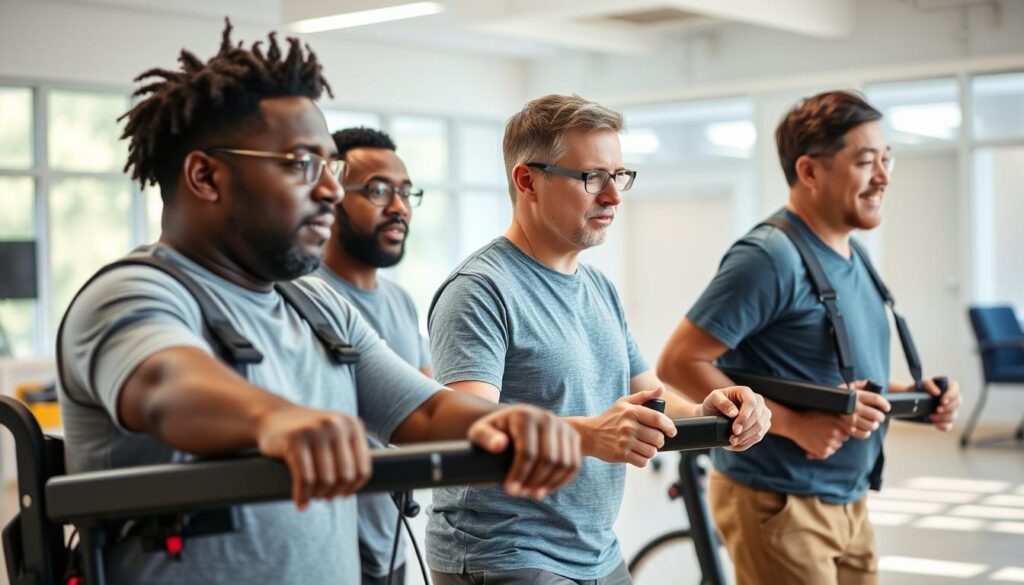
Medical science is transforming spinal cord injury recovery. It offers new hope for those facing paralysis. Each year, 800,000 Americans have strokes, while 250,000 live with spinal cord injuries1.
Once impossible, breakthrough tech is changing paralysis treatment. Innovative approaches are restoring movement for paralyzed individuals.
Electrical stimulation and robotic tech provide new paths to independence. Clinical trials show paralyzed patients can regain muscle control through advanced neural interventions2.
Spinal cord injury recovery is rapidly evolving. Nine paralyzed men walked again using special electrical implants3.
These breakthroughs offer real possibilities for those with mobility challenges. They’re reshaping the future for people seeking to overcome paralysis.
Key Takeaways
- Spinal cord injury affects over 250,000 Americans annually
- Advanced electrical stimulation enables muscle movement recovery
- Emerging technologies provide new hope for paralysis treatment
- Robotic and neurological interventions show promising results
- Personalized medical approaches are transforming patient outcomes
Understanding Paralysis and Its Impact
Paralysis drastically changes a person’s life. It’s vital to grasp this condition for exploring mobility improvement for paraplegics. Understanding paralysis can also help in finding new treatment breakthroughs.
Various factors can disrupt the body’s neural networks. This disruption can lead to partial or complete loss of muscle function. Knowing about paralysis types and causes is crucial for navigating this condition.
Defining Paralysis and Its Types
Paralysis happens when nerve signals can’t travel between the brain and muscles. The main types include:
- Monoplegia: Affecting a single limb
- Hemiplegia: Impacting one side of the body
- Paraplegia: Involving lower body regions
- Quadriplegia: Impacting all four limbs
Common Causes of Paralysis
Several factors can trigger paralysis, such as:
- Traumatic spinal cord injuries
- Neurological disorders
- Stroke complications
- Genetic conditions
| Cause | Prevalence | Impact |
|---|---|---|
| Spinal Cord Injuries | 38% | High mobility restrictions |
| Stroke | 29% | Moderate to severe limitations |
| Neurological Disorders | 22% | Progressive functionality loss |
Psychological Effects of Paralysis
Living with paralysis involves more than physical challenges. Mental resilience becomes paramount in adapting to new life circumstances. Nearly 6 million Americans live with paralysis, with 1.3 million having spinal cord injuries4.
“Paralysis is not the end of mobility, but the beginning of a different journey of movement and adaptation.”
Mental health plays a key role in recovery. It can turn potential limitations into chances for innovative mobility improvement. This is especially important for those with paraplegia.
Advances in Medical Research
Medical research is revolutionizing innovative therapies for paralysis. New discoveries offer hope for people with spinal cord injuries and neurological challenges. These breakthroughs are changing lives and expanding treatment options.
Breakthroughs in Spinal Cord Injury Treatment
Researchers are making big strides in understanding paralysis. Over 500,000 people worldwide experience spinal cord injuries each year5. These new approaches are transforming neurorehabilitation success stories.
- Brain-spine interface technologies
- Electrical stimulation techniques
- Precision neuron activation
Role of Neurotechnology in Recovery
Cutting-edge neurotechnology is reshaping paralysis treatment. The brain-spine interface (BSI) helps people with chronic tetraplegia stand and walk naturally6. This breakthrough shows the power of advanced medical interventions.
“The digital bridge integrates fully implanted systems for recording cortical activity and stimulating the spinal cord wirelessly and in real-time.”
Promising Clinical Trials and Their Outcomes
Clinical trials are pushing recovery boundaries. A major study funded by the U.S. Department of Defense aims to help 70 people7. The research focuses on new surgical and therapeutic approaches for spinal cord injuries.
| Research Institution | Key Focus | Participant Outcome |
|---|---|---|
| Washington University | Nerve Reconnection | Potential Movement Restoration |
| Stanford University | Electrical Stimulation | Improved Muscle Control |
These advancements offer renewed hope for individuals facing paralysis. They showcase the incredible potential of modern medical research in changing lives.
Innovative Therapies for Regaining Movement
Breakthrough technologies are revolutionizing rehabilitation for spinal cord injuries. These innovative therapies offer new hope for those facing mobility challenges8.
The field of movement recovery is rapidly changing. Cutting-edge approaches now go beyond traditional methods. Technological advancements are creating new opportunities for patients to regain independence.
Physical Rehabilitation Techniques
Modern rehab strategies now use advanced techniques for neurological recovery. These include:
- Electrical stimulation therapies
- Targeted muscle retraining
- Neuroplasticity-focused interventions
Robotics and Exoskeletons in Therapy
Robotic tech is transforming spinal cord injury rehab. Exoskeletons provide crucial support, helping patients experience lost movements9.
Over 302,000 people in the U.S. could benefit from these new technologies8.
“Technology is giving paralyzed individuals a second chance at mobility and independence.”
The Importance of Occupational Therapy
Occupational therapy helps patients relearn daily activities. It focuses on practical skills and personal strategies. Therapists assist individuals in adapting to mobility challenges10.
The future of paralysis therapies looks bright. Ongoing research continues to push the boundaries of what’s possible.
Success Stories: Real-Life Recoveries
Neurorehabilitation success stories offer powerful hope for patients seeking to regain movement. These inspiring journeys showcase modern medical treatments and human resilience. They demonstrate the incredible potential for recovery after paralysis.
Remarkable Personal Journeys
Individual stories of recovery light the way for those facing paralysis. Janne Kouri’s journey after a neck injury is truly inspiring. A freak accident during beach volleyball left him paralyzed at 31.
Kouri’s determination became a beacon of hope. His story shows the power of perseverance in the face of adversity.
Breakthrough Recovery Techniques
- Epidural stimulation treatment
- Specialized rehabilitation programs
- Advanced physiotherapy techniques
Dustin Shillcox’s story is equally remarkable. Paralyzed from the chest down in 2010, he underwent experimental epidural stimulation in 2014. This treatment allowed him to regain movement and sensation throughout his body11.
Incredibly, Shillcox completed the New York City Marathon as a hand cyclist in 201511. His achievement shows the amazing possibilities of innovative treatments.
The Power of Support Networks
Family and medical professionals play crucial roles in recovery. Susan Kouri’s unwavering support exemplified the importance of a strong system12. Dr. Susan Harkema’s “loco-motor training” has helped hundreds of spinal cord injury patients regain functions12.
“Recovery is not just about physical healing, but about rebuilding hope and resilience.” – Unknown
Key Recovery Milestones
| Patient | Initial Condition | Key Achievement |
|---|---|---|
| Janne Kouri | Neck-down paralysis | Standing without walker |
| Dustin Shillcox | Chest-down paralysis | Marathon hand cyclist |
These stories prove that regaining movement after paralysis is possible. Cutting-edge medical interventions and dedicated rehabilitation play crucial roles. Each journey shows the amazing potential of human determination and medical innovation.
The Role of Stem Cells in Recovery
Stem cell research offers new hope for people with spinal cord injuries. These innovative therapies are changing how we understand and treat paralysis13.
Stem cell treatments are a hot topic in medical research. Scientists are finding amazing ways to help patients move and feel again14.
Exploring Stem Cell Therapies
Stem cell research focuses on several key strategies for neurological recovery:
- Direct stem cell injections into the spinal cord
- Neural stem cell regeneration techniques
- Protective cellular environments for nerve restoration
Case Studies on Stem Cell Success
Stem cell treatments have shown impressive results. Kris Boesen, 21, improved greatly after getting 10 million stem cells in his spine14.
Another study found that 7 out of 10 patients had better muscle strength and feeling after stem cell therapy13.
Ethical Considerations in Stem Cell Research
Stem cell research is promising but faces ethical and scientific challenges. Researchers are working hard to understand how cells interact and what risks might exist13.
The future of paralysis treatment lies in our ability to unlock the regenerative potential of stem cells.
| Research Metric | Statistic |
|---|---|
| Annual Spinal Cord Injuries | 17,000 in the United States15 |
| Recovery Rate in Cell Therapy | 67% significant movement recovery15 |
| Potential Lifetime Healthcare Costs | Up to $5 million per patient15 |
Stem cell therapies bring hope to those with paralysis. They offer a chance to regain movement and live more independently.
The Importance of Mental Health Support
Spinal cord injury rehabilitation involves more than physical recovery. Mental health is vital for paralyzed men working to regain movement. The emotional journey after a spinal cord injury can be tough.
Comprehensive support is necessary to address the significant psychological impacts. Mental health challenges often accompany physical recovery for those with spinal cord injuries.
Addressing Depression and Anxiety
Depression rates are higher in people with spinal cord injuries. They reach 22-28%, compared to 7% in the general population16.
Anxiety affects about 20% of individuals with spinal cord injuries. This is much higher than the 3% seen in the general population16.
Techniques for Enhancing Resilience
Building mental resilience is crucial for paralyzed men regaining movement. Key strategies include:
- Developing a strong support network
- Practicing mindfulness and meditation
- Setting realistic recovery goals
- Engaging in adaptive activities
The Role of Counseling and Therapy
Professional counseling helps manage psychological challenges in spinal cord injury rehabilitation. Biopsychosocial approaches recognize the link between physical, psychological, and social factors17.
Therapy can address:
- Emotional processing of life changes
- Coping mechanisms
- Self-esteem building
- Relationship management
“Mental health is not a destination, but a process. It’s about how you drive, not where you’re going.” – Noam Shpancer
Help is available if you’re facing a mental health crisis. Call the Suicide & Crisis Lifeline at 98818.
Seeking support shows strength, not weakness. Don’t hesitate to reach out for help when needed.
Exercise and Its Benefits
Physical activity is vital for improving mobility in paraplegics. Spinal cord injury rehab needs a comprehensive approach. Exercise can be a powerful tool for recovery and health19.
Physical Activity’s Role in Recovery
Exercise offers multiple benefits for those with spinal cord injuries. The CDC recommends specific guidelines tailored to individual abilities19:
- 150 minutes of moderate-intensity aerobic exercise weekly
- Strength training 2 or more days per week
- Regular stretching focusing on key muscle groups
Adaptive Sports and Their Impact
Adaptive sports offer exciting rehab and empowerment opportunities. Some recommended activities include:
- Hand cycling
- Wheelchair basketball
- Swimming
- Rowing
“Exercise is not just about physical recovery, but also mental resilience and personal achievement.”
Recommended Exercise Programs
Innovative approaches like locomotor training show promise in improving mobility for paralyzed individuals20. These programs aim to reconnect the brain and spinal cord20.
| Exercise Type | Benefits | Frequency |
|---|---|---|
| Aerobic Exercise | Cardiovascular health | 3-5 times weekly |
| Strength Training | Muscle maintenance | 2-3 times weekly |
| Stretching | Flexibility | Most days |
Remember, every small movement counts towards your recovery journey. Talk to healthcare pros to create a personalized exercise plan. They’ll help tailor it to your needs and abilities19.
Assistive Technologies Transforming Lives
Innovative tech is changing how people with paralysis live their daily lives. These new solutions help improve motor function after paralysis. They empower individuals to regain independence and boost their quality of life21.
High-Tech Devices for Enhanced Mobility
Modern assistive tech breaks barriers for those with mobility challenges. Brain-computer interfaces are a game-changer in paralysis therapies22. These systems link the brain and body digitally.
They allow people to control prosthetic limbs and steer wheelchairs. Users can perform complex movements and regain some neurological function.
- Control prosthetic limbs
- Navigate wheelchairs
- Perform complex movements
- Restore partial neurological function
Communication Tools for Independence
New tech is changing how paralyzed people interact with others. Advanced brain-computer interfaces can now decode brain signals fast. They can reach nearly 80 words per minute21.
Home Automation Aids
Smart home tech gives paralyzed people more independence. AI-powered systems let them control many home functions. They can manage lighting and security using advanced interfaces23.
| Technology Type | Primary Function | Impact |
|---|---|---|
| Brain-Computer Interface | Neural Signal Decoding | Enhanced Communication |
| Neuroprosthetic Devices | Limb Movement Control | Increased Motor Function |
| AI Home Systems | Environmental Control | Personal Independence |
The ultimate hope is to provide individuals with paralysis the freedom to move and communicate with greater ease and autonomy.
As tech keeps improving, the future looks brighter for those with paralysis. The potential for enhancing their quality of life grows with each new advancement21.
Collaboration Between Healthcare Professionals
Spinal cord injury recovery needs a wide-ranging approach. It goes beyond regular medical treatment. Your rehab journey requires teamwork among various healthcare experts.
These specialists work together to create a full recovery plan. This strategy aims to address all aspects of your healing process.
The Multidisciplinary Approach
A good rehab plan involves many specialists working as one. The team usually includes:
- Neurologists
- Physical therapists
- Occupational therapists
- Mental health counselors
- Rehabilitation nurses
Importance of Team-Based Care
Team-based care covers every part of your recovery. Each expert brings unique skills to your treatment plan24. Studies show that this approach can help restore muscle functions.
It also improves overall quality of life24. Working together unlocks new possibilities in spinal cord injury recovery.
“Collaboration is the key to unlocking potential in spinal cord injury recovery.”
Case Management for Optimal Recovery
Good case management joins all parts of your treatment. It helps track progress and adjust strategies. This approach ensures you get steady support throughout your journey.
| Healthcare Professional | Primary Role | Recovery Impact |
|---|---|---|
| Neurologist | Medical Assessment | Diagnostic Guidance |
| Physical Therapist | Movement Rehabilitation | Functional Improvement |
| Mental Health Counselor | Psychological Support | Emotional Resilience |
A team approach boosts your chances of meaningful recovery. It helps you regain independence25. Clinical trials show promising results with this method.
In fact, 90% of participants improved their strength and function25. This highlights the power of working together in spinal cord injury rehab.
The Future of Paralysis Recovery
Medical science is making big strides in paralysis treatment. New therapies are changing how we help patients with movement issues. These breakthroughs offer new hope for those with paralysis.
New tech is going beyond old rehab methods. Researchers are creating cutting-edge solutions for nerve injuries. These innovations could change how we treat paralysis forever.
Emerging Technologies on the Horizon
Several new technologies show promise in bringing back movement:
- Brain-spine interface technologies26
- Advanced neural stimulation systems27
- High-density electrode arrays for precise neurological control
Shifts in Treatment Paradigms
Recent developments show real progress. Gert-Jan Oskam, once paralyzed, walked again thanks to neural implants28. Michel Roccati also regained walking ability after complete spinal cord injury28.
| Technology | Potential Impact |
|---|---|
| Spinal Cord Stimulation | Restoring fine motor control |
| Brain-Spine Interface | Enabling independent movement |
| Neural Implants | Bypassing neurological damage |
Setting Goals for Future Research
Researchers aim to improve these technologies further. Their goals include:
- Developing more portable neurological link systems26
- Expanding applications for arm and hand paralysis26
- Optimizing stimulation protocols for different injury levels27
The future of paralysis recovery is not about limitations, but about endless possibilities for healing and restoration.
Ongoing advances make full movement recovery more likely. These new therapies bring hope to millions worldwide. The dream of overcoming paralysis is becoming more real every day.
Conclusion: Hope and Encouragement for Recovery
Your paralysis journey is full of potential, not limitations. Spinal cord injury recovery has made impressive strides. These advances offer new hope for paralyzed men to regain movement.
Cutting-edge tech and rehab strategies are changing lives. Patients who engage with supportive communities often see big improvements. Perseverance and advanced medical help can unlock unexpected recovery chances29.
The Power of Hope in Healing
Your recovery journey is unique to you. Strong support networks play a key role in positive outcomes. Family, friends, and healthcare pros are all crucial.
The Christopher & Dana Reeve Foundation drives research for paralysis recovery. They provide resources to ensure you’re not alone on your path30.
Final Thoughts on Regaining Movement
Celebrate each small win in your spinal cord injury recovery. Advanced therapies are expanding what’s possible. Your determination, plus pro support, can create amazing chances to move again30.
Resources for Ongoing Support
Many groups and medical resources can guide you. Stay informed and hopeful. Keep exploring new ways to advance your recovery journey.
FAQ
What causes paralysis?
Paralysis stems from various medical conditions. These include stroke, spinal cord injuries, and brain injuries. Infections and diseases like ALS can also cause paralysis.
These conditions damage nerve pathways in the body. This interrupts signals between the brain and muscles. As a result, partial or complete loss of movement occurs.
How many people in the United States are affected by paralysis?
Paralysis affects about 800,000 people annually in the U.S. Over 250,000 Americans live with spinal cord injuries. These numbers show paralysis’s big impact on people and healthcare.
What innovative therapies are being developed for paralysis?
Scientists are exploring exciting new therapies for paralysis. These include electrical stimulation, robotic exoskeletons, and stem cell treatments. Brain-computer interfaces are also being developed.
These technologies aim to restore movement. They also improve independence and quality of life for paralyzed individuals.
Can people with paralysis regain movement?
Recent studies show promising results for paralysis recovery. NIH-funded research has helped paraplegics regain some muscle control. This is done through advanced spinal cord stimulation.
Complete recovery isn’t guaranteed. However, many patients see big improvements in mobility and function.
How important is mental health for paralysis patients?
Mental health is crucial for people with paralysis. Depression and anxiety are common challenges they face. Treatment plans now include psychological support and counseling.
These services help patients build resilience. They also aid in coping with the emotional impacts of paralysis.
What role do exercise and physical therapy play in recovery?
Exercise is key in paralysis recovery. Adaptive sports and special physical therapy can boost strength and flexibility. These programs are designed to maximize functional recovery.
Body weight-supported treadmill training is also helpful. These activities maintain overall physical health for paralyzed individuals.
Are stem cells a potential treatment for paralysis?
Stem cell research shows great promise for paralysis treatment. Dr. Mark Tuszynski is studying neural stem cells to regrow nerve connections. This approach could revolutionize spinal cord injury treatment.
While still experimental, these methods offer hope for future breakthroughs.
What assistive technologies are available for people with paralysis?
Many advanced technologies help people with paralysis. These include brain-computer interfaces and sophisticated wheelchairs. Communication tools and home automation systems are also available.
These innovations boost mobility and independence. They greatly improve quality of life for paralyzed individuals.
How important is a multidisciplinary approach in treating paralysis?
A team-based approach is vital in paralysis treatment. It involves neurologists, physical therapists, and occupational therapists working together. Mental health professionals also play a key role.
This collaboration ensures holistic care. It helps optimize recovery outcomes for patients.
What does the future look like for paralysis treatment?
The future of paralysis treatment looks bright. New technologies like advanced spinal stimulation are expanding possibilities. High-density electrode arrays and transcutaneous stimulation show promise.
Ongoing research continues to push boundaries. These advances offer hope for better paralysis recovery in the future.
Source Links
- Research in Context: Movement after paralysis – https://www.nih.gov/news-events/nih-research-matters/research-context-movement-after-paralysis
- Spinal stimulation helps four patients with paraplegia regain voluntary movement – https://www.nih.gov/news-events/news-releases/spinal-stimulation-helps-four-patients-paraplegia-regain-voluntary-movement
- Paralysed man with severed spine walks thanks to implant – https://www.bbc.com/news/science-environment-60258620
- Completely paralyzed man voluntarily moves his legs – https://www.universityofcalifornia.edu/news/completely-paralyzed-man-voluntarily-moves-his-legs
- Spinal cord injuries: New research finds way to reverse paralysis – https://www.medicalnewstoday.com/articles/how-researchers-are-restoring-movement-in-people-with-spinal-cord-injuries
- Walking naturally after spinal cord injury using a brain–spine interface – Nature – https://www.nature.com/articles/s41586-023-06094-5
- Restoring arm, hand function after spinal cord injury focus of clinical trial | WashU Medicine – https://medicine.washu.edu/news/restoring-arm-hand-function-after-spinal-cord-injury-focus-of-clinical-trial/
- Paralysis: Scientists restore movement, feeling in man via microchip – https://www.medicalnewstoday.com/articles/brain-body-linking-microchip-helps-paralyzed-man-regain-movement-in-arm
- AI, implants form ‘digital bridge’ to help paralyzed man move arms, hands | CNN – https://www.cnn.com/2023/09/27/health/digital-bridge-implants-paralysis/index.html
- Spinal cord stimulation improves arm, hand movements after stroke – https://www.nih.gov/news-events/nih-research-matters/spinal-cord-stimulation-improves-arm-hand-movements-after-stroke
- 3 Inspirational Spinal Cord Recovery Stories – https://www.spinalcord.com/blog/3-inspirational-spinal-cord-recovery-stories
- Man’s Miracle Recovery: From Paralyzed to Helping Others – https://abcnews.go.com/Health/janne-kouris-miracle-recovery-paralyzed-helping/story?id=16033161
- Paralyzed man who can walk again shows potential benefit of stem cell therapy – https://abcnews.go.com/GMA/Wellness/paralyzed-man-walk-shows-potential-benefit-stem-cell/story?id=108709237
- Stem cell therapy gives paralyzed man second chance at independence – https://stemcell.keck.usc.edu/stem-cell-therapy-gives-paralyzed-man-second-chance-at-independence/
- Regenerative Medicine Restores Movement After Paralysis – https://www.rushu.rush.edu/news/regenerative-medicine-restores-movement-after-paralysis
- Mental Health and Spinal Cord Injury: Clinical Considerations for Rehabilitation Providers – https://pmc.ncbi.nlm.nih.gov/articles/PMC9046713/
- Psychosocial Consequences of Spinal Cord Injury: A Narrative Review – https://pmc.ncbi.nlm.nih.gov/articles/PMC9320050/
- Psychosocial Issues of Spinal Cord Injury – https://www.upmc.com/services/rehab/rehab-institute/conditions/spinal-cord-injury/education-spinal-injury/psychological-issues
- Exercise After Spinal Cord Injury (SCI) – https://msktc.org/sci/factsheets/exercise-after-spinal-cord-injury
- Paralyzed Men Gain Movement Without Surgery – https://www.nih.gov/news-events/nih-research-matters/paralyzed-men-gain-movement-without-surgery
- Restoring Hope: AI Breakthroughs Transform Lives of Paralyzed Individuals – The Quantum Record – https://thequantumrecord.com/science-news/ai-breakthroughs-transform-lives-of-paralyzed-individuals/
- Brain Implants Allow Paralyzed Man to Walk Using His Thoughts (Published 2023) – https://www.nytimes.com/2023/05/24/science/paralysis-brain-implants-ai.html
- ‘Groundbreaking’ technology enables quadriplegic man to move his limbs – https://www.medicalnewstoday.com/articles/316641
- Robot-Like Machines Helped People With Spinal Injuries Regain Function – https://www.npr.org/sections/health-shots/2016/08/11/489524505/robot-like-machines-helped-people-with-spinal-injuries-regain-function
- Reeve Foundation Partner, ONWARD Medical, Announces World’s First FDA-Approved Non-Invasive Spinal Cord Stimulation System for People with Chronic Spinal Cord Injury – Christopher & Dana Reeve Foundation – https://www.christopherreeve.org/community/about-us/executive-memos/onward-medical-arcex/
- Man with paralysis walks naturally after brain, spine implants | CNN – https://www.cnn.com/2023/05/24/health/walk-after-paralysis-with-implant-scn/index.html
- New hope for people living with paralysis after stroke – https://engineering.cmu.edu/news-events/news/2023/02/20-spinal-cord-stimulation.html
- Brain implants help paralysed man to walk again – https://www.bbc.com/news/science-environment-65689580
- The 7-Steps to Recuperation from Stroke Arm Paralysis – Neurolutions – https://www.neurolutions.com/after-stroke/the-7-steps-to-recuperation-from-stroke-arm-paralysis/
- From Trauma to Triumph: Inspiring Stories of Recovery and Resilience – https://medium.com/@doctorkerryevans/from-trauma-to-triumph-inspiring-stories-of-recovery-and-resilience-dddd101bf96f

