
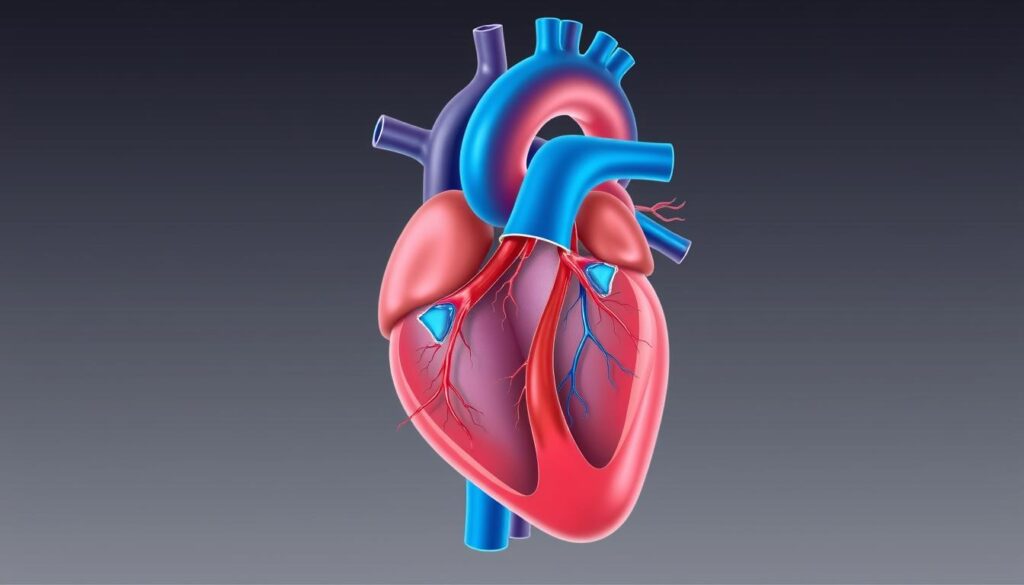
Patent Ductus Arteriosus (PDA) is a heart condition affecting premature infants. It creates blood circulation challenges between the heart and lungs1. A crucial blood vessel fails to close after birth, potentially disrupting normal heart function2.
Girls are twice as likely to develop PDA compared to boys13. Babies with Down syndrome face a higher risk due to genetic factors1. High-altitude births also increase the chances of this heart condition1.
A heart murmur often signals PDA. Small openings may heal on their own. However, larger defects can cause health issues if untreated12.
The National Heart, Lung, and Blood Institute views PDA as a major congenital heart defect1. Early detection and proper care are vital for managing this condition.
Key Takeaways
- PDA is more common in premature infants
- Girls have a higher risk of developing PDA
- Small PDAs can close naturally within months
- Genetic conditions like Down syndrome increase PDA risk
- Early detection and monitoring are crucial
Understanding Patent Ductus Arteriosus (PDA) and Its Impact on Heart Health
Patent Ductus Arteriosus (PDA) is a vital heart condition affecting infant health. This defect occurs when a blood vessel between major arteries stays open after birth4.
What Happens in PDA?
Normally, the ductus arteriosus closes shortly after birth. In PDA, this vessel remains open, causing abnormal blood flow.
This leads to increased blood circulation to the lungs. It can also cause potential heart complications5.
Common Signs and Symptoms
- Rapid or difficult breathing
- Frequent respiratory infections
- Poor weight gain
- Challenges with feeding
- Heart murmur detected during examination
Larger PDA cases may show more noticeable symptoms. These include breathing difficulties and lung infections4.
Risk Factors
Several key factors increase the chances of developing PDA:
| Risk Factor | Impact |
|---|---|
| Premature Birth | Significantly higher PDA occurrence56 |
| Genetic Conditions | Higher risk in babies with Down syndrome |
| Maternal Health | Rubella during pregnancy increases PDA risk6 |
Doctors use specialized tests like echocardiograms to diagnose PDA. These tests assess heart structure and blood flow.
Your healthcare provider might use other diagnostic tools too. These include electrocardiograms or cardiac catheterization4.
Early detection and proper management of PDA can significantly improve long-term heart health outcomes.
Oxygen therapy may help infants with PDA-related breathing issues. Without treatment, pulmonary hypertension can develop6.
Treatment Options and Medical Interventions
Patent Ductus Arteriosus (PDA) has several treatment options based on its severity. The main goal is to close the abnormal blood vessel connection. This helps restore normal heart function.
Ibuprofen is often used first, especially for premature infants. Nonsteroidal anti-inflammatory drugs (NSAIDs) can help close small PDAs.
- Medical management using medications
- Transcatheter closure procedures
- Surgical ligation for complex cases
For larger PDAs, doctors may suggest transcatheter closure. This is a minimally invasive procedure. A cardiologist uses a catheter to insert a device that seals the opening7.
This approach usually doesn’t require a long hospital stay. It offers a quicker recovery compared to traditional surgery7.
When other methods fail, surgical ligation becomes necessary. Surgeons make a small cut between the ribs. They directly close the PDA using stitches or metal clips7.
Your child’s cardiologist will choose the best treatment. They base this on individual health factors8.
Early intervention and proper medical management can help prevent long-term complications associated with Patent Ductus Arteriosus.
After treatment, regular check-ups with a pediatric cardiologist are vital. These visits help monitor your child’s heart health. They also ensure the PDA stays closed7.
Your healthcare team at Stanford Children’s Health can guide you through treatment. They offer personalized care for your child’s unique needs.
Conclusion
Patent Ductus Arteriosus (PDA) can be daunting, but modern medicine offers effective solutions. Early diagnosis and proper treatment allow most children with PDA to live normally. Your medical team will create a personalized plan for your heart health.
Treatment options vary from observation to medical and surgical interventions. Small PDAs may close on their own as children grow9. Larger defects might need more active management. Pediatric cardiologists can guide you through the best approach for your child.
This might include medications like indomethacin or surgical procedures10. The aim is to reduce long-term complications and support healthy development. Regular check-ups and following recommended treatments are essential.
While you can’t prevent congenital heart defects, proactive care greatly improves outcomes. Maintaining a healthy lifestyle is crucial. Advanced medical technologies offer hope for vibrant, active lives9. Your medical team will be your strongest support throughout this journey.
FAQ
What is Patent Ductus Arteriosus (PDA)?
PDA is a heart defect where a blood vessel stays open after birth. This opening connects the aorta and pulmonary artery. It causes abnormal blood flow between the heart and lungs.
PDA mainly affects premature infants and is more common in girls. It can be linked to genetic conditions like Down syndrome.
What are the main symptoms of PDA?
PDA symptoms depend on the size of the opening. They often include rapid breathing and poor weight gain. A distinctive heart murmur and frequent respiratory infections are also common.
Some infants may have trouble feeding. Growth and development challenges can occur too.
Who is at higher risk for developing PDA?
Premature babies are most at risk for PDA. Family history of heart defects increases the risk. Maternal infections during pregnancy and high-altitude births are other factors.
Premature infants are especially vulnerable. Their ductus arteriosus is more likely to stay open after birth.
How is PDA diagnosed?
Doctors diagnose PDA through physical exams and listening for heart murmurs. They also use tests like echocardiograms. These tests show the opening’s size and blood flow.
Medical professionals assess how PDA affects heart and lung function.
What are the treatment options for PDA?
Treatment depends on how severe the PDA is. Small PDAs might close on their own. Medications like ibuprofen can help manage some cases.
Larger PDAs often need more intervention. This can include cardiac catheterization or surgical ligation for complex cases.
What complications can arise from untreated PDA?
Untreated PDA can cause serious problems. These include pulmonary hypertension and heart failure. Endocarditis is another potential complication.
The abnormal blood flow strains the heart. This can lead to long-term cardiovascular issues.
Can children with PDA lead normal lives?
Most children with treated PDA can live normal, healthy lives. They usually don’t have activity restrictions. Regular check-ups with a pediatric cardiologist are important.
These visits help monitor the condition and ensure ongoing heart health.
How can the risk of PDA be reduced?
PDA can’t be completely prevented. But a healthy pregnancy can help reduce congenital heart defect risks. This includes proper prenatal care and good nutrition.
Avoiding harmful substances is crucial. Managing existing health conditions also helps lower the risk.
Source Links
- Patent ductus arteriosus (PDA) – Symptoms and causes – https://www.mayoclinic.org/diseases-conditions/patent-ductus-arteriosus/symptoms-causes/syc-20376145
- Patent Ductus Arteriosus (PDA) – https://www.heart.org/en/health-topics/congenital-heart-defects/about-congenital-heart-defects/patent-ductus-arteriosus-pda
- Patent Ductus Arteriosus (PDA) – https://www.hopkinsmedicine.org/health/conditions-and-diseases/patent-ductus-arteriosus-pda
- Patent Ductus Arteriosus (PDA) – https://www.chop.edu/conditions-diseases/patent-ductus-arteriosus-pda
- Patent Ductus Arteriosus (PDA) (for Parents) – https://kidshealth.org/en/parents/patent-ductus-arteriosus.html
- Patent Ductus Arteriosus (PDA) | Nationwide Children’s Hospital – https://www.nationwidechildrens.org/conditions/patent-ductus-arteriosus-pda
- Patent ductus arteriosus (PDA) – Diagnosis and treatment – https://www.mayoclinic.org/diseases-conditions/patent-ductus-arteriosus/diagnosis-treatment/drc-20376150
- Patent Ductus Arteriosus (PDA) | Symptoms, Diagnosis & Treatment – https://www.cincinnatichildrens.org/health/p/patent-ductus-arteriosus
- Patent Ductus Arteriosus (PDA) – https://deprod.stanfordchildrens.org/en/topic/default?id=patent-ductus-arteriosus-pda-90-P01811
- Patent Ductus Arteriosus: An Overview – https://pmc.ncbi.nlm.nih.gov/articles/PMC3462096/

