
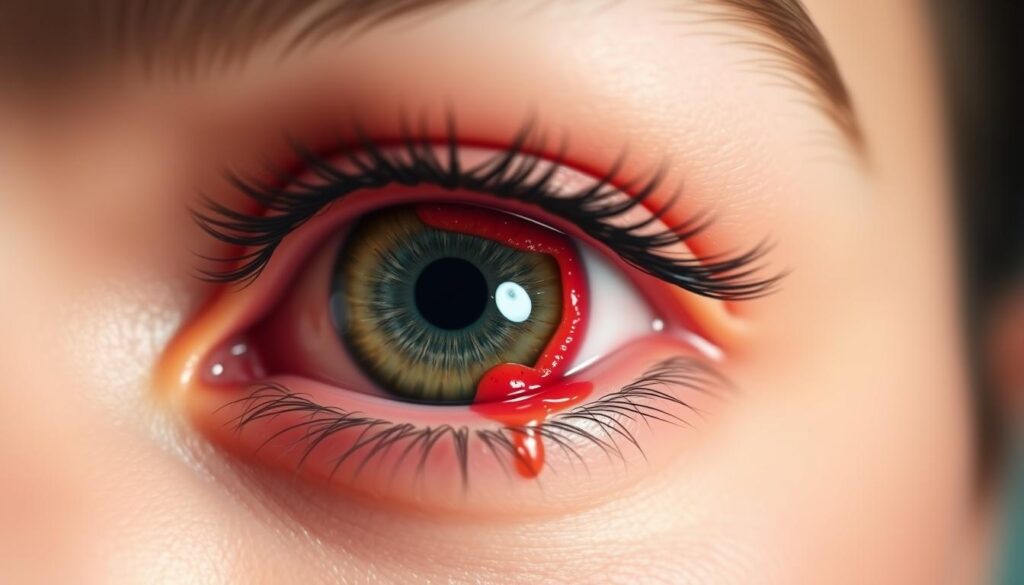
Pink eye can make your eyes red, irritated, and uncomfortable. This common condition affects people of all ages1. Viral and bacterial types spread easily through contact with infected eye drainage1.
Various factors can trigger pink eye. These include viruses, bacteria, allergies, and irritants. Viral pink eye often comes with the common cold virus2.
Your risk goes up if you’re around infected people. Allergens and long-term contact lens use also increase your chances1.
Knowing the type of pink eye is key for proper care. Each type has its own symptoms and treatment needs. Understanding the cause helps in effective management2.
Key Takeaways
- Pink eye is a common, contagious eye infection affecting people of all ages
- Viral and bacterial conjunctivitis spread through direct contact
- Different causes require different treatment approaches
- Contact lens wearers have a higher risk of developing pink eye
- Prompt medical evaluation can prevent potential vision complications
Understanding Pink Eye (Conjunctivitis)
Pink eye is a common condition affecting people of all ages. It happens when the conjunctiva, a thin membrane covering your eye, gets inflamed. This causes redness and discomfort in the affected eye3.
What is Pink Eye?
Pink eye makes the white part of your eye look pink or red. This happens because blood vessels in the eye swell up. Various factors can cause pink eye, including infections and allergies4.
Knowing the different types of eye irritation helps in choosing the right treatment. Proper diagnosis is key to managing this condition effectively.
Common Causes of Pink Eye
- Viral infections (most common cause)4
- Bacterial exposure3
- Allergic reactions to pollen, dander, or mold4
- Contact lens overuse4
Types of Conjunctivitis
There are three primary types of conjunctivitis:
- Viral Conjunctivitis: Characterized by watery discharge and typically resolves without antibiotics3
- Bacterial Conjunctivitis: Presents with thick, pus-like eye discharge and requires antibiotic treatment3
- Allergic Conjunctivitis: Triggered by allergens and not contagious3
Understanding the specific type of conjunctivitis helps determine the most effective treatment approach.
Good hygiene can greatly lower the risk of spreading pink eye. Wash your hands often and avoid sharing personal items.
Take care when using contact lenses. Follow proper cleaning and storage practices to protect your eyes3.
Symptoms of Pink Eye You Should Know
Pink eye can cause discomfort quickly. Knowing its symptoms helps identify and treat this common eye infection. Early detection prevents spread and ensures proper care.
Recognizing the Signs
Pink eye has several distinct symptoms. You may notice redness in one or both eyes. There’s often intense itching or burning.
A gritty feeling in the eyes is common. Eye discharge may form crusts overnight5. You might experience increased tearing and light sensitivity.
When to Seek Medical Attention
Not all eye infections are alike. Contact a doctor if you have severe eye pain or blurred vision. Seek help for intense redness or symptoms lasting over a week6.
- Severe eye pain
- Blurred vision
- Intense redness
- Symptoms lasting more than a week6
“Early detection can prevent potential complications from eye infections.”
Differentiating from Other Eye Problems
Telling pink eye from other eye conditions can be tricky. Viral conjunctivitis is the most common infectious eye infection5. Contact lens wearers face higher risk for severe eye infections6.
Bacterial and viral pink eye have similar symptoms but need different treatments. Bacterial conjunctivitis often produces a thicker eye discharge. It might need antibiotic treatment5.
Most pink eye cases are mild and resolve without long-term issues6. However, ongoing symptoms need professional evaluation. This prevents potential vision problems.
Treatment Options for Pink Eye
Pink eye treatment depends on the type of conjunctivitis you have. Viral pink eye often heals on its own. You can manage symptoms with home remedies and over-the-counter treatments7.
Bacterial cases require eye drops for treatment. Specialized ophthalmic solutions can effectively combat the infection8. Ciprofloxacin and azithromycin work well for bacterial strains8.
Allergic conjunctivitis needs a different approach. Antihistamine eye drops can help with seasonal allergies7. Contact lens wearers should stop using lenses during treatment7.
Practice good hygiene to prevent spreading pink eye. Wash your hands often and avoid touching your eyes. Most cases clear up quickly, but see a doctor if symptoms persist.
Your healthcare provider can determine the best treatment for your specific type of conjunctivitis. They’ll consider your symptoms and medical history to create an effective plan.
FAQ
What exactly is pink eye?
Pink eye, or conjunctivitis, inflames the membrane lining your eyelid and eyeball. It makes the white part of your eye look pink or red. Viruses, bacteria, allergies, or irritants can cause this condition.
Is pink eye contagious?
Viral and bacterial conjunctivitis spread easily through eye discharge contact. Allergic conjunctivitis isn’t contagious. It’s caused by reactions to things like pollen or animal dander.
What are the most common symptoms of pink eye?
Common signs include eye redness, itchiness, and a gritty feeling. You might notice discharge that crusts overnight. Excessive tearing and light sensitivity are also typical.
Some people feel a burning sensation or mild discomfort in the affected eye.
How long does pink eye typically last?
Viral pink eye usually clears up on its own in 1-2 weeks. Bacterial pink eye may improve faster with antibiotics. Allergic pink eye can last as long as you’re exposed to allergens.
When should I see a doctor about pink eye?
See a doctor if you have eye pain, blurred vision, or intense redness. Get help if symptoms worsen or persist. It’s crucial to consult a doctor if you wear contacts or have severe discomfort.
What are the treatment options for pink eye?
Treatment varies based on the cause. Viral pink eye needs symptom management with cold compresses and artificial tears. Bacterial pink eye may require antibiotic eye drops.
For allergic pink eye, over-the-counter antihistamine eye drops can help.
How can I prevent spreading pink eye?
Practice good hygiene by washing your hands often. Avoid touching or rubbing your eyes. Don’t share towels, washcloths, or other personal items.
If you have pink eye, wash your hands frequently. Use clean towels and washcloths daily.
Can pink eye cause permanent damage to my eyes?
Most pink eye cases are mild and don’t cause long-term damage. However, some types can lead to serious issues if left untreated. Consult a doctor if you’re worried about your symptoms.
Source Links
- Pink eye (conjunctivitis) – Symptoms and causes – https://www.mayoclinic.org/diseases-conditions/pink-eye/symptoms-causes/syc-20376355
- Pink Eye (Conjunctivitis) – https://www.webmd.com/eye-health/eye-health-conjunctivitis
- Pinkeye (Conjunctivitis) (for Teens) – https://kidshealth.org/en/teens/conjunctivitis.html
- Conjunctivitis or pink eye: MedlinePlus Medical Encyclopedia – https://medlineplus.gov/ency/article/001010.htm
- Patient education: Conjunctivitis (pink eye) (Beyond the Basics) – https://www.uptodate.com/contents/conjunctivitis-pink-eye-beyond-the-basics/print
- Pink Eye – https://www.hopkinsmedicine.org/health/conditions-and-diseases/pink-eye
- Conjunctivitis (pink eye) – https://www.aoa.org/healthy-eyes/eye-and-vision-conditions/conjunctivitis
- Bacterial Conjunctivitis (Pink Eye) Medication: Antibiotics – https://emedicine.medscape.com/article/1191730-medication

