
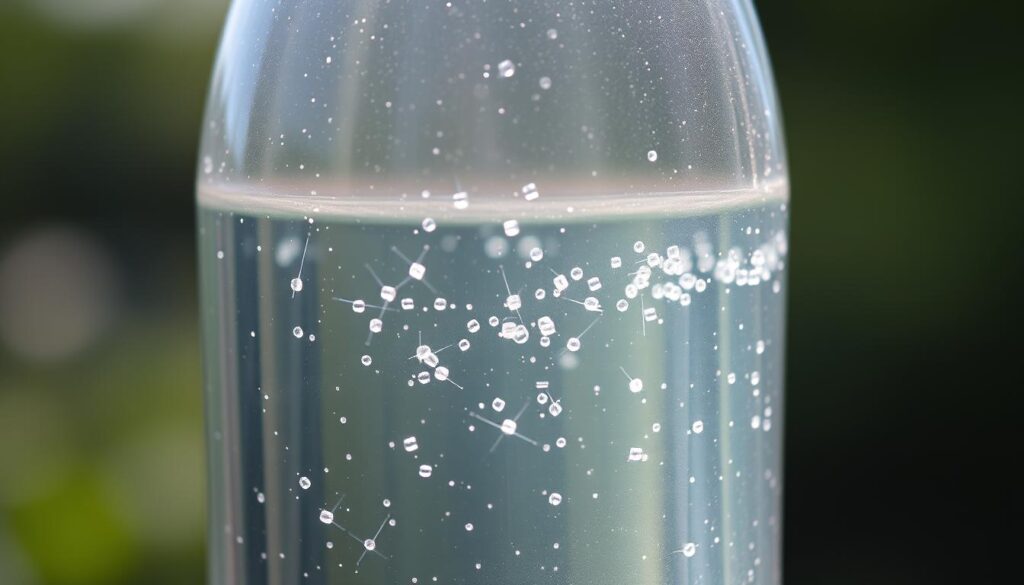
Your bottled water might not be as clean as you think. New research has found thousands of invisible plastic particles in it. Scientists discovered about 240,000 tiny plastic pieces in just one liter of bottled water12.
Most of these particles are nanoplastics, which are extremely small. They make up about 90% of the detected particles. This raises big questions about bottled water safety12.
New imaging tools can now spot these tiny plastic bits. They’ve revealed a hidden world of microplastics we couldn’t see before.
Scientists found different types of plastics in bottled water. These include polyamide, polyethylene terephthalate (PET), and other common plastics1. This study, published in a top science journal, helps us understand plastic in our drinking water1.
Key Takeaways
- A typical liter of bottled water contains around 240,000 plastic particles
- 90% of these particles are nanoplastics
- Multiple plastic types have been identified in bottled water
- New imaging techniques can detect microscopic plastic fragments
- Consumer awareness is crucial in understanding water contamination
Understanding Plastic Particles in Bottled Water
Plastic pollution is a growing concern in our daily lives, especially in drinking water. Your bottled water may contain invisible plastic particles. These tiny invaders, called microplastics and nanoplastics, have sparked scientific research and public interest.
What Are Plastic Particles?
Plastic particles come in two main sizes: microplastics and nanoplastics. Microplastics are tiny fragments less than 5 millimeters in size. Nanoplastics are even smaller, measuring just 1 nanometer to 1 micron3.
Researchers found about 240,000 plastic fragments in a typical liter of bottled water4. This discovery is alarming and raises concerns about our drinking water safety.
Common Types of Plastic Particles
Scientists have identified several types of plastic particles commonly found in bottled water:
- Polyamide 66 (most common)
- Polypropylene
- Polyethylene
- Polyethylene terephthalate (PET)
- Polyvinyl chloride
- Polystyrene
How Do They Get Into Bottled Water?
Plastic particles enter bottled water through various ways. The manufacturing process, bottle degradation, and opening bottle caps all contribute. About 90% of the detected particles are nanoplastics, which are very hard to filter out3.
“Microplastics are inevitably entering our bodies,” says Dr. Sherri “Sam” Mason, highlighting the pervasive nature of plastic pollution5.
Plastic pollution affects more than just bottled water. Humans produce over 440 million tons of plastic each year3. This massive production has significant consequences for our environment.
Health Implications of Plastic Particles
Plastic particles in bottled water may harm our health. Scientists are studying these tiny invaders closely. The concern goes beyond simple contamination to deeper health issues.
Are Plastic Particles Harmful?
New studies show plastic particles could be riskier than we thought. One liter of bottled water may have 240,000 plastic particles. About 90% are nanoplastics6.
These tiny bits raise big health concerns. They might sneak into our cells. Some can mess with our hormones. We’re still learning about long-term effects.
- Nanoplastics can potentially penetrate human cells
- Endocrine disruptors may interfere with hormonal systems
- Potential long-term health consequences remain under investigation
Current Research Findings
Water tests show scary facts about plastic toxicity. Bottled water has way more plastic bits than we knew. It could be 10 to 100 times more6.
Nanoplastics can carry nasty chemicals. These include bisphenols, phthalates, and heavy metals. They might get into our bodies6.
| Plastic Type | Potential Health Risks |
|---|---|
| Plastic #1 (PET) | Potential endocrine disruption |
| Plastic #7 (BPA) | Fertility issues, altered brain development |
The most vulnerable populations, such as infants and young children, may face higher risks due to their developing bodies6.
Scientists are still studying plastic toxicity. But the evidence suggests we should be careful. It’s smart to think about our water choices.
Knowing these risks helps us make better decisions. We can choose safer drinking water options.
Choosing Safer Bottled Water Options
Picking safe drinking water can be tricky. Your health relies on smart choices about the water you drink. Consider exploring water filtration options for better hydration.
Plastic particles in bottled water pose health risks. About 5% of Americans mainly drink bottled water. Yet, the safety of these products remains uncertain7.
Decoding Water Labels
Understanding labels is key to finding safer bottled water. Look for important details about water quality:
- Source of water (spring, purified, municipal)
- Filtration methods used
- Packaging materials
Brands with Safer Practices
Some brands are improving drinking water standards and reducing plastic contamination. Sustainable alternatives are now available in the market.
These brands focus on:
- Using BPA-free packaging
- Implementing advanced filtration techniques
- Reducing plastic particle presence
The bottled water market has grown 73% in the last decade8. Experts suggest trying other ways to stay hydrated. Filtered tap water is often safer and eco-friendlier7.
Protect your health by being mindful of your water choices.
| Water Option | Plastic Particles | Health Risk Level |
|---|---|---|
| Bottled Water | 240,000 particles/liter | High |
| Filtered Tap Water | 5.5 particles/liter | Low |
| Stainless Steel Bottle | 0 particles | Minimal |
To lower risks, think about getting a home water filter. Using glass or stainless steel containers is also smart. These sustainable alternatives can greatly reduce your exposure to harmful plastic particles9.
The Future of Bottled Water and Plastic
The bottled water industry faces pressure to tackle plastic pollution. Brands are focusing on sustainable packaging to reduce their environmental impact10. Each year, nearly 400 million metric tons of plastic are produced worldwide.
Over 30 million tons end up in water or on land annually11. Your choices can drive industry change. Recycling and plastic reduction efforts are growing.
Water companies are rethinking their methods. Scientific research on plastic particles shows the urgent need for change12.
Industry Trends Towards Sustainability
Water brands are exploring new packaging to cut plastic waste. Some develop materials that break down faster. However, “biodegradable” bags can still take years to disappear10.
Glass and stainless steel containers are becoming popular eco-friendly options. These alternatives appeal to environmentally aware consumers.
What You Can Do as a Consumer
Choose reusable water bottles and support brands committed to sustainability. Spread awareness about reducing plastic use. Your choices can push the industry toward greener solutions.
Together, we can help address the growing problem of microplastic contamination12. Small actions add up to make a big difference.
FAQ
How many plastic particles are typically found in a liter of bottled water?
A liter of bottled water contains about 240,000 plastic fragments. This is 10 to 100 times higher than previous estimates. Advanced microscopy revealed 90% nanoplastics and 10% microplastics in these samples.
What types of plastic particles are commonly found in bottled water?
Common plastic particles include PET, PA, PP, PE, PS, PVC, and PMMA. Polyamide, a type of nylon, is the most frequent particle found. It’s likely due to its use in water filtration processes.
Are plastic particles in bottled water harmful to human health?
Health implications are still being researched, but concerns exist. Plastic particles have been found in human blood, lungs, gut, and reproductive tissues. Potential risks include reproductive toxicity, endocrine disruption, and neurotoxicity.
Oxidative stress and cellular penetration by nanoplastics are also possible health hazards.
How can I reduce my exposure to plastic particles in drinking water?
To minimize exposure, try these alternatives:
– Use filtered tap water
– Store water in glass, aluminum, or stainless steel containers
– Choose bottled water brands prioritizing sustainability
– Use water filtration methods like reverse osmosis or activated charcoal filters
– Avoid bottles exposed to heat or sunlight for extended periods
Where do plastic particles in bottled water come from?
Plastic particles enter bottled water through multiple sources:
– Manufacturing process
– Degradation of plastic bottles over time
– Repeated motion of screwing and unscrewing bottle caps
– Water filtration and purification equipment
– Environmental contamination during production and packaging
What can consumers do to help address plastic particle contamination?
You can take several actions:
– Use reusable water bottles made of glass or stainless steel
– Choose filtered tap water when possible
– Avoid single-use plastics
– Support brands committed to sustainability
– Participate in collective action to encourage industry and governmental changes
– Raise awareness about plastic particle contamination
Are some bottled water brands safer than others?
No brand is completely free of plastic particles. Look for companies that use sustainable packaging materials. Seek out brands that implement rigorous quality testing and prioritize reducing plastic contamination.
Choose companies offering transparency about their manufacturing processes. Consider brands using alternative container materials like glass or aluminum.
Source Links
- Plastic particles in bottled water – https://www.nih.gov/news-events/nih-research-matters/plastic-particles-bottled-water
- Bottled Water Is Full of Tiny Plastics. Here’s How to Make It Safer for Drinking – https://www.verywellhealth.com/bottled-water-contains-plastic-particles-8546698
- Researchers find a massive number of plastic particles in bottled water – https://www.npr.org/2024/01/10/1223730333/bottled-water-plastic-microplastic-nanoplastic-study
- Are You Drinking Plastic? | Chemistry Article for Students | Scholastic Science World Magazine – https://scienceworld.scholastic.com/issues/2024-25/082624/plastic.html
- Are microplastics in your bottled water? | Bottleless Nation – https://www.bottlelessnation.com/are-you-drinking-microplastic-from-bottled-water/
- Bottled water packed with nanoplastics, study finds | CNN – https://www.cnn.com/2024/01/08/health/bottled-water-nanoplastics-study-wellness/index.html
- Bottled Water Versus Safer Ways to Stay Hydrated – ECWQ – https://eastcoastwaterquality.com/news/bottled-water-versus-safer-ways-to-stay-hydrated/
- Which is safer, tap water or bottled water? Nanoplastics found. – https://www.onegreenbottle.com/which-is-safer-tap-water-or-bottled-water-nanoplastics-found/
- Mya Care – https://myacare.com/blog/whats-in-your-water-bottled-water-safety-and-healthier-alternatives
- Microplastics are everywhere: Is it possible to reduce our exposure? – https://www.bbc.com/future/article/20240110-microplastics-are-everywhere-is-it-possible-to-reduce-our-exposure
- Bottled Water Can Contain Hundreds of Thousands of Previously Uncounted Tiny Plastic Bits, Study Finds – https://news.climate.columbia.edu/2024/01/08/bottled-water-can-contain-hundreds-of-thousands-of-previously-uncounted-tiny-plastic-bits-study-finds/
- The Mega-Crisis of Microplastics in Our Drinking Water – https://www.foodandwaterwatch.org/2024/11/25/microplastics-drinking-water-petition/

