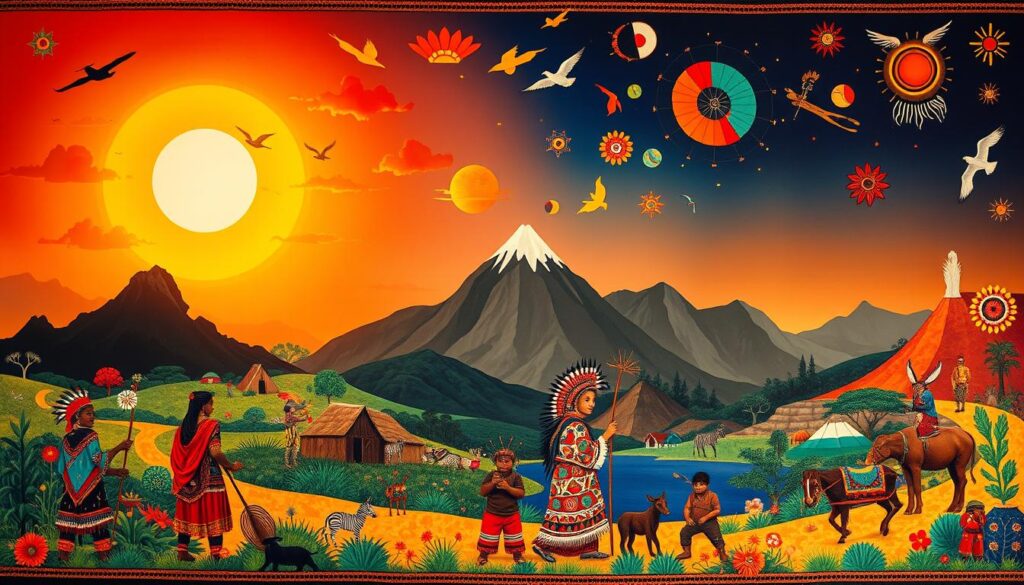
Indigenous cultures showcase human diversity with rich traditions and deep ancestral connections. These vibrant communities maintain unique heritage that enriches our global experience. Their stories and customs paint a colorful picture of humanity1.
About 476 million Indigenous People exist worldwide. They represent over 4,000 distinct languages and cultural identities. Their knowledge passes through generations via stories, art, and cultural performances2.
Indigenous communities excel at sustainable ecosystem management. They’ve gathered environmental wisdom over centuries. Their deep understanding of nature provides valuable insights into responsible environmental care1.
Key Takeaways
- Indigenous cultures represent global human diversity
- Traditional knowledge is transmitted through generations
- Indigenous Peoples manage approximately 25% of global land area
- Cultural preservation requires active protection and respect
- Indigenous communities are critical environmental guardians
Understanding Indigenous Cultures and Their Importance
Indigenous cultures are a vibrant tapestry of human diversity. They carry profound wisdom and unique perspectives that shape our global understanding. These rich cultural identities connect communities to their ancestral roots.
The world’s linguistic landscape is surprisingly fragile. About 90% of existing languages might vanish within the next century. This potential loss represents more than just words.
It’s about losing entire worldviews and intricate cultural identities. These languages hold unique ways of seeing and understanding the world.
The Significance of Cultural Heritage
Cultural heritage encompasses far more than physical artifacts. It includes:
- Ecological knowledge
- Sacred site preservation
- Traditional practices
- Collective ownership of cultural resources
Unique Aspects of Indigenous Lifestyles
Indigenous cultures show remarkable intercultural adaptability. Their traditional knowledge often provides innovative solutions to environmental challenges.
About 97 per cent of the world’s population speaks 4 per cent of its languages, while only 3 per cent speaks 96 per cent of them3. This fact highlights the incredible diversity of human communication.
How Indigenous Cultures Enrich Society
Understanding indigenous cultures opens pathways to:
- Sustainable ecosystem management
- Biodiversity conservation
- Climate change mitigation strategies
“Indigenous cultures, languages, and traditions play a vital role in shaping identities and communities.”
Respecting and learning from indigenous wisdom can lead to positive change. We can develop more holistic, sustainable approaches to living in harmony with our planet.
Threats to Indigenous Cultures Today
Indigenous cultures face big challenges in today’s world. Multiple forces threaten their traditional ways of life. The diversity of cultures is at risk4.
Industrial development is a major threat to Indigenous Peoples’ lands. It affects over 60% of their territories in 64 countries4. This disrupts centuries-old traditions and ecological relationships.
Colonization and Its Lasting Effects
Colonization still affects Indigenous communities today. People were removed from their ancestral lands. This created lasting trauma that weakens cultural continuity5.
- Forced relocation from traditional territories
- Disruption of cultural practices
- Systemic discrimination
Modernization and Cultural Erosion
Fast-paced modernization threatens unique cultural traditions. About 476 million Indigenous Peoples worldwide fight to keep their identity5. They face strong global economic pressures.
Environmental Changes and Their Impact
Climate change is a huge threat to Indigenous communities. They manage about a quarter of the world’s surface area. Yet, these groups are more at risk from environmental changes5.
| Threat Category | Impact Level |
|---|---|
| Industrial Development | High |
| Climate Change | Critical |
| Cultural Displacement | Severe |
“Our traditions are not relics of the past, but living connections to our future.” – Indigenous Rights Activist
Protecting these cultures needs global awareness and respect for diversity. We must make efforts to preserve indigenous knowledge and rights4.
How You Can Help Protect Indigenous Cultures
Supporting Indigenous cultures requires active engagement and thoughtful actions. Your role in preserving their heritage can make a significant difference. By understanding their challenges, you can become an ally in protecting their unique traditions6.
Supporting Indigenous Rights and Advocacy
Support organizations dedicated to Indigenous rights, like Cultural Survival. They offer grassroots support for Indigenous community movements7.
Amplify Indigenous voices by following social media influencers like Txai Suruí. Join petitions advocating for clean water access and legislative protections7.
Promoting Awareness and Education
Education is key to understanding Indigenous cultures. Attend webinars from the National Museum of the American Indian. Explore podcasts like “Let’s Talk Native with John Kane”7.
Learning about their experiences helps raise awareness about Indigenous challenges. These include restricted access to education and healthcare6.
Engaging in Responsible Tourism and Ethical Consumption
Support Indigenous businesses like Cheekbone Beauty and B. Yellowtail Collective7. Your purchases can protect their cultures and boost economic sustainability.
Indigenous peoples protect 80% of global biodiversity8. Your support is crucial for environmental conservation and cultural preservation.
FAQ
How many Indigenous Peoples are there worldwide?
There are about 476 million Indigenous Peoples globally. They make up 6.2% of the world’s population. These groups live in over 90 countries and speak more than 4,000 languages.
What makes Indigenous cultures unique?
Indigenous cultures have deep ties to their ancestral lands. They maintain distinct social and political systems. Their heritage includes traditional knowledge and practices passed down through generations.
Why are Indigenous cultures important for the environment?
Indigenous communities are vital for biodiversity conservation. Their knowledge helps fight climate change. They offer sustainable ways to manage resources, which can help protect our planet.
What major challenges do Indigenous Peoples face today?
Indigenous communities face many hurdles. These include human rights violations and forced displacement from their lands. They often have limited access to education and healthcare.
Climate change affects them more than others. Their traditional ways of life are under threat from colonization and modernization.
How can individuals support Indigenous cultures?
You can stand up for Indigenous rights to self-rule. Help promote their languages and support their educational programs. Choose responsible tourism when visiting Indigenous areas.
Spread awareness about Indigenous issues. Support groups that work to protect their rights and cultural heritage.
What is considered Indigenous cultural heritage?
Indigenous cultural heritage includes many things. It covers art, literature, and scientific knowledge. Sacred sites and traditional practices are also part of it.
This heritage belongs to the whole community. It can’t be sold or given away. Indigenous customs and laws decide how to preserve it.
How does modernization impact Indigenous cultures?
Modernization often harms Indigenous cultures. It forces them to change their ways of life. Big industries, city growth, and new tech can disrupt traditional lifestyles.
These changes can make it hard to keep old knowledge alive. They create challenges for preserving Indigenous cultures.
What role do Indigenous languages play in cultural preservation?
Indigenous languages are key to keeping cultures alive. They hold important knowledge and unique ways of seeing the world. Keeping these languages strong helps maintain cultural identity.
These languages pass down wisdom through generations. They help Indigenous communities stay resilient in changing times.
Source Links
- Indigenous Peoples and the nature they protect – https://www.unep.org/news-and-stories/story/indigenous-peoples-and-nature-they-protect
- Indigenous People’s Traditional Knowledge Must Be Preserved, Valued Globally, Speakers Stress as Permanent Forum Opens Annual Session – https://press.un.org/en/2019/hr5431.doc.htm
- United Nations For Indigenous Peoples – https://www.un.org/development/desa/indigenouspeoples/mandated-areas1/culture.html
- Amid Industrial Development Threats to Lands, Major Opportunities to Support Indigenous Stewardship – https://www.nature.org/en-us/what-we-do/our-insights/perspectives/indigenous-lands-development-risk-solutions-study/
- Indigenous Peoples – https://www.worldbank.org/en/topic/indigenouspeoples
- Indigenous peoples rights are human rights. – https://www.amnesty.org/en/what-we-do/indigenous-peoples/
- Seven ways to support Indigenous Peoples – Planet Forward – https://planetforward.org/story/seven-ways-to-support-indigenous-peoples/
- Why protecting Indigenous communities can also help save the Earth – https://www.theguardian.com/climate-academy/2020/oct/12/indigenous-communities-protect-biodiversity-curb-climate-crisis