
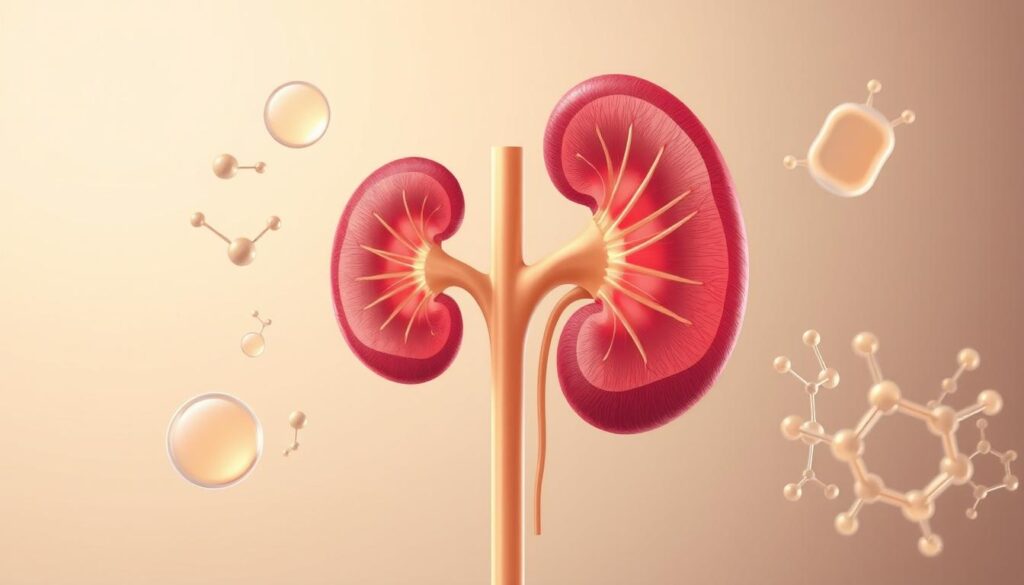
Proteinuria is a key indicator of kidney health. Your urine holds clues about your overall well-being. Detecting protein levels can help spot early signs of kidney disease1.
Healthy kidneys filter waste while keeping proteins in your blood. A small amount of protein in urine is normal. However, high levels might point to a health problem2.
Sometimes, temporary conditions can cause short-term protein increases. These include dehydration, intense exercise, or fever3.
Proteinuria can have various causes. Chronic conditions like diabetes, high blood pressure, and kidney disease are common culprits1. A urinalysis can reveal important information about your kidney’s health.
Key Takeaways
- Protein in urine can signal potential kidney issues
- Not all protein presence indicates serious health problems
- Regular medical check-ups help monitor kidney function
- Lifestyle factors can temporarily affect protein levels
- Early detection is crucial for managing kidney health
Understanding Protein in Urine and Its Significance
Your kidneys filter waste and maintain body balance. When these organs malfunction, protein can leak into your urine. This signals potential health issues.
Protein in urine, or albuminuria, reveals kidney health details. A small amount is normal. High levels might indicate nephritis or glomerular disease4.
What Causes Proteinuria
Several factors can trigger protein in your urine. These include:
- Kidney disease
- Diabetes
- High blood pressure
- Pregnancy
- Intense physical activity
Normal vs. Abnormal Protein Levels
Typically, very little protein appears in urine. High protein levels could signal kidney problems5.
| Protein Level | Interpretation |
|---|---|
| Low/Trace Amounts | Healthy Kidney Function |
| High Levels | Potential Kidney Disease Risk |
Risk Factors for Developing Proteinuria
Some people are more likely to have protein in urine. Key risk factors include4:
- Diabetes
- Hypertension
- Family history of kidney disease
- Certain medications like NSAIDs
Kidney stones and persistent proteinuria can be warning signs that require medical attention. Regular check-ups help maintain optimal kidney health.
Early detection of protein in urine can prevent serious kidney complications.
Recognizing Signs and Getting Diagnosed
Protein in urine isn’t always easy to spot. Many people with early kidney damage don’t have noticeable symptoms. Some signs may appear as kidney function worsens.
Here are potential signs of proteinuria and kidney problems:
- Foamy or bubbly urine
- Swelling in hands, feet, or face
- Frequent urination, especially at night6
- Unexplained muscle cramps6
- Persistent fatigue
A urinalysis is the best way to check protein levels in urine7. This test can reveal many health insights:
| Urine Component | Potential Indication |
|---|---|
| Glucose | Possible diabetes7 |
| White blood cells | Potential infection7 |
| Blood | Kidney issues or infections7 |
If you see blood in urine or notice changes, talk to your doctor. They might suggest a kidney function test to check your renal health6.
Early detection through routine testing can prevent serious kidney complications.
Urinalysis is usually quick, safe, and easy7. Results often come within a day or two. These tests give important info about your kidney health7.
Conclusion
Managing proteinuria requires a holistic approach to kidney health. Your doctor will create a tailored plan to address the root causes. Regular tests and targeted treatments are crucial for monitoring kidney function.
Lifestyle changes are vital in treating proteinuria. You may need to modify your diet and increase exercise. Managing conditions like diabetes or hypertension is also important.
Medications such as ACE inhibitors or ARBs can protect your kidneys. These drugs help reduce protein excretion and maintain kidney health8.
Early detection is crucial for effective management. Routine health screenings often uncover proteinuria cases. Regular check-ups are essential for maintaining long-term kidney health8.
Your proactive approach can prevent complications and improve overall well-being. Work closely with your healthcare team to protect your kidneys. Stay committed to your treatment plan for the best results.
Remember, each person’s situation is unique. By following your doctor’s advice, you can effectively manage proteinuria. This approach will help safeguard your kidney function for years to come.
FAQ
What is proteinuria?
Proteinuria means you have too much protein in your urine. Healthy kidneys keep proteins in your blood while filtering waste. Damaged kidneys may let proteins like albumin leak into urine.
This can signal potential kidney issues. It’s important to monitor your kidney health regularly.
What causes protein in urine?
Many factors can cause protein in urine. These include diabetes, high blood pressure, kidney disease, and pregnancy. Short-term causes might be dehydration, intense exercise, or stress.
Fever, cold temperatures, and some medications like NSAIDs can also lead to proteinuria. It’s crucial to identify the root cause.
How is proteinuria diagnosed?
Doctors use a urine test called UACR to diagnose proteinuria. A normal UACR is less than 30mg/g. Your doctor might also recommend a urinalysis.
This test includes visual checks, chemical tests, and microscopic examination. A 24-hour urine sample can provide more detailed results.
What are the symptoms of proteinuria?
Mild cases might not show symptoms. As kidney damage worsens, you may notice foamy urine or swelling. Other signs include frequent urination, nausea, vomiting, and nighttime muscle cramps.
Regular check-ups are vital for early detection of proteinuria. Don’t ignore any unusual symptoms you experience.
Can proteinuria be treated?
Treatment depends on the underlying cause. For diabetes-related proteinuria, managing blood sugar is key. This includes medication, diet changes, and regular exercise.
If hypertension is the cause, doctors may prescribe specific medications. These help lower blood pressure and protect kidney function.
Who is at risk for developing proteinuria?
Risk factors include diabetes, high blood pressure, and family history of kidney disease. Obesity, advanced age, and certain medications can also increase your risk.
People with chronic conditions need regular kidney function checks. Early detection is crucial for effective management.
Is drinking more water enough to treat proteinuria?
Drinking more water alone won’t treat proteinuria’s underlying cause. It only helps if dehydration is the main factor. Staying hydrated is important for overall kidney health.
You’ll need a medical evaluation to address the root cause. Your doctor can recommend the best treatment plan.
Source Links
- Proteinuria (Protein in Urine) – https://www.webmd.com/a-to-z-guides/proteinuria-protein-in-urine
- Protein in urine (proteinuria) Causes – https://www.mayoclinic.org/symptoms/protein-in-urine/basics/causes/sym-20050656
- Protein in Urine (Proteinuria): Causes, Symptoms, and More – https://www.healthline.com/health/what-causes-protein-in-urine
- Protein in Urine (Proteinuria) Causes, Symptoms, Tests & Treatments – https://www.kidneyfund.org/all-about-kidneys/other-kidney-problems/protein-urine
- Protein in Urine: MedlinePlus Medical Test – https://medlineplus.gov/lab-tests/protein-in-urine/
- 10 Signs You May Have Kidney Disease – https://www.kidney.org/news-stories/10-signs-you-may-have-kidney-disease
- Urinalysis (urine test) – https://www.kidney.org/kidney-topics/urinalysis-urine-test
- Patient education: Protein in the urine (proteinuria) (Beyond the Basics) – https://www.uptodate.com/contents/protein-in-the-urine-proteinuria-beyond-the-basics/print

