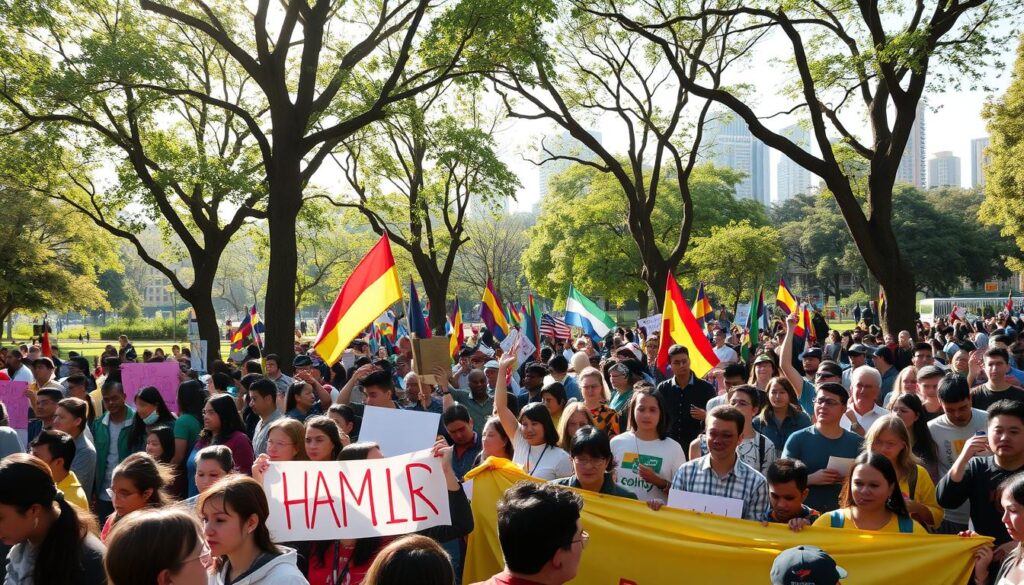
Protests and demonstrations are key to activism. They let people share their views and push for change. A well-planned demonstration can achieve its goals quickly or slowly1. It’s important to know what you want to achieve to make a strong impact1.
By joining protests and demonstrations, you help a bigger movement. This movement fights for change and supports activism.
When planning a protest, focus on four main areas: planning, timing, communication, and follow-up1. Having a team of organizers can make your protest more effective1. Peaceful protests can draw in many new supporters2.
By using these strategies, you can host a powerful protest. It will help spread your message and encourage others to act.
Key Takeaways
- Protests and demonstrations are protected under the First Amendment, allowing individuals to express their opinions and bring about social change.
- Setting clear goals for the demonstration is vital in determining its tone, form, and impact1.
- Building a team of organizers can increase the effectiveness of the protest1.
- Peaceful protest can attract a large number of new participants interested in getting further involved in a cause2.
- Diversifying outreach methods can help maximize turnout for a protest2.
- Designating peace marshals within a protest team can help prevent damage to property or the occurrence of fights during a protest2.
Understanding the Purpose of Protests
Protests are a strong way to fight for social justice and start political movements. Knowing why we protest helps make our voices heard. It makes sure our message gets to the right people.
Defining Your Goals
It’s important to know what you want to achieve. Whether it’s to stop civil unrest or push for new laws, clear goals help. For example, the March on Washington in 1963 showed the need for racial equality3.
Identifying the Audience
Knowing who you’re trying to reach is key. It’s about connecting with people of all ages. Even kids as young as eight are joining in3.
Crafting Your Message
A good message is the core of any protest. It should be simple, yet powerful. The Women’s March in 2017 is a great example of a message that brought people together3.
| Aspect | Description |
|---|---|
| Goals | Define clear, actionable objectives |
| Audience | Identify target demographics for greater impact |
| Message | Develop a strong, unified message to unify participants |
Planning and Logistics for Your Protest
Organizing a protest well needs careful planning. Picking the right time and place is key for success.
Selecting a Date and Location
Choose a date that gets the most people involved. Think about local events or holidays. The spot should be easy to get to, big enough, and meaningful to your cause. Cost, permits, and being close to your audience matter a lot4.
Obtaining Permits and Approvals
Getting the right permits makes your protest legal and official. Start applying early to meet all needs and avoid problems5.
Creating a Safety Plan
A good safety plan covers risks and keeps everyone safe. Have emergency steps, first aid areas, and share safety rules with helpers.
Coordinating with Local Authorities
Talking well with police helps a lot. They usually support peaceful protests and can help manage big gatherings5.
Engaging Participants and Volunteers
Successful activism needs a dedicated team and active participation. Building a strong foundation is key. It helps social justice initiatives grow and reach their goals.
Building a Team
Get a diverse group of people who care about your cause. Working with other organizations and community members boosts your impact6.
Promoting the Event
Use both old and new ways to share your message. Social media, flyers, and local media are important. In South Korea, for example, high smartphone use helped a lot of people join the candlelight protests7.
Training Volunteers
Make sure all volunteers know their roles and the big picture. Good training helps everyone work together. This reduces conflicts and increases the impact of demonstrations6.
Executing the Protest Day Strategy
On the day of the protest, it’s key to follow your plan well. This helps keep things peaceful and gets your message across. Good preparation can also lower risks and make your protest more effective.
Setting Up the Venue
Get there early to mark out where everyone will gather. Set up booths for handing out information and spots for speakers and performers. Make sure everyone knows where things are to keep things orderly.
Ensuring Communication
Use good communication tools to keep everyone in touch. Have a central spot for updates and instructions to avoid confusion. Walkie-talkies or secure messaging apps can help keep things running smoothly8.
Managing the Crowd
Use volunteers to help control the crowd. Tell everyone to stay calm and respectful. This is key for a peaceful protest. Be ready to handle any tension to stop things from getting out of hand9.
Following Up Post-Protest
After it’s all over, thank everyone for their support and ask for feedback. Share what happened on social media to keep the energy up. Plan more actions to keep pushing for your cause and keep people involved89.
FAQ
What are the essential steps to organize a peaceful protest?
Organizing a peaceful protest requires several steps. First, define your goals clearly. Then, identify who you want to reach with your message. Next, create a message that grabs attention.
Choose a date and location that will make your protest stand out. Make sure you have the right permits. Lastly, plan for safety to ensure a peaceful event.
How can I define clear goals for my protest?
To set clear goals, know what change you want to see. Whether it’s raising awareness or changing policies, define your objectives. This helps focus your message and rally people around your cause.
Who should be my target audience for a successful demonstration?
Identifying your target audience is key. Think about who can make a difference, like policymakers or community leaders. Tailor your message to reach these groups effectively.
What legal considerations must I be aware of when organizing a protest?
It’s important to know the laws about protests. You’ll need permits and must follow local rules. Respect public property and know your rights. Working with local authorities can help you meet these requirements.
How do I craft a compelling message for my protest?
Creating a compelling message is about being clear and emotional. Use strong language that gets your point across. Add metaphors and examples to make your message more impactful.
What factors should I consider when selecting a date and location for the protest?
When picking a date and location, think about visibility and accessibility. Choose a time and place that will draw in people and media. These choices can make your protest more effective.
How can I ensure the safety of participants during the protest?
Creating a safety plan is vital. Have first aid supplies and a security team ready. Make sure everyone can communicate clearly and be prepared for any situation. This keeps your protest safe and positive.
What are effective strategies for promoting my protest event?
To promote your protest, use social media and local media. Post clear messages and use engaging visuals. This will attract more people and help your cause.
How do I manage and engage volunteers for the protest?
Building a strong team of volunteers is key. Give them clear roles and offer training. Make sure they feel part of the cause. Engaged volunteers will make your protest better.
What should I do on the day of the protest to ensure smooth execution?
On the day of the protest, set up efficiently and keep communication open. Use clear signs and have areas for speakers. Make sure everyone knows their role. Being ready helps handle any issues and keeps the protest effective.
How can I maintain momentum after the protest?
After the protest, keep the momentum going. Share what happened and engage with participants. Organize more events and keep advocating. This helps your cause continue to grow.
Source Links
- How to organise a protest – https://activisthandbook.org/organising/protest
- Organising Your First Protest – https://commonslibrary.org/organising-your-first-protest/
- The Purpose and Power of Protest – https://www.adl.org/resources/tools-and-strategies/purpose-and-power-protest
- How to Organise a Protest March – https://commonslibrary.org/how-to-organise-a-protest-march/
- 5 Essential Steps to Organizing a Powerful Protest | CROWDS ON DEMAND – https://crowdsondemand.com/blog/5-essential-steps-to-organizing-a-powerful-protest
- The Two Competing Strategies Behind Every Protest – https://paxfauna.org/the-two-competing-strategies-behind-every-protest/
- Protest Participation Experiences and Media Uses in Urban Protests: A Conceptualization and Empirical Examination – https://ijoc.org/index.php/ijoc/article/viewFile/9626/2972
- Protest Tips and Resources | NYU School of Law – https://www.law.nyu.edu/centers/race-inequality-law/protest-tips
- How to Protest Safely – https://www.nrdc.org/stories/how-protest-safely