
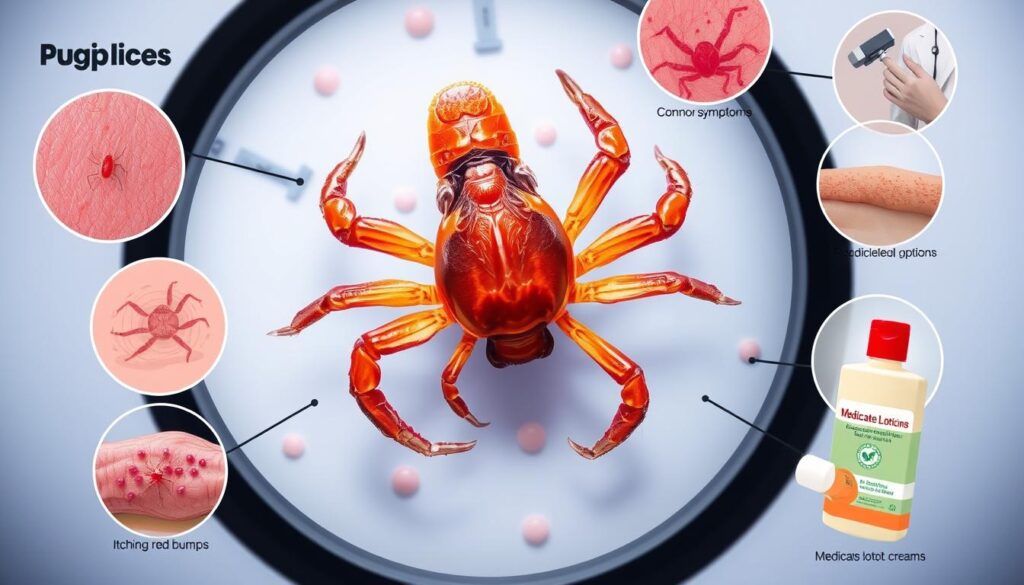
Pubic lice, or crabs, are tiny bugs that cause discomfort in your genital area1. These pesky parasites spread through close skin contact and live in coarse body hair2. They can be upsetting to discover, but knowing how to handle them helps.
These bloodsuckers trigger intense itching, especially at night when they’re most active1. Pubic lice can live in various hairy spots, including your chest, armpits, and even eyelashes2.
Grasping this issue is key for proper treatment and prevention. If you think you have pubic lice, seek medical help. A doctor can guide you through this delicate health matter.
Key Takeaways
- Pubic lice are tiny parasites transmitted through sexual contact
- They cause intense genital itching, especially at night
- Treatment involves specialized creams and lotions
- Informing recent sexual partners is essential
- Professional medical advice can help manage the infestation
What Are Pubic Lice?
Pubic lice, or crabs, are tiny bugs that live in intimate body hair. These microscopic creatures cause discomfort and are a sexual health concern3. They measure 1.1–1.8 mm long, yet can create significant problems4.
These grey-brown parasites thrive in coarse body hair, especially the pubic region4. They feed on human blood and can easily spread between intimate partners5.
Understanding the Life Cycle of Crabs
The life cycle of pubic lice involves three distinct stages:
- Egg (Nit) Stage: Females lay approximately 30 eggs during their 3-4 week lifespan3
- Nymph Stage: Newly hatched lice mature over 6-9 days3
- Adult Stage: Fully developed lice continue their reproductive cycle
How They Spread Among Individuals
Pubic lice mainly spread through sexual contact4. Close body interactions allow these parasites to move between people. Rarely, they can spread through shared clothing or bedding4.
Lice Treatment requires comprehensive personal hygiene practices and potentially medical intervention.
| Transmission Method | Likelihood |
|---|---|
| Sexual Contact | High |
| Shared Clothing | Low |
| Shared Bedding | Very Low |
Important Note: People with other STIs might face higher risks of pubic lice infestation5. If you have intense genital itching, get medical advice quickly5.
Symptoms to Look For
Pubic lice, or “crabs,” can cause discomfort and spread through intimate contact. Spotting them early helps address the issue quickly and protect your sexual health.
Identifying Genital Itching and Discomfort
Intense genital itching is the main sign of pubic lice6. This irritation often worsens at night when lice are most active6.
You might experience constant urges to scratch, skin irritation, and unusual reactions in pubic areas.
- Persistent scratching urges
- Skin irritation in pubic regions
- Unusual skin reactions
Detecting Lice and Eggs
Pubic lice can inhabit various body areas, including pubic hair, armpits, and eyelashes6. Keep an eye out for these visual clues:
- Tiny grayish-white eggs (nits) attached to hair shafts
- Small, crab-like insects in the genital area
- Bluish-gray skin spots from lice feeding6
Additional Warning Signs
Pubic lice can trigger other symptoms beyond itching7. These may include:
- Low-grade fever
- General irritability
- Lack of energy
- Sores from excessive scratching
Early detection and prompt treatment are crucial for managing pubic lice and preventing spread.
If you think you have pubic lice, see a doctor. They can provide an accurate diagnosis and proper treatment8.
Treatment Options You Can Consider
Pubic lice need a smart treatment plan. Knowing your choices helps manage this issue effectively. You can restore your hygiene quickly and safely.
Over-the-Counter Remedies
You have several easy-to-get treatment methods for pubic lice. Permethrin cream and pyrethrin with piperonyl butoxide are top choices9.
Brands like A-200®, RID®, and Nix® offer quick treatments. These can be applied and washed off in 10 minutes10.
- Apply medication directly to affected areas
- Follow package instructions carefully
- Repeat treatment after 9-10 days if live lice persist9
Prescription Medications
Tough cases may need prescription treatments. Doctors might suggest stronger options like malathion, ivermectin, or lindane shampoo10.
These medications work better when over-the-counter remedies fail. They offer more powerful solutions for stubborn infections.
Home Remedies: What’s Safe and Effective?
Most home remedies aren’t scientifically proven. Shaving or using rubbing alcohol won’t solve the problem10.
Instead, use these proven strategies:
- Wash all potentially contaminated clothing in hot water
- Machine dry items on high heat
- Inform recent sexual partners about potential exposure9
Always consult a healthcare professional for personalized treatment recommendations.
Successful treatment means eliminating current lice and preventing future issues11. Thorough cleaning, proper medication, and partner notification are crucial.
Preventing the Spread of Pubic Lice
Tackling pubic lice requires a thorough approach to hygiene and sexual health. Focus on stopping transmission between partners and halting the spread of these tiny pests12. Good hygiene and open talks with partners are crucial.
Start by cleaning all personal items thoroughly. Wash bedding, clothes, and towels in hot water to kill any lice13. Seal items you can’t wash in plastic bags for two weeks.
Tell sexual partners from the past 1-3 months to get checked13. This helps prevent further spread and ensures everyone’s health.
Take charge of your sexual health. Avoid sex until both you and your partner finish treatment13. See a doctor if symptoms persist or new issues arise.
Remember, other STIs often come with pubic lice. Get tested for a full picture of your health12.
Talk openly with your partners about sexual health. It might feel awkward, but it keeps everyone safe. Stay informed and make your sexual wellness a top priority.
FAQ
How do pubic lice spread?
Pubic lice spread mainly through sexual contact. They can also transfer via shared bedding, towels, or clothing. These pests can’t live on pets or survive without a human host for long.
What are the main symptoms of a pubic lice infestation?
Intense itching around the genitals or back passage is a key sign. You might see tiny blue spots on the skin or lice in pubic hair. Small blood spots or gritty debris in underwear are also common symptoms.
Pale blue spots may appear where lice have been feeding continuously.
How can I treat pubic lice?
Over-the-counter medications like permethrin cream or pyrethrin shampoos are effective treatments. Apply the product to affected areas and wash off after 10 minutes. Repeat the treatment after 7-9 days to kill newly hatched lice.
For stubborn cases, ask your doctor about prescription medications.
How long do pubic lice live?
Pubic lice go through egg, nymph, and adult stages. Eggs hatch after about 7 days. Without a human host, they survive less than 24 hours.
Can I prevent spreading pubic lice to my partner?
Avoid sexual contact for at least 7 days after treatment. Wash all bedding and clothing in hot water (60°C). Dry clean or seal non-washable items in plastic bags for 14 days.
Inform recent sexual partners so they can get checked and treated.
Are there any complications if left untreated?
Untreated pubic lice can cause skin infections from scratching. They may irritate eyes if present on eyelashes. Transmission to sexual partners can continue without treatment.
Seek medical advice and complete the full treatment process.
Can pubic lice affect areas other than the pubic region?
Yes, pubic lice can infest other coarse body hair. This includes armpit hair, beards, chest hair, eyelashes, and eyebrows. Check your entire body during treatment.
Consult a healthcare provider for comprehensive care.
Are home remedies effective against pubic lice?
Most home remedies like shaving or hot baths don’t work against pubic lice. Stick to recommended over-the-counter or prescription treatments. Follow instructions carefully to ensure complete eradication.
Source Links
- Pubic lice (crabs) – https://www.healthdirect.gov.au/pubic-lice-crabs
- Pubic lice (crabs): Symptoms, risk factors, and treatment – https://www.medicalnewstoday.com/articles/173681
- About Pubic “Crab” Lice – https://www.cdc.gov/lice/about/pubic-lice.html
- Pubic lice – https://www.nhs.uk/conditions/pubic-lice/
- Pubic lice (crabs)-Pubic lice (crabs) – Symptoms & causes – Mayo Clinic – https://www.mayoclinic.org/diseases-conditions/pubic-lice-crabs/symptoms-causes/syc-20350300
- Pubic lice – https://www.mountsinai.org/health-library/diseases-conditions/pubic-lice
- Pubic Lice Infestation (Crabs): Symptoms, Treatment, Causes – https://www.healthline.com/health/std/pubic-lice
- Pubic Lice (Crabs) (for Parents) – https://kidshealth.org/en/parents/pubic-lice.html
- Treatment of Pubic Lice – https://www.cdc.gov/lice/treatment/pubic-lice.html
- Pubic Lice (Crabs): Bites, Symptoms, Treatment & Prevention – https://my.clevelandclinic.org/health/diseases/4522-pubic-lice-crabs
- Pubic lice (crabs)-Pubic lice (crabs) – Diagnosis & treatment – Mayo Clinic – https://www.mayoclinic.org/diseases-conditions/pubic-lice-crabs/diagnosis-treatment/drc-20350306
- Pubic lice – https://www.nhsinform.scot/illnesses-and-conditions/sexual-and-reproductive/pubic-lice/
- Pubic Lice: Symptoms, Treatment, and Prevention – https://skinsight.com/skin-conditions/pediculosis-pubis-pubic-lice/

