
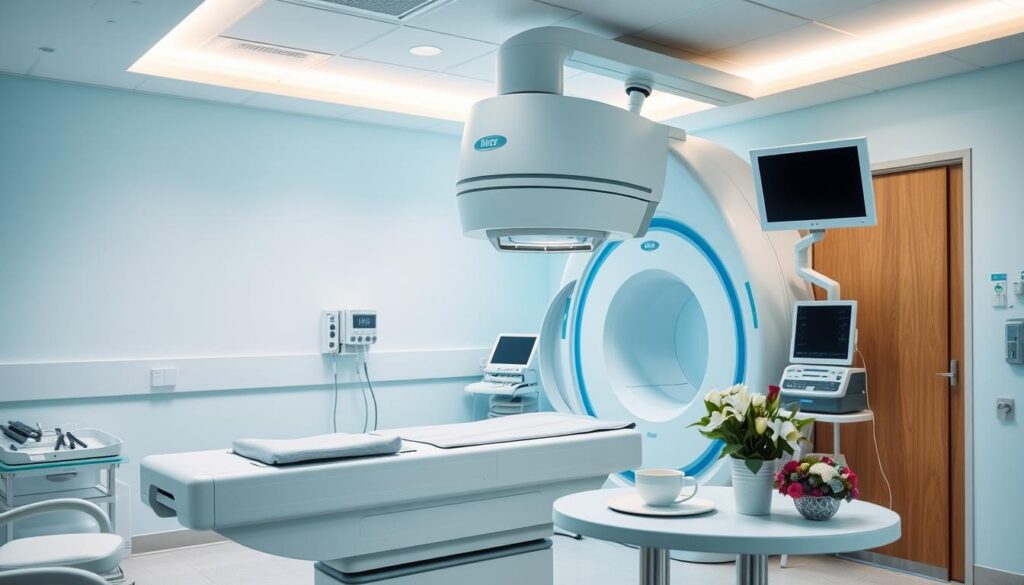
Understanding radiation therapy can boost your confidence during breast cancer treatment. Radiation oncology targets cancer cells and lowers recurrence risks. This guide covers external beam radiation and brachytherapy, helping you prepare for your treatment journey12.
Your radiation plan depends on your cancer stage and surgical history. Treatments usually happen five days a week for several weeks. They precisely target cancer cells while protecting healthy tissue2.
Radiation can prevent cancer from returning after surgery. It also helps control the disease’s progression1.
Breast cancer treatment has made great strides. New techniques like intensity-modulated radiation therapy (IMRT) offer more precise targeting. Image-guided radiation therapy (IGRT) also improves accuracy3.
These advanced technologies protect healthy tissues while effectively treating cancer cells. They help reduce side effects and improve treatment outcomes.
Key Takeaways
- Radiation therapy is a targeted treatment for breast cancer
- Multiple radiation techniques are available
- Treatment schedules vary based on individual needs
- Modern technologies improve precision and reduce side effects
- Radiation can be used at different stages of breast cancer
Understanding Radiation Therapy for Breast Cancer
Radiation therapy is a powerful treatment for breast cancer. It targets cancer cells with precision, helping patients fight their disease effectively4.
Your radiation therapy journey involves strategic planning and multiple treatment options. These are designed to combat cancer cells while minimizing side effects.
What is Radiation Therapy?
Radiation therapy uses high-energy rays to damage cancer cell DNA. This stops them from growing and dividing. External beam radiation therapy is the most common approach for breast cancer4.
Your oncologist will map out the treatment area during a simulation appointment. This ensures precise targeting of cancer cells.
Types of Radiation Treatment Options
- External Beam Radiation: Commonly used for all breast cancer stages4
- Hypofractionated Radiation: Reduces treatment duration to 4-5 weeks4
- Internal Radiation (HDR Brachytherapy): Recommended for early-stage breast cancer4
Treatment Timeline and Benefits
Radiation therapy follows a structured schedule. Standard whole breast radiation involves treatments five days a week for about 6-7 weeks2.
- Reduced cancer recurrence risk
- Improved local disease control
- Targeted approach to eliminating remaining cancer cells
| Radiation Type | Treatment Duration | Recommended Stage |
|---|---|---|
| External Beam | 6-7 weeks | All stages |
| Hypofractionated | 3-4 weeks | Early stages |
| HDR Brachytherapy | 3-5 days | Stage 1-2 |
Radiation therapy offers significant benefits, but it’s important to understand potential side effects. Short-term impacts may include fatigue, skin sensitivity, and breast discomfort42.
Your medical team will guide you on managing these symptoms during post-mastectomy radiotherapy.
Your personalized radiation therapy plan will be carefully crafted to maximize treatment effectiveness while minimizing potential complications.
Advanced Technologies and Treatment Delivery Methods
Radiation oncology has transformed breast cancer treatment. Cutting-edge technologies now provide precise and targeted external beam radiation approaches5. These methods aim to maximize treatment effectiveness while protecting healthy tissues6.
Your breast cancer treatment may use several innovative radiation techniques. These methods aim to improve accuracy and reduce side effects.
- Image-Guided Radiation Therapy (IGRT): Uses real-time imaging to ensure pinpoint accuracy during treatment5
- Intensity-Modulated Radiation Therapy (IMRT): Delivers radiation beams with varying intensities to protect surrounding healthy tissue6
- Surface Guided Radiation Therapy: Ensures precise patient positioning without invasive skin markers
Modern radiation technologies have greatly improved patient outcomes. Hypofractionated treatments now offer shorter radiation schedules. This reduces potential side effects and enhances the overall treatment experience5.
| Technology | Key Benefit | Precision Level |
|---|---|---|
| RapidArc® | 360-degree radiation delivery | High |
| Proton Therapy | Targeted radiation stopping at tumor site | Very High |
| Partial Breast Irradiation | Targeted radiation to lumpectomy site | Moderate |
Your radiation oncology team will choose the best treatment approach for you. They’ll consider your specific cancer staging and individual health factors6.
“Advanced radiation technologies offer hope and precision in breast cancer treatment” – Cancer Research Experts
Conclusion
Breast radiotherapy is vital in cancer treatment. Modern techniques have greatly improved precision and patient care. Advanced radiation methods are changing breast cancer treatment outcomes7. These strategies have reduced breast recurrences and boosted survival rates7.
New research shows promise in regional nodal irradiation. It helps prevent recurrence and improves overall patient survival8. Studies show newer techniques can lower breast cancer deaths by 2.8%8. They also improve overall survival by 2.9%.
Your treatment plan may use these new approaches. They aim to maximize effectiveness and minimize side effects. Radiation oncology keeps evolving, offering more targeted treatments.
Advanced tech makes your treatment more efficient. It also helps you recover better. Stay in touch with your healthcare team. Follow their advice and keep a positive outlook.
FAQ
What is radiation therapy for breast cancer?
Radiation therapy uses high-energy X-rays or particles to kill cancer cells. It’s often used after surgery to lower cancer recurrence risk. This treatment can help at almost every stage of breast cancer, including metastatic cases.
What are the main types of radiation therapy for breast cancer?
There are two primary types: external beam radiation and internal radiation (brachytherapy). External beam radiation delivers treatment from outside the body. Brachytherapy places radioactive sources directly inside or near the tumor site.
How long does radiation therapy typically last?
Most treatments last 3-7 weeks, with sessions five days a week. Each session is short, usually taking about 15-30 minutes.
What side effects can I expect from radiation therapy?
Common side effects include fatigue, skin irritation, and breast swelling. You may also feel mild discomfort. Your healthcare team will help manage these issues with proper care and rest.
Are there advanced radiation therapy technologies available?
Yes, advanced technologies like IGRT and IMRT offer precise targeting of cancer cells. These methods minimize damage to healthy tissue. Other new approaches include proton therapy and surface-guided radiation therapy.
Will radiation therapy completely cure my breast cancer?
Radiation therapy is part of a larger treatment plan. It greatly reduces cancer recurrence risk and helps control the disease. Often, it’s used with other treatments like surgery, chemotherapy, or targeted therapies.
How do I prepare for radiation therapy?
You’ll have a simulation appointment to map the target area. This helps doctors plan your treatment precisely. You’ll get advice on skin care, nutrition, and managing side effects.
Wearing comfy clothes and staying hydrated are good ideas.
Can radiation therapy be used for all stages of breast cancer?
Radiation therapy can help at almost every stage of breast cancer. This includes early-stage to metastatic cancer. Your oncology team will choose the best treatment for your specific case.
Source Links
- Radiation Therapy for Breast Cancer – https://www.ucsfhealth.org/education/radiation-therapy-for-breast-cancer
- Radiation for Breast Cancer | Breast Cancer Treatment – https://www.cancer.org/cancer/types/breast-cancer/treatment/radiation-for-breast-cancer.html
- Radiation Therapy for Breast Cancer – https://www.mskcc.org/cancer-conditions/breast-cancer/radiation-therapy-for-breast-cancer
- Understanding Radiation Therapy For Breast Cancer – https://aocancer.com/blog/understanding-radiation-therapy-for-breast-cancer
- Radiation therapy for breast cancer – https://www.mayoclinic.org/tests-procedures/radiation-therapy-for-breast-cancer/about/pac-20384940
- Recent advances progress in radiotherapy for breast cancer after breast-conserving surgery: a review – https://pmc.ncbi.nlm.nih.gov/articles/PMC10475720/
- A systematic overview of radiation therapy effects in breast cancer – PubMed – https://pubmed.ncbi.nlm.nih.gov/14596511/
- Recent advances in radiotherapy of breast cancer – Radiation Oncology – https://ro-journal.biomedcentral.com/articles/10.1186/s13014-020-01501-x

