
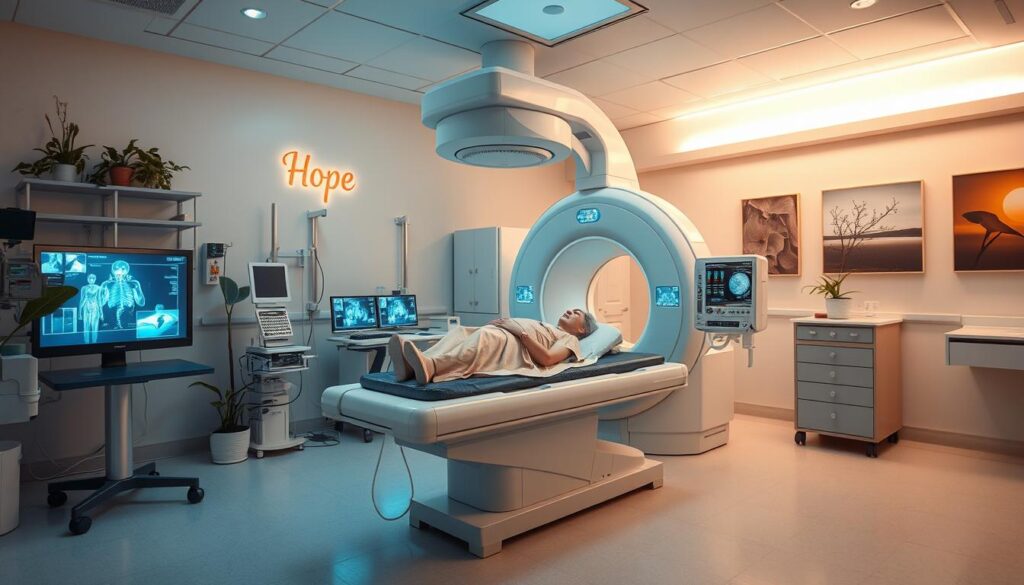
Cancer diagnoses can be daunting, but radiation therapy brings hope. This powerful treatment uses high-energy radiation to target cancer cells. It’s a key weapon in fighting cancer1.
Your radiation therapy journey is tailored to you. The goal is to maximize treatment effectiveness while protecting healthy tissue. This personalized approach ensures the best possible outcome.
Radiation therapy is a versatile oncology treatment. Doctors may recommend it alone or with surgery and chemotherapy1. The focus is on precise targeting of cancer cells.
Leading medical centers have expert radiation oncology teams. These specialists work together to create your optimal treatment plan2. They understand that each patient’s cancer journey is unique.
Your specific cancer type, location, and overall health are considered. This ensures a tailored approach to radiotherapy that meets your individual needs.
Key Takeaways
- Radiation therapy is a targeted treatment destroying cancer cells
- Treatment can be personalized for individual patient needs
- Multiple specialists collaborate to develop treatment plans
- Therapy can be used alone or with other cancer treatments
- Modern techniques minimize damage to healthy tissue
Understanding Your Treatment Journey
Radiation therapy is a key cancer treatment. It involves a careful, structured approach. Your journey will be a team effort for the best personalized care.
- Initial consultation
- Simulation
- Treatment planning
- Treatment delivery
- Post-treatment follow-up
Your Initial Consultation Experience
Your first meeting involves a thorough review of your medical history. A radiation oncologist will also do a full physical exam3. This helps decide if radiation therapy is right for you.
The Treatment Planning Process
Treatment planning is detailed and involves a team of experts3. These include radiation oncologists, medical physicists, and dosimetrists. Your plan aims to target the tumor while protecting healthy tissues4.
| Planning Stage | Duration |
|---|---|
| Simulation | Approximately 1 hour4 |
| Treatment Planning | Up to 1 week4 |
Safety and Quality Assurance Measures
Patient safety is crucial in radiation oncology. Your treatment will have many checks to ensure it’s precise and effective5. Tiny permanent tattoos help keep your position consistent during treatment5.
“Your safety and successful treatment are our highest priorities” – Radiation Oncology Team
You’ll have weekly check-ins with your medical team. These meetings address concerns and track your progress3. Over half of cancer patients get radiotherapy, making it a trusted option5.
Radiation Therapy: Types and Treatment Options
Radiation therapy uses various methods to target cancer cells precisely. External Beam Radiation delivers high-energy x-rays directly to tumors. Over half of cancer patients receive this treatment as part of their care plan.
- Intensity Modulated Radiation Therapy (IMRT): A precise method targeting tumors while minimizing damage to surrounding healthy tissue
- Stereotactic Body Radiation Therapy (SBRT): Delivers high-dose radiation to specific tumor locations
- Proton Therapy: An advanced approach using proton beams for exceptional targeting advanced radiation technologies
Brachytherapy is an internal radiation method. It places radioactive sources near or inside tumors. This works well for head, neck, breast, cervix, prostate, and eye cancers6.
“Radiation therapy can be curative, prevent cancer recurrence, or provide symptom relief”6
Treatment planning is vital for effective radiation therapy. It involves simulation, marking treatment areas, and choosing the best radiation types and doses. Your medical team will create a plan that targets tumors while protecting healthy tissue7.
Radiation sessions usually last 10 to 30 minutes. They’re often scheduled five days a week for several weeks7. The goal is to damage cancer cell DNA, stopping growth or killing cells6.
Conclusion
Radiation therapy is a powerful cancer treatment approach. Advanced techniques offer precise and targeted options designed to improve patient experiences. About 50% of cancer patients receive radiation therapy during their illness8.
Follow-up care is vital for managing potential side effects. Most patients experience mild symptoms like fatigue and skin changes. These typically resolve within 1 to 3 weeks9.
Open communication with your healthcare team is essential. It helps address concerns and ensures comprehensive cancer care10. Your medical team will provide personalized guidance throughout your treatment process.
The future of radiation therapy is bright. Ongoing research continuously improves treatment protocols. Innovative techniques like Intensity Modulated Radiation Therapy (IMRT) are expanding treatment options8.
FAQ
What exactly is radiation therapy?
Radiation therapy uses high-energy x-rays or particles to destroy cancer cells. It damages cancer cell DNA, stopping growth and division. Your treatment will target your specific cancer while protecting healthy tissues.
How many types of radiation therapy are there?
Several types of radiation therapy exist. These include external beam, internal radiation, and proton beam therapy. Specialized techniques like IMRT, SBRT, and SRS are also available.
The best type depends on your cancer type, location, and health factors. Your doctor will recommend the most suitable option for you.
What should I expect during my first radiation therapy consultation?
A radiation oncologist will review your medical history and perform a physical exam. You’ll discuss treatment options and undergo imaging studies to map your tumor location.
A team will then create a personalized treatment plan for your unique needs. This ensures you receive the most effective care possible.
Will radiation therapy hurt?
The actual radiation treatment is painless. You won’t feel anything during the procedure. However, you might experience side effects like fatigue or skin changes.
Your medical team will help manage these potential issues. They’ll provide supportive care throughout your treatment journey.
Can radiation therapy be used with other cancer treatments?
Yes, radiation therapy can be combined with other treatments. It often works well with surgery and chemotherapy. Your oncology team will determine the best strategy for you.
They’ll consider your cancer type, stage, and overall health when making decisions. This ensures you receive the most effective treatment possible.
What are the common side effects of radiation therapy?
Common side effects include fatigue and skin changes in the treatment area. You may also experience localized symptoms depending on the treated body part.
Most side effects are temporary and manageable. Your medical team will guide you on nutrition, skin care, and rest.
How long does a typical radiation therapy treatment take?
Treatment duration varies based on your specific cancer and plan. External beam radiation is usually given in small daily doses over several weeks.
Each session is brief, often lasting only 10-15 minutes. Your radiation oncologist will provide a detailed schedule tailored to you.
What happens after I complete radiation therapy?
After treatment, you’ll have regular follow-up appointments to monitor your progress. These check-ups assess treatment effectiveness and address any ongoing concerns.
They’re crucial for tracking your recovery and ensuring your continued health. Your medical team will support you throughout this process.
Source Links
- PDF – https://www.massgeneral.org/assets/MGH/pdf/cancer-center/radiation-oncology/cancer-radiation-guide-2017.pdf
- PDF – https://www.hopkinsmedicine.org/-/media/radiation-oncology/_docs/radonc_introductory-information-for–patients-final.pdf
- Radiation Therapy Process | Stony Brook Cancer Center – https://cancer.stonybrookmedicine.edu/RadiationTherapyProcess
- Radiation Therapy Treatment Process | OncoLink – https://www.oncolink.org/cancer-treatment/radiation/introduction-to-radiation-therapy/radiation-therapy-treatment-process
- Step-by-Step Through Radiation Therapy | SERO – https://treatcancer.com/blog/step-by-step-guide-to-radiation-therapy/
- Radiation Therapy for Cancer – https://www.cancer.gov/about-cancer/treatment/types/radiation-therapy
- Radiation therapy – Mayo Clinic – https://www.mayoclinic.org/tests-procedures/radiation-therapy/about/pac-20385162
- Cancer and Radiation Therapy: Current Advances and Future Directions – https://pmc.ncbi.nlm.nih.gov/articles/PMC3298009/
- Radiotherapy basics for family physicians: Potent tool for symptom relief – https://pmc.ncbi.nlm.nih.gov/articles/PMC1479480/
- Missed Radiation Therapy and Cancer Recurrence – https://www.cancer.gov/news-events/cancer-currents-blog/2016/missed-radiation-therapy

