
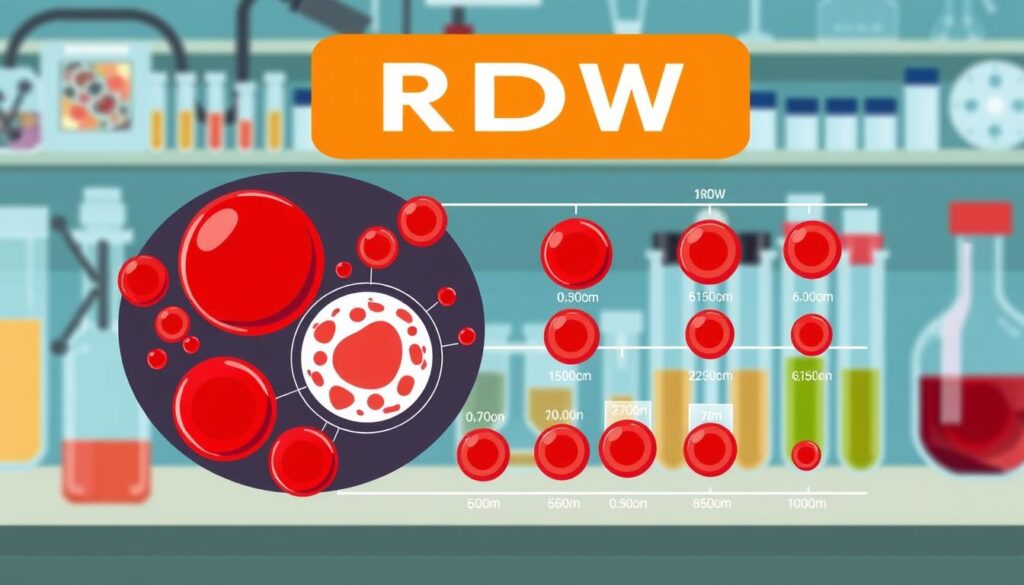
The Red Cell Distribution Width (RDW) blood test reveals crucial insights into your blood health. It measures the size variation of your red blood cells. This test is part of a complete blood count (CBC)12.
Red blood cells transport oxygen throughout your body. Large size variations in these cells could signal health issues. The RDW test helps detect problems like nutrient deficiencies and anemia2.
Doctors often recommend this test during routine check-ups or when investigating health concerns. It’s a simple blood draw that provides vital information about your overall health1.
Normal RDW ranges typically fall between 12% to 15%. However, this can vary depending on the laboratory3.
Key Takeaways
- RDW test measures the variation in red blood cell sizes
- Part of a comprehensive complete blood count (CBC)
- Helps diagnose anemia and potential nutrient deficiencies
- Normal RDW range is typically 12% to 15%
- Can indicate various underlying health conditions
Understanding RDW Blood Test and Its Significance
Your blood tells a story about your health. The RDW blood test helps decode this narrative. It provides insights into your red blood cells and potential health conditions.
The RDW lab test measures red blood cell size variation. It offers a detailed look at your blood’s makeup4. Doctors use it as part of a comprehensive blood analysis.
What Red Cell Distribution Width Measures
Red blood cells have a specific size range. Healthy cells usually measure 6.2 to 8.2 micrometers5. The RDW test uses a histogram to show these variations4.
Normal RDW Ranges and Values
Knowing your normal RDW range is key for accurate interpretation. The standard ranges vary slightly:
| Gender | RDW Range |
|---|---|
| Adult Females | 12.2% to 16.1% |
| Adult Males | 11.8% to 14.5% |
The Role of RDW in Blood Analysis
RDW blood work serves many diagnostic purposes. It can help identify various conditions, including:
A high RDW might show more variation in red blood cell size. This could signal underlying health concerns4.
Doctors look at your Mean Platelet Volume test with RDW. This gives a full picture of your blood health6. It can reveal potential medical issues.
RDW Test Results and Clinical Implications
RDW test results offer vital clues about your health. This test looks at red blood cell sizes. It helps doctors spot various medical issues through red blood cell analysis7.
Key factors in RDW test results include:
- Normal RDW Range: Typically falls between 11.6-14.6% for adults7
- High RDW Causes: Can indicate multiple health conditions
- Low RDW Levels: Often suggest more uniform red blood cell sizes8
High RDW levels might point to:
- Nutrient deficiencies (iron, vitamin B-12)
- Anemia variations
- Potential cardiovascular risks
Men with higher RDW quartiles face increased health risks. Those in the highest quartile have a 30% higher cancer risk9.
| RDW Level | Potential Implications |
|---|---|
| 11.6-14.6% | Normal Range |
| >14.6% | Potential Health Concerns |
Your RDW results provide a window into your body’s cellular health and potential underlying conditions.
RDW test results need careful analysis with other blood tests. A doctor can explain what your specific results mean8.
Conclusion
Your RDW blood test offers vital insights into your red blood cell health. It can reveal potential medical conditions and guide informed decisions about your wellness. Abnormal RDW values may signal various disorders, including anemia10.
The Red Cell Distribution Width Test is more than just blood analysis. Studies show RDW can predict health risks. Higher RDW levels are linked to increased mortality risk11. RDW levels above 14.5% might require closer medical attention10.
Your lifestyle greatly affects RDW values. Physical activity, sleep, and metabolic factors can influence these measurements12. The RDW test is a crucial screening method, not a definitive diagnostic tool.
Interpreting RDW results needs professional medical expertise. It should be considered alongside other diagnostic information10. Understanding your RDW results helps you take charge of your health.
Regular check-ups and a healthy lifestyle are key. Consult healthcare professionals to address potential health challenges revealed by this test. Your RDW results can be a valuable tool for maintaining overall wellness.
FAQ
What is an RDW blood test?
An RDW blood test checks the size and volume of your red blood cells. It’s part of a complete blood count (CBC). The test helps diagnose anemia and other blood disorders.
A small blood sample is taken from your arm vein. Then, it’s analyzed to measure red blood cell distribution.
What are normal RDW ranges?
Normal RDW ranges differ slightly between genders. For adult females, it’s 12.2% to 16.1%. For adult males, it’s 11.8% to 14.5%.
These percentages show red blood cell size variation. Lower percentages mean more uniform cell sizes.
What can high RDW results indicate?
High RDW results may point to nutrient deficiencies like low iron, folate, or vitamin B-12. They can also suggest various types of anemia.
Other possible indications include cardiovascular disease, kidney disease, liver disease, or underlying health issues.
How is the RDW test performed?
The RDW test is a simple blood draw from a vein in your arm. A healthcare professional takes a small blood sample.
A special machine analyzes the blood. It creates a histogram to measure red blood cell size and volume variation.
Do low RDW results mean anything?
Low RDW results aren’t usually linked to specific blood disorders. They often show that your red blood cells are uniform in size.
This is typically normal when other blood test results are standard.
How is the RDW test used in diagnosis?
Doctors use the RDW test as part of a full blood analysis. It works best when viewed alongside other complete blood count tests.
The results help investigate blood disorders and assess overall blood cell health. They also guide further diagnostic steps.
What conditions can the RDW test help identify?
The RDW test can spot various types of anemia. These include iron deficiency, thalassemia, and sickle cell anemia.
It also helps identify nutrient deficiencies. The test can show signs of chronic diseases affecting blood cell production or health.
How often should I get an RDW test?
The frequency of RDW testing depends on your health situation. Your doctor might suggest it during a routine check-up.
If you have existing health conditions, you may need more frequent tests. This is also true if you’re being monitored for a blood disorder.
Source Links
- RDW Blood Test (Red Cell Distribution Width) – Testing.com – https://www.testing.com/tests/rdw-test/
- Red Cell Distribution Width (RDW) Test – https://www.healthline.com/health/rdw-blood-test
- What Does RDW on a CBC Mean? – https://www.verywellhealth.com/red-cell-distribution-width-4583796
- RDW (Red Cell Distribution Width): MedlinePlus Medical Test – https://medlineplus.gov/lab-tests/rdw-red-cell-distribution-width/
- RDW Blood Test: What It Is, Procedure & Results – https://my.clevelandclinic.org/health/diagnostics/22980-rdw-blood-test
- Reference Range of the Red Cell Distribution Width (RDW), Interpretation of the Red Cell Distribution Width (RDW) Test, Collection and Panels – https://emedicine.medscape.com/article/2098635-overview
- What is RDW Blood Test & Why It’s Important – Centers Urgent Care – https://centersurgentcare.net/blogs-what-is-rdw-blood-test-amp-why-its-important/lab-work/
- What Is the Red Cell Distribution Width (RDW) Blood Test? – https://www.metropolisindia.com/blog/preventive-healthcare/understanding-rdw-blood-test-normal-range-and-interpretation
- Impact of red cell distribution width on future risk of cancer and all-cause mortality among cancer patients – the Tromsø Study – https://pmc.ncbi.nlm.nih.gov/articles/PMC4591771/
- RDW blood test: What Is It, preparation, and results – https://www.medicalnewstoday.com/articles/321568
- Red cell distribution width and cancer – https://pmc.ncbi.nlm.nih.gov/articles/PMC5107391/
- The role of red blood cell distribution width (RDW) in cardiovascular risk assessment: useful or hype? – https://pmc.ncbi.nlm.nih.gov/articles/PMC6861793/

