
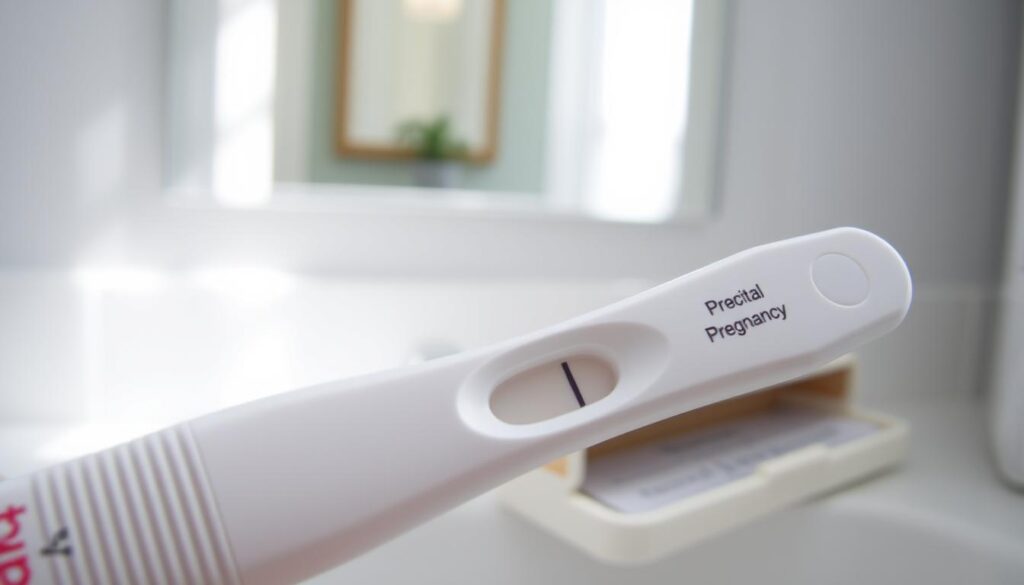
False positive pregnancy tests can be confusing and emotional. A positive result doesn’t always mean you’re pregnant. It’s important to understand how these tests work1.
Home pregnancy tests detect the hCG hormone in urine. Though highly accurate, various factors can cause false positives12. These include rare medical conditions, medication interactions, and user errors.
Pregnancy tests have different sensitivity levels. Some can detect lower amounts of hCG in urine2. This sensitivity might lead to misleading results, especially with certain health conditions1.
Key Takeaways
- Home pregnancy tests are not 100% foolproof
- Multiple factors can cause false positive results
- Always confirm results with a healthcare professional
- Understand your test’s sensitivity and instructions
- Consider potential medical conditions that might affect results
Understanding Home Pregnancy Tests and How They Work
Home pregnancy tests are simple yet powerful tools. They detect pregnancy by measuring hCG in urine. These tests help you find out if you’re expecting3.
The Science Behind HCG Detection
Pregnancy tests identify the hCG hormone produced during pregnancy. After fertilization, hCG levels rise rapidly, doubling every 48-72 hours4.
Test strips contain antibodies that react with hCG molecules. This reaction allows the test to detect pregnancy.
When to Take a Pregnancy Test for Best Results
Timing is crucial for accurate pregnancy test results. Experts recommend taking the test:
- After a missed period
- First thing in the morning when urine is most concentrated5
- At least one week after a missed menstrual cycle
Reading and Interpreting Test Results
Interpreting your pregnancy test requires careful attention. Home pregnancy tests can show results through:
| Result Type | Interpretation |
|---|---|
| Line Indicators | One line = Not pregnant, Two lines = Pregnant |
| Digital Displays | Typically show “Pregnant” or “Not Pregnant” |
| Symbol Results | Plus (+) or Minus (-) signs |
Pro tip: Always check the test’s expiration date. Follow instructions precisely to ensure accurate hCG detection3.
“Accuracy in pregnancy testing requires attention to detail and understanding of the process.”
Home pregnancy tests are highly reliable, but not 100% accurate. If you get a positive result, consult a healthcare professional4.
Common Causes of False Positive Pregnancy Tests
False positive pregnancy test results can be confusing and stressful. Various factors affect pregnancy test accuracy. Understanding these causes can help you handle potential anxiety better.
- User error when reading or timing test results6
- Chemical pregnancies affecting approximately 15-20% of conceptions6
- Recent pregnancy where hCG remains detectable7
Medical conditions can greatly impact test results. Rare situations like ectopic pregnancies may cause false positives7. Molar pregnancies and certain tumors can also trigger these outcomes.
Perimenopausal individuals face unique challenges. Their hormonal fluctuations can lead to inaccurate test results6.
| Cause | Likelihood |
|---|---|
| Medication Interference | High |
| Hormonal Conditions | Moderate |
| User Error | Very High |
Pro tip: Always confirm unexpected results with a healthcare professional.
Medications can cause pregnancy test errors. Fertility treatments and some antidepressants may trigger false positives6. Drugs containing hCG can also lead to inaccurate results.
For best results, follow test instructions carefully. Consider taking the test again if you’re unsure8. False positives are rare, but knowing their causes helps you interpret results better7.
Conclusion
Home pregnancy tests are highly reliable when used correctly. They can be nearly 99% accurate. However, various factors can affect the results.
If you get a false positive result, stay calm. Seek professional medical guidance. Blood tests and pelvic exams can confirm pregnancy status more definitively.
Your healthcare provider can help interpret results. They can address any concerns about unexpected test outcomes.
Test accuracy depends on several factors. Wait at least one week after a missed period for reliable results. Consult a medical professional9 if you have repeated false positives or health concerns.
FAQ
What causes a false positive pregnancy test?
A false positive pregnancy test can happen for various reasons. User error and recent pregnancy loss are common causes. Medical conditions affecting hormone levels can also lead to false positives.
Chemical, ectopic, or molar pregnancies may trigger inaccurate results. Certain medications, especially fertility treatments, can interfere with test accuracy.
How accurate are home pregnancy tests?
Most home pregnancy tests boast 99% accuracy when used correctly. However, several factors can affect their reliability. Testing too early or not following instructions can lead to inaccurate results.
When is the best time to take a pregnancy test?
For best results, test after a missed period. Use your first morning urine when it’s most concentrated. This approach ensures the highest accuracy for pregnancy detection.
Can medications cause a false positive pregnancy test?
Yes, some medications can interfere with pregnancy test results. Fertility treatments with hCG may cause false positives. Certain anti-anxiety drugs and hormonal treatments can also affect test accuracy.
How long can hCG remain in my body after a pregnancy?
HCG can stay in your body for up to 60 days after pregnancy ends. This lingering hormone might lead to a false positive test result.
What should I do if I get an unexpected positive result?
If you get a surprise positive result, seek medical advice. A healthcare professional can confirm your pregnancy status. They’ll provide guidance based on your specific situation.
How can I reduce the chance of a false positive pregnancy test?
To avoid false positives, follow test instructions carefully. Check the expiration date before use. Test during the recommended timeframe for best results.
Confirm your results with a healthcare provider for accuracy. They can perform additional tests to verify your pregnancy status.
Can medical conditions affect pregnancy test results?
Yes, some medical conditions can impact pregnancy test results. Ovarian cysts and pituitary disorders may alter hormone levels. Certain types of cancer can also affect test accuracy.
Source Links
- False-Positive Pregnancy Test: 7 Possible Causes – https://www.healthline.com/health/pregnancy/false-positive-pregnancy-test
- Home pregnancy tests: Can you trust the results? – https://www.mayoclinic.org/healthy-lifestyle/getting-pregnant/in-depth/home-pregnancy-tests/art-20047940
- False-positive pregnancy test: 5 possible causes – https://www.medicalnewstoday.com/articles/319803
- 7 Reasons Your Pregnancy Test Gave A False-Positive – https://www.thesource.org/post/reasons-your-pregnancy-test-gave-a-false-positive
- False Positive Pregnancy Test: Causes, Accuracy, and Next Steps – https://www.inovifertility.com/blog/false-positive-pregnancy-test/
- 5 Reasons Your Pregnancy Test Might Not Really Be Positive – https://www.health.com/false-positive-for-pregnancy-test-8421873
- False positives: Can a pregnancy test be wrong? – https://www.babycenter.com/getting-pregnant/pregnancy-tests/can-pregnancy-tests-be-wrong_41001652
- Ferty9 – https://www.ferty9.com/blog/what-are-the-causes-of-false-positive-pregnancy-test
- HCG pregnancy test: How it works and what the results mean – https://www.medicalnewstoday.com/articles/327284

