The global refugee crisis is at an all-time high, with over 110 million people forced to leave their homes. This includes 36.4 million refugees1. The world needs to act fast to help these people. It’s a big problem, with 86% of refugees living in poorer countries like those in the Middle East, Africa, and South Asia2.
So, what can we do to help those affected by the refugee crisis and global displacement?
The refugee crisis is complex, caused by things like war, persecution, and natural disasters. It’s led to a big increase in people being displaced. To tackle this, we need to know what a refugee is and understand the scale of the problem. For example, 1.2 million refugees need a new home2, and 89.3 million people were forced to leave their homes in 20211.
Key Takeaways
- The global refugee crisis has reached unprecedented levels, with over 110 million forcibly displaced people worldwide.
- Poorer countries are hosting the majority of refugees, with 86% of all refugees currently living in the Middle East, Africa, and South Asia2.
- 1.2 million refugees urgently need resettlement2.
- 89.3 million people were displaced from their homes at the end of 20211.
- Oxfam works within refugee and internally displaced persons (IDP) communities to provide aid in emergencies3.
- Wealthy countries have the financial resources to support their economies and provide vital humanitarian assistance and protection to conflict-affected populations with little investment1.
Understanding the Global Refugee Crisis
The global refugee crisis affects millions daily. It includes diverse displaced populations seeking safety and stability.
Definition and Key Statistics
A refugee is someone who has been forced to flee their country. This is due to persecution, conflict, or violence. As of June 2023, there were 110 million people forcibly displaced worldwide.
Among them, 36.4 million were refugees. 30.5 million were under UNHCR’s mandate. And 5.94 million were Palestine refugees under UNRWA’s mandate4.
Historical Context
The establishment of UNHCR in 1950 was a big step. It aimed to help Europeans displaced by World War II4. The 1951 Refugee Convention later defined “refugee” and outlined their rights. This laid the foundation for modern humanitarian assistance.
Factors Contributing to Displacement
Displacement is caused by many factors. These include ongoing conflicts, persecution, climate change, and economic instability. In 2023, the main causes were Afghanistan, the Democratic Republic of the Congo, and Syria4.
Climate disasters have also forced people to leave their homes. This adds to the crisis’s complexity5.
| Country | Number of Refugees | Primary Cause |
|---|---|---|
| Syria | 6.5 million | Conflict |
| Afghanistan | 6.1 million | Conflict |
| Ukraine | 6 million | Conflict |
| Venezuela | 5.6 million | Economic Instability |
| South Sudan | 2.2 million | Conflict |
The Impact of the Crisis on Host Countries
Host countries face many challenges and opportunities when they welcome refugees. The balance between immigration policies and refugee support services is key to these impacts.
Economic Challenges
The arrival of refugees can boost GDP in the short term through aid and spending6. In cities, refugees’ income helps the local economy6. Yet, this growth also brings strain on resources and higher costs6.
- Positive effects: More people working and local goods being made.
- Negative effects: Overcrowded public services and job competition.
Social Integration Issues
Integrating refugees into communities can be tough due to cultural and language differences7. These hurdles can cause social tensions and disparities, hitting vulnerable groups hard6.
- Challenges: Adapting to new cultures and keeping social harmony.
- Opportunities: More cultural diversity and community growth.
Political Consequences
Refugees’ presence can sway public opinion and spark policy debates, affecting national and international relations8. Immigration policies often change to reflect the new demographic, impacting stability and governance.
- Policy shifts: Stricter or more open immigration rules.
- International relations: Cooperation or conflict between countries.
| Impact Area | Positive Effects | Negative Effects | References |
|---|---|---|---|
| Economic | Short-term GDP growth, increased labor participation | Resource strain, higher costs, job competition | 6 |
| Social | Cultural diversity, community enrichment | Social tensions, language barriers | 76, |
| Political | Policy innovation, international cooperation | Policy debates, shifts in public opinion | 8 |
Solutions to Support Refugees
Helping refugees needs a mix of global efforts, strong policies, and local actions.
International Cooperation
The Global Compact on Refugees was approved in 2018. It helps countries work together to handle refugee situations well. The 2023 Global Refugee Forum showed this teamwork, with over 1,600 promises to help refugees and their hosts9.
Policy Recommendations
Good policies are key for refugees’ well-being. Important suggestions include:
- Increasing the number of refugees allowed into a country.
- Making the asylum process faster.
- Providing education and job chances.
Community-Based Approaches
Local efforts are very important for refugees to fit in. Groups like the International Rescue Committee (IRC) help in 29 U.S. cities. They offer food, homes, and jobs to refugees10. The IRC’s New Roots helps refugees grow food and become self-sufficient.
Helping refugees also means getting the community involved. This can be through volunteering, mentoring, or speaking up for their rights. These actions help right away and also lead to lasting solutions.
| Initiative | Description | Impact |
|---|---|---|
| Global Compact on Refugees | Framework for international cooperation | Enhanced refugee support through global pledges9 |
| IRC New Roots | Support for refugee farmers | Empowerment towards self-sufficiency10 |
| Resettlement Support Centers | Preparation and security vetting for refugees | Smoother integration into host communities9 |
The Role of NGOs and Charitable Organizations
Non-governmental organizations (NGOs) and charities play a key role. They offer refugee support services and humanitarian assistance. Their work helps asylum seekers start anew.
Case Studies of Successful Initiatives
UNHCR works with over 900 partners, including NGOs, to help refugees11. Médecins Sans Frontières won the Nansen Medal in 1993 for their refugee health work11.
How to Get Involved
You can help by volunteering, donating, or supporting refugee businesses. Organizations like ACAA in London offer free English lessons and legal help. This helps migrants fit into society12.
Raising Awareness and Advocacy
It’s important to raise awareness to change policies and support refugees. NGOs run campaigns to show the struggles of asylum seekers. They push for policies that welcome everyone11.
FAQ
What defines a refugee under international law?
A refugee is someone who has to leave their home country because of danger. This danger can be war, violence, or persecution. The 1951 Refugee Convention says refugees can’t go back home because they fear being persecuted. This fear is because of their race, religion, nationality, or political views.
How severe is the current global refugee crisis?
The global refugee crisis is very severe. Over 35 million people have been displaced. Countries like Syria, Afghanistan, and South Sudan are major sources of refugees. This shows how conflicts and instability affect people’s lives.
What are the primary causes of forced migration today?
Forced migration is caused by many things. These include ongoing conflicts, persecution, extreme weather, and economic troubles. These factors make it so people and families have to leave their homes. They seek safety and better living conditions.
How do refugee influxes affect the economies of host countries?
Refugees can be a challenge for host countries’ economies. They can strain public services and jobs. But, they also bring benefits. Refugees can work, fill important jobs, and help local economies grow through spending and starting businesses.
What challenges do refugees face in social integration?
Refugees face many challenges when trying to fit into a new society. These include cultural differences, language barriers, and social tension. To overcome these, refugees need education, language training, and community support. This helps build understanding and unity.
How do immigration policies influence the refugee crisis?
Immigration policies are very important in handling refugee flows. They help ensure refugees get the support they need. Inclusive policies can help refugees integrate well. But, strict policies can make it harder.
What international initiatives are in place to address the refugee crisis?
There are several international efforts to tackle the refugee crisis. The Global Compact on Refugees and the Global Refugee Forum are key. They focus on working together, sharing the burden, and finding ways to support refugees and host communities.
What are some effective policy recommendations for supporting refugees?
There are several good policies to support refugees. These include better legal protection, more education and healthcare, and helping them find jobs. Also, investing in community programs is important. These steps help refugees build a stable future.
How do community-based approaches benefit refugee integration?
Community-based approaches are very helpful. They involve local support and help refugees feel part of the community. Programs like mentorship and local partnerships give refugees the help they need to integrate well.
What role do non-governmental organizations (NGOs) play in the refugee crisis?
NGOs are very important in helping refugees. They provide essential services like shelter, education, and healthcare. They also advocate for refugees’ rights and influence policies to improve their lives.
How can individuals contribute to addressing the refugee crisis?
There are many ways individuals can help. Volunteering, donating, and advocating for policy changes are all important. Supporting refugee businesses and raising awareness also help create a welcoming environment for refugees.
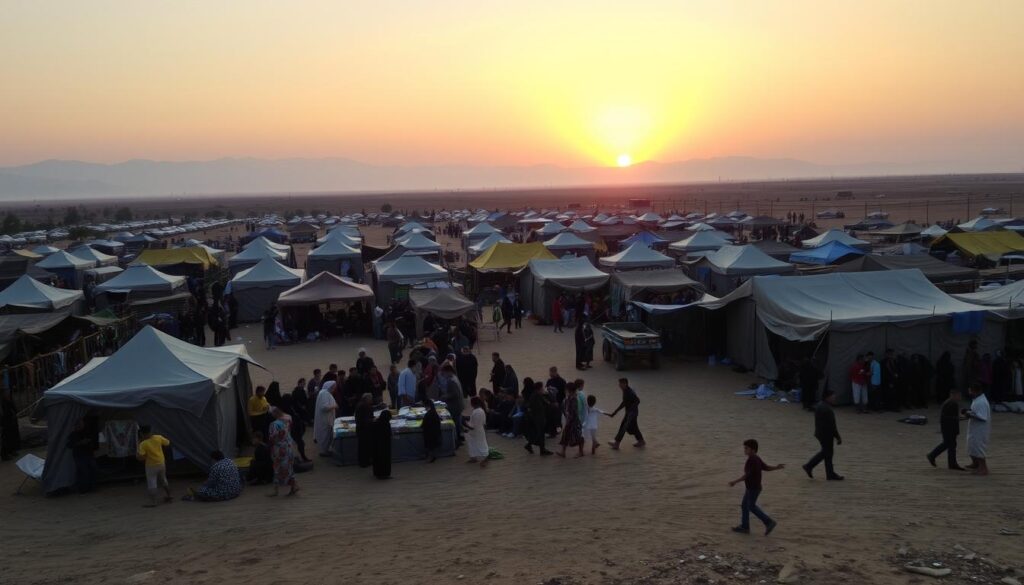
What are refugee camps, and how do they function in the context of the crisis?
Refugee camps are temporary places that provide shelter and services. They offer immediate help but are not a long-term solution. Refugees need a way to move to sustainable living conditions and permanent homes.
Source Links
- Four steps towards ending the refugee crisis – https://www.nrc.no/perspectives/2021/three-steps-towards-ending-the-refugee-crisis/
- 8 ways to solve the world refugee crisis – https://www.amnesty.org/en/latest/campaigns/2015/10/eight-solutions-world-refugee-crisis/
- Refugee and immigrant rights – https://www.oxfamamerica.org/explore/issues/humanitarian-response-and-leaders/global-refugee-crisis/
- Refugees | United Nations – https://www.un.org/en/global-issues/refugees
- The global refugee crisis, explained – https://concernusa.org/news/global-refugee-crisis-explained/
- Theory and evidence on the impact of refugees on host communities – https://blogs.worldbank.org/en/dev4peace/theory-and-evidence-impact-refugees-host-communities
- A perfect storm of crises: Why refugee-hosting countries need more support – ICMPD – https://www.icmpd.org/blog/2023/a-perfect-storm-of-crises-why-refugee-hosting-countries-need-more-support
- Refugees and Migrants: A Crisis of Solidarity | United Nations – https://www.un.org/en/academic-impact/refugees-and-migrants-crisis-solidarity
- Refugees in America – https://www.rescue.org/topic/refugees-america
- How to help refugees – https://www.rescue.org/uk/article/how-help-refugees
- Refugees Magazine Issue 97 (NGOs and UNHCR) – NGOs: our right arm | UNHCR – https://www.unhcr.org/publications/refugees-magazine-issue-97-ngos-and-unhcr-ngos-our-right-arm
- Behind The Numbers: the role of NGOs in the refugee crisis – https://blogs.lse.ac.uk/researchingsociology/2016/10/27/behind-the-numbers-the-role-of-ngos-in-the-refugee-crisis/