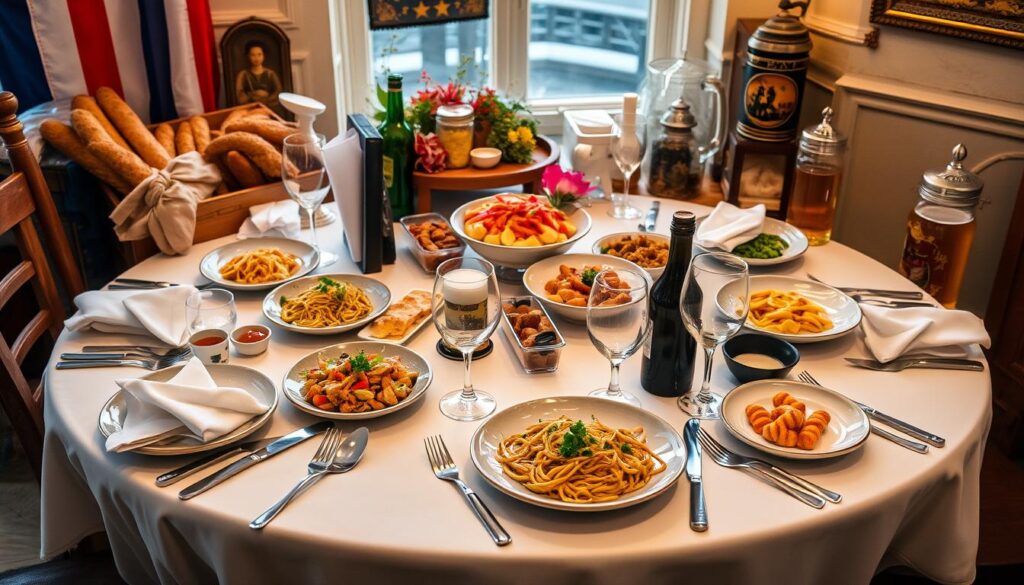
European restaurant culture offers a rich tapestry of dining traditions. It’s more than just ordering food; it’s a cultural journey. Each country presents unique customs that transform meals into memorable experiences1.
In Europe, dining is a leisurely affair. Meals with friends or colleagues can last up to three hours. This turns a simple restaurant visit into a social event1.
Water isn’t automatically served in many European countries. In France, Germany, Portugal, and Spain, you’ll need to order it specifically1.
French restaurants place bread directly on the tablecloth, not on a plate. Italian eateries have strict rules about pasta and pizza toppings1. In Russia, bread is highly respected and wasting it is discouraged1.
Knowing these etiquette rules helps you dine with confidence in Europe. Each country’s unique customs reflect its cultural heritage. Respect for food and traditions is key to enjoying European cuisine fully.
Key Takeaways
- European meals often last significantly longer than typical dining experiences
- Water is not automatically served in most European restaurants
- Bread and dining customs vary dramatically between countries
- Respect for food and dining traditions is paramount
- Each European country has unique restaurant etiquette
Understanding Dining Norms Across Different Countries
Global dining etiquette reveals fascinating cultural nuances. Each country brings unique traditions to the table. These traditions influence service style and chef interactions2.
Dining customs vary dramatically across different regions. They reflect deep-rooted cultural practices. Understanding these differences helps you navigate international restaurants with respect.
France: The Art of Culinary Refinement
French dining is an experience of elegant precision. Keeping your hands visible is crucial in their dining culture3. French chefs take pride in their cuisine.
Diners should appreciate each dish without making modifications2. Proper table posture is also important in France.
- Elbows should remain off the table
- Use Continental dining style
- Respect the chef’s original recipe
Italy: Celebrating Meal Traditions
Italian dining is a leisurely affair celebrating food and companionship. Meals can extend for hours. This allows guests to enjoy each course and engage in rich conversations3.
The ambiance is relaxed. There’s an emphasis on savoring every bite2.
| Dining Practice | Italian Norm |
|---|---|
| Meal Duration | 2-4 hours |
| Punctuality | Typically 15-30 minutes late |
| Pizza Etiquette | No additional condiments |
Spain: Embracing Culinary Comfort
Spanish dining culture embraces a relaxed atmosphere. Food is meant to be enjoyed without strict formality. Reviews often highlight warm service and social nature of Spanish restaurants3.
Finishing your entire plate shows appreciation in Spain2.
In Spain, dining is not just about eating—it’s about connecting with others and enjoying life’s simple pleasures.
Tipping Practices That Vary by Region
Restaurant tipping can be confusing, especially when traveling abroad. Learning local customs helps avoid awkward situations. It shows respect for traditions in different countries.
The Do’s and Don’ts of Tipping
Cultural norms for tipping differ greatly around the world. Exploring restaurant tipping practices uncovers interesting facts. Americans notice more tipping situations popping up recently.
- Research local customs before traveling
- Observe what locals are doing
- Be prepared for different service charge structures
How Service Charges Are Handled
Tipping practices vary widely across countries. European restaurants often charge 20% to 25% for service4. Many places include this in the bill, making extra tips unnecessary5.
| Region | Typical Tipping Practice |
|---|---|
| Europe | Service charge often included |
| United States | 15-20% tip expected |
| Asia | Tipping not customary |
Situational Tipping: When and How Much
Knowing when to tip helps with restaurant experiences. Most people link tipping to service quality. For great service, a higher tip shows extra appreciation.
Remember, tipping is about showing gratitude for good service, not just a mandatory payment.
Keep small change handy for tipping. Be ready to follow local customs4. Your thoughtful tipping can make a meal more culturally enriching5.
Table Manners to Keep in Mind
Good table manners can make your dining experience amazing. They help you feel confident in any setting. Proper etiquette helps avoid 95% of embarrassing situations6.
Hand placement and utensil use show cultural awareness. In Continental style, keep hands visible above the table. Use utensils with care7.
Avoid making noises while eating in refined settings. Don’t chew loudly or knock cutlery against plates7.
Mealtime conversation is an art in European dining. Engage in dialogue without dominating. Dining etiquette suggests waiting for others before eating6.
Take small, refined sips when drinking. Avoid gulping an entire glass at once7.
Bread is often served with the main course in Europe. In formal settings, it’s proper not to clink glasses when toasting8.
Master these details to dine with grace and cultural sensitivity. You’ll impress others with your refined manners.
FAQ
What are the typical dining customs in France?
French dining is a formal, leisurely experience. Keep your hands visible above the table. Use the Continental style of eating with your fork in the left hand.
Bread typically comes with the main course or cheese course. Meals can last up to three hours, focusing on socializing.
How long do meals typically last in European countries?
In Spain, France, and Italy, meals are social events lasting up to four hours. These are opportunities for conversation and relaxation. People enjoy multiple courses at a leisurely pace.
Are tipping practices the same across Europe?
Tipping practices vary across European countries. In many places, service charges are already included in the bill. In France, leaving small change is appreciated.
In Italy, tipping isn’t expected but welcomed. In Spain, rounding up the bill is common but not required.
What are some important table manners to remember in Europe?
European table manners differ from American customs. Keep hands visible and use utensils for all foods. Follow the Continental eating style.
In Germany and France, don’t cut lettuce in salads. In the UK, tilt soup away when eating. Be mindful of conversation etiquette.
Is water automatically served in European restaurants?
No, water isn’t automatically served in most European restaurants. You’ll need to order water specifically. Some countries have customs about when to drink certain types of water.
How important is bread in European dining?
Bread plays a significant role in European dining. In France, it’s placed directly on the table. Wasting bread is considered disrespectful in many European countries.
Bread is often served with main courses or cheese courses. It’s an integral part of the dining experience.
What are some unique dining customs in different European countries?
European countries have unique dining customs. In Denmark, people divide the last bits of shared dishes equally. The UK has specific rules for soup and port wine.
In France, hands must stay visible above the table. In Italy, arriving 15-30 minutes late for dinner is socially acceptable.
Source Links
- 11 Quirky European Table Manners You Need to Know – https://www.afar.com/magazine/the-weirdest-food-rules-from-around-europe
- Restaurant Etiquette Around the World | Lightspeed – https://www.lightspeedhq.com/blog/restaurant-etiquette-around-the-world/
- 12 Dining Rules To Obey When Eating Around The World – https://www.thetravel.com/dining-rules-obey-around-world-travel/
- The Current State of Tipping Etiquette in the United States – https://www.cntraveler.com/story/tipping-etiquette-in-the-united-states
- Confused about rules around tipping have changed? You’re not alone.— Harvard Gazette – https://news.harvard.edu/gazette/story/2023/12/expert-explains-whats-behind-the-changes-in-rules-around-tipping/
- A Man’s Guide to Dining Etiquette and Proper Table Manners – https://www.artofmanliness.com/character/etiquette/guide-dining-etiquette-table-manners/
- Good Table Manners: The 15 Golden Rules of Etiquette for Proper Dining – https://cucineditalia.com/en/table-manners-15-golden-rules-of-etiquette/
- 11 Fine-Dining Etiquette Rules You’ve Probably Broken Your Whole Life – https://www.foodandwine.com/news/fine-dining-etiquette-rules-youve-broken