
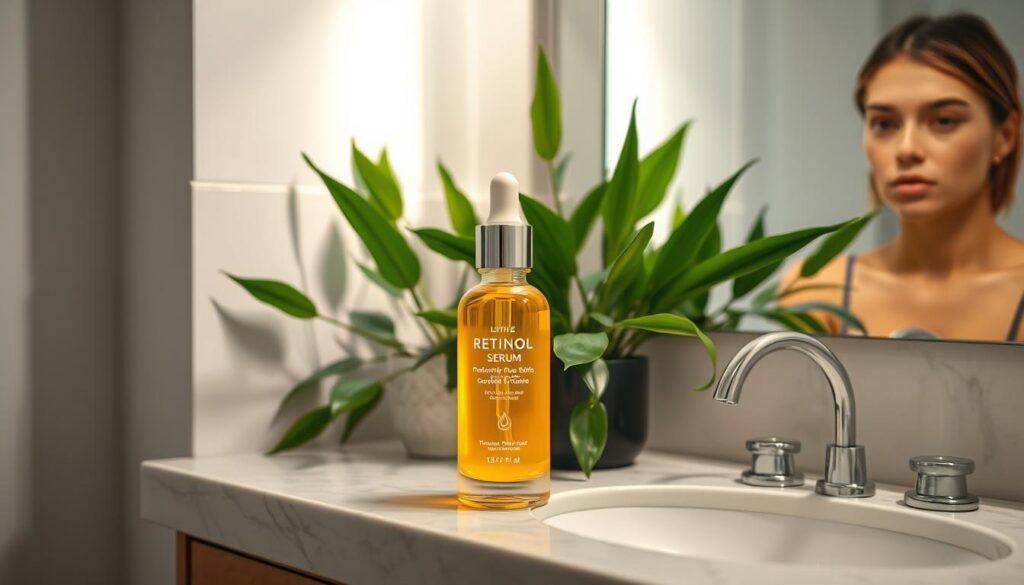
Retinol is a remarkable vitamin A derivative that transforms your skin care routine. This powerful ingredient boosts skin cell regeneration and fights aging signs1. It works wonders for your skin, treating acne and reducing wrinkles2.
Retinol became a skincare game-changer in the 1960s1. Over-the-counter products now target various skin conditions. They offer anti-aging properties that can dramatically improve your complexion2.
Retinol speeds up skin cell turnover and unclogs pores. It also stimulates collagen production. New users should start with a low concentration, typically below 0.3%1.
This allows your skin to adjust gradually. Expect to see visible results after several weeks of consistent use2.
Key Takeaways
- Retinol is a powerful vitamin A derivative for skin care
- Effective for treating acne, wrinkles, and skin texture
- Start with low concentrations for best results
- Visible improvements take several weeks
- Nighttime application is recommended
The Science Behind Retinol
Retinol is a game-changing skincare ingredient derived from vitamin A. It offers amazing benefits for skin health and anti-aging. This powerful molecule works deep in your skin to improve texture and tone.
Understanding Vitamin A Derivatives
Vitamin A derivatives come in various forms for skin care. The most notable types include:
- Retinol (over-the-counter version)
- Tretinoin (prescription-strength)
- Retinaldehyde
- Retinyl palmitate
Mechanism of Action in Skin
Retinol penetrates deep into the skin, stimulating key processes. It boosts collagen production and cell turnover3. This helps reduce wrinkles and even out skin tone.
Scientific research has shown its effectiveness for many skin concerns. Retinol triggers fibroblasts to make collagen fibers, improving skin appearance3.
Types of Retinoids Available
| Retinoid Type | Potency | Skin Concern |
|---|---|---|
| Over-the-Counter Retinol | Mild | General skin renewal |
| Prescription Tretinoin | Strong | Acne and advanced aging |
| Retinaldehyde | Moderate | Sensitive skin |
Picking the right retinoid depends on your skin needs and tolerance. Experts suggest starting with lower strengths and slowly increasing4. This helps avoid side effects like dryness or irritation.
Patience is key when adding retinol to your skincare routine. You may need weeks to see big improvements4.
How Does Retinol Work?
Retinol is a game-changer for your skin. This vitamin A derivative works deep within your skin’s layers. It triggers a remarkable process of skin cell regeneration.
Retinol transforms your complexion from the inside out. It penetrates to cellular levels, improving overall skin health. The magic of retinol happens through several key mechanisms:
- Accelerates cellular turnover
- Stimulates collagen production
- Regulates sebum production
- Promotes skin texture improvement
Retinol changes into retinoic acid when applied to skin. This acid directly impacts your skin cells5. It kickstarts wrinkle reduction by encouraging new cell growth.
Retinol also strengthens your skin’s protective function6. It acts on multiple skin cell types, including:
- Keratinocytes
- Fibroblasts
- Melanocytes
- Langerhans cells
“Retinol is the #1 dermatologist-recommended non-prescription skin-aging solution”6
Retinol helps unclog pores and regulate oil production. This makes it effective for acne treatment. Consistency is key – use it nightly for best results.
Expect to see improvements in 3-6 months. Your skin texture and tone will thank you7.
Benefits and Side Effects of Retinol Use
Retinol is a powerful skincare ingredient with remarkable benefits. It offers impressive results but needs careful application. Understanding its potential can help you use it effectively and safely.
Primary Skin Benefits
Retinol provides amazing anti-aging effects for your skincare routine. It works wonders on your skin’s appearance and health.
- Reduce fine lines and wrinkles8
- Improve skin texture and tone
- Fight acne and minimize pore size8
- Stimulate collagen production8
“Retinol is the strongest retinoid available without a prescription” – Skincare Experts
Understanding Potential Side Effects
The retinization process can cause initial skin sensitivity. You might notice some changes in your skin at first.
- Temporary dryness
- Mild redness
- Slight skin peeling9
| Retinol Concentration | Recommended Usage |
|---|---|
| 0.0015% – 0.3% | Start every other night9 |
| 0.3% – 0.5% | Gradually increase to daily use |
Who Should Be Cautious
Some people should be extra careful with retinol or avoid it completely. This includes those with specific conditions or circumstances.
- Pregnant or breastfeeding women9
- People with extremely sensitive skin
- Those with active rosacea
Sunscreen importance cannot be overstated when using retinol. Protect your skin from increased sun sensitivity. Apply a broad-spectrum sunscreen daily9.
Conclusion
Retinol, a vitamin A derivative, is a powerful skincare ingredient. It’s known for its impressive anti-aging properties. Scientific research shows it can regenerate skin cells and transform your complexion1011.
Retinol works by targeting multiple skin issues at once. After 12 weeks of use, you’ll see fewer fine lines and wrinkles10. It’s considered one of the best anti-aging ingredients available.
This wonder product can also tackle hyperpigmentation and sun damage. It even helps smooth out uneven skin texture10. To get the best results, use retinol wisely.
Experts suggest pairing retinol with hydrating ingredients like hyaluronic acid. Always apply sunscreen when using retinol products10. New research shows that newer retinoids are more potent and skin-friendly11.
Keep in mind that everyone’s skin reacts differently. Start with lower concentrations and introduce retinol slowly. Pay attention to how your skin responds.
With patience and proper use, retinol can be your skin’s best friend. It can help you achieve smoother, more youthful-looking skin over time.
FAQ
What exactly is retinol?
Retinol is a potent skincare ingredient derived from vitamin A. It’s a small molecule that penetrates deep into your skin. Retinol converts to retinoic acid, boosting cell turnover and collagen production.
How long does it take to see results from retinol?
Visible results from retinol typically appear after 6-12 weeks of consistent use. Patience is key when introducing retinol to your skincare routine. Start with a low concentration and use it 2-3 times weekly.
Is retinol safe for all skin types?
Retinol isn’t suitable for everyone. Those with sensitive skin or specific conditions should consult a dermatologist first. For normal to combination skin, retinol can be beneficial. Introduce it slowly to minimize potential irritation.
Can retinol help with acne?
Yes, retinol effectively treats acne. It regulates sebum production, unclogs pores, and speeds up skin cell turnover. This helps prevent new breakouts and fade post-acne marks.
What side effects should I watch out for when using retinol?
Initial side effects may include dryness, redness, flakiness, and increased skin sensitivity. To minimize these, start with a low concentration and use it sparingly. Always moisturize and wear sunscreen during the day.
If irritation persists, reduce frequency or consult a skincare professional.
How should I incorporate retinol into my skincare routine?
Use retinol 2-3 times a week at night, after cleansing and before moisturizing. Start with a low concentration and gradually increase frequency. Always follow with a moisturizer and use sunscreen during the day.
For best results, be consistent and patient with your retinol routine.
Are there different types of retinoids?
Yes, retinoids come in various forms with different potency levels. Over-the-counter retinol is gentler and great for beginners. Prescription retinoids are more concentrated and powerful.
Other forms include tretinoin, retinyl palmitate, and retinaldehyde.
Can I use retinol if I have sensitive skin?
If you have sensitive skin, look for encapsulated retinol or low concentration formulas. These are typically gentler and less likely to cause irritation. Always patch test first and start with minimal application.
Some people with sensitive skin may need to use retinol less frequently.
Source Links
- In-Depth Analysis of Retinol: The Powerhouse Anti-Aging Ingredient – https://oleceabeaute.com/blogs/blogs/in-depth-analysis-of-retinol-the-powerhouse-anti-aging-ingredient?srsltid=AfmBOoqB_A1RldjciEAGEvq0Q6vyE34GgQhgQB3tG2yPQlBuiobUVIvB
- Retinol: Cream, Serum, What It Is, Benefits, How To Use – https://my.clevelandclinic.org/health/treatments/23293-retinol
- The Science Behind Retinol – Art of Dermatology | New York – https://artofdermatology.com/the-science-behind-retinol/
- How Does Retinol Work? Facts, Side Effects, and More – https://www.healthline.com/health/beauty-skin-care/how-does-retinol-work
- Retinoids: active molecules influencing skin structure formation in cosmetic and dermatological treatments – https://pmc.ncbi.nlm.nih.gov/articles/PMC6791161/
- What Is Retinol & How Does It Work? | The Bar – https://www.neutrogena.com/the-bar/what-is-retinol-anti-wrinkle-cream
- Medical Dermatology Associates of Chicago: Dermatology – https://www.dermchicago.com/blog/the-beginners-guide-to-retinol
- What Is Retinol? Benefits, Uses, and How It Transforms Your Skin | Dermalogica® – https://www.dermalogica.com/blogs/living-skin/what-is-retinol
- Health Benefits of Retinol – https://www.health.com/retinol-benefits-7152524
- What is retinol and how does it work? – https://myfacedr.com/blogs/posts/what-is-retinol-and-how-does-it-work?srsltid=AfmBOoo9VLvLICQvNUab9yZvMdDcKwr-Ybb4BKtknB0pa18BwMtN-29b
- The Chemistry of Beauty: How Retinoids Enhance Skin Health – https://www.news-medical.net/health/The-Chemistry-of-Beauty-How-Retinoids-Enhance-Skin-Health.aspx

