
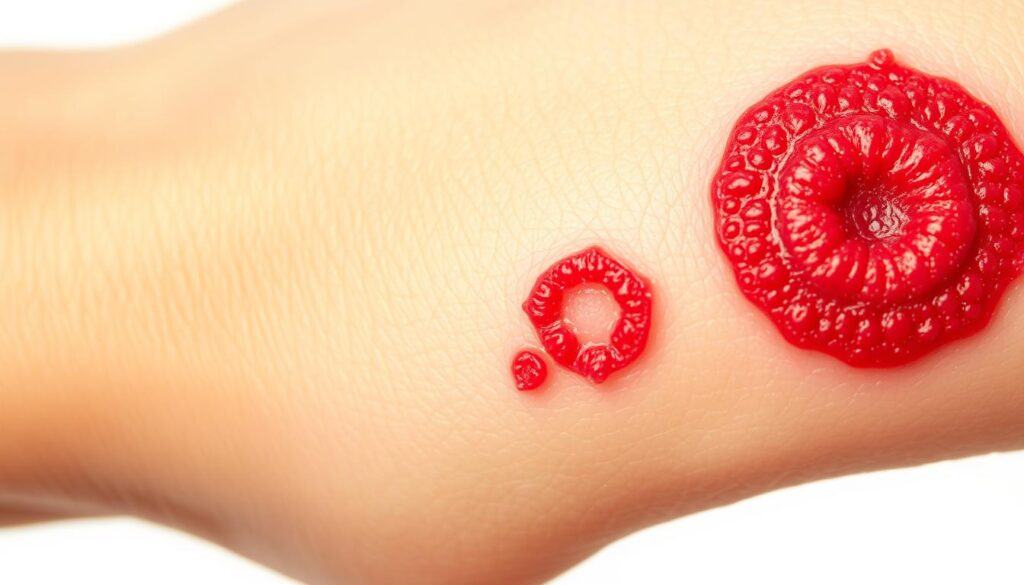
Ringworm is a common fungal infection affecting millions worldwide. It’s not caused by worms but creates ring-shaped rashes on the skin. This contagious condition causes itching and discomfort1.
Ringworm can develop on various body areas like the scalp, feet, groin, and nails. It spreads through contact with infected people, animals, objects, or soil1.
Warm, moist places like public showers and locker rooms are ideal for ringworm growth2. Understanding this infection is key for effective management and prevention.
Ringworm appears as a red, scaly, slightly raised rash that expands outward1. While it may look concerning, most cases are treatable with proper care3.
Key Takeaways
- Ringworm is a common fungal skin infection, not caused by worms
- The infection spreads through direct skin contact and contaminated surfaces
- Warm, humid environments increase ringworm transmission risks
- Different body areas can be affected by specific types of ringworm
- Proper treatment and hygiene can effectively manage the condition
Understanding Ringworm: Causes and Symptoms
Ringworm is a common contagious skin disease caused by fungal infections. It can affect various body parts. These dermatophyte fungi thrive in warm, moist environments and spread quickly.
What Causes Ringworm Infections
Specific fungi that feed on keratin in skin, hair, and nails cause ringworm4. About 40 fungal species can trigger this fungal infection. This makes it a widespread skin condition4.
- Direct contact with infected people or animals
- Touching contaminated surfaces
- Sharing personal items like towels or clothing
- Walking barefoot in public areas
Common Symptoms to Watch For
Spotting ringworm early helps manage the itchy rash better. Look for these signs of a ring-shaped rash:
- Circular, red patches with clearer skin in the center
- Persistent itching and burning sensations
- Scaly skin with raised, bumpy borders
- Potential hair loss or nail discoloration
Risk Factors and Susceptibility
Some people are more likely to get ringworm than others. Certain conditions raise your risk of this skin problem4:
| Risk Factor | Impact |
|---|---|
| Weakened Immune System | Higher infection likelihood |
| Hot, Humid Climates | Increased fungal growth |
| Contact Sports | Greater transmission risk |
“Understanding ringworm is the first step to effective prevention and treatment.”
Kids and athletes often get different types of ringworm. Scalp and athlete’s foot are the most common kinds4.
Treatment Options and Prevention Methods
Ringworm requires a targeted antifungal approach. The treatment strategy varies based on location and severity5. Most skin infections can be managed with over-the-counter solutions5.
Your treatment plan might include:
- Non-prescription antifungal creams
- Topical sprays or powders
- Specific medications targeting different body areas
Mild ringworm cases often respond to antifungal lotions like clotrimazole or terbinafine6. These work well for most skin infections5. Typically, you’ll need to apply these treatments for 2 to 4 weeks5.
Tougher infections need professional help. Scalp ringworm and nail fungus usually require prescription oral medications5. Doctors might prescribe:
- Griseofulvin
- Terbinafine
- Itraconazole
- Fluconazole
“Early detection and proper treatment are crucial for managing ringworm effectively”
Preventing ringworm is crucial. Keep skin clean and dry. Avoid sharing personal items. Be careful in public spaces like gyms and pools.
If symptoms persist, see a doctor6. Some fungal infections can be stubborn. Nail infections might take months to a year to heal5.
Always follow your doctor’s advice for the best treatment6. This ensures the most effective way to manage ringworm.
Conclusion
Ringworm is a fungal infection that requires proper management. Swift action and early symptom recognition are crucial. Children are especially at risk for this skin condition7.
Staying informed helps protect you and your loved ones. Knowledge is key to preventing transmission8.
Treatment options now include over-the-counter creams and prescription medications. Tea tree oil shows promise as a natural remedy7. For best results, consult a healthcare professional, especially if you’re immunocompromised8.
Prevention is vital for managing this common fungal skin condition. Practice good hygiene and avoid sharing personal items. Keep your living spaces clean to reduce infection risk.
Early detection and proper treatment help prevent ringworm’s spread78. Stay alert and seek medical advice when needed. With the right approach, you can overcome this treatable skin infection.
FAQ
What exactly is ringworm?
Ringworm isn’t caused by a worm. It’s a fungal skin infection caused by dermatophytes. It appears as a red, circular rash with clearer skin in the center.
The infection can affect various body parts. This includes the skin, scalp, feet, and nails.
How do you catch ringworm?
Ringworm spreads easily through skin contact with infected people or animals. It can also spread by sharing personal items or touching contaminated surfaces.
People at higher risk include athletes and those using public showers. Those with close animal contact are also more likely to get it.
What are the most common symptoms of ringworm?
The main sign is a red, circular rash with a raised, scaly border. It often causes itching or burning sensations.
You might notice flaking or peeling skin. In some cases, it can lead to hair loss or nail discoloration.
How can I treat ringworm at home?
For mild cases, use over-the-counter antifungal creams, sprays, or powders. Keep the affected area clean and dry to help healing.
Wash your hands often to avoid spreading. If it doesn’t improve in a week, see a doctor.
How long does ringworm typically last?
With proper treatment, mild ringworm usually clears up in 2-4 weeks. More stubborn cases may take longer to heal.
Infections affecting the scalp or nails might need 1-3 months of oral antifungal medication.
Can pets spread ringworm to humans?
Yes, pets like cats and dogs can spread ringworm to humans. Watch for circular patches of hair loss or scaly skin on your pet.
If you notice these signs, take your pet to a vet. This helps prevent spreading to family members.
How can I prevent getting ringworm?
Practice good hygiene to prevent ringworm. Don’t share personal items and wear shoes in public areas.
Keep your skin clean and dry. Wash hands often. Avoid contact with infected individuals or animals.
Source Links
- Ringworm (body): How to treat this skin infection-Ringworm (body) – Symptoms & causes – Mayo Clinic – https://www.mayoclinic.org/diseases-conditions/ringworm-body/symptoms-causes/syc-20353780
- Ringworm Signs, Causes & Treatment (for Teens) – https://kidshealth.org/en/teens/ringworm.html
- Ringworm and Fungal Nail Infections Basics – https://www.cdc.gov/ringworm/about/index.html
- Ringworm:Symptoms, Causes, Treatments – https://www.webmd.com/skin-problems-and-treatments/what-you-should-know-about-ringworm
- Treatment of Ringworm and Fungal Nail Infections – https://www.cdc.gov/ringworm/treatment/index.html
- Ringworm (body): How to treat this skin infection-Ringworm (body) – Diagnosis & treatment – Mayo Clinic – https://www.mayoclinic.org/diseases-conditions/ringworm-body/diagnosis-treatment/drc-20353786
- What Ringworm Looks Like on Different Skin Tones – https://www.verywellhealth.com/ringworm-overview-2632044
- PowerPoint Presentation – https://scholarlycommons.hcahealthcare.com/cgi/viewcontent.cgi?article=1046&context=northtexas2024

