
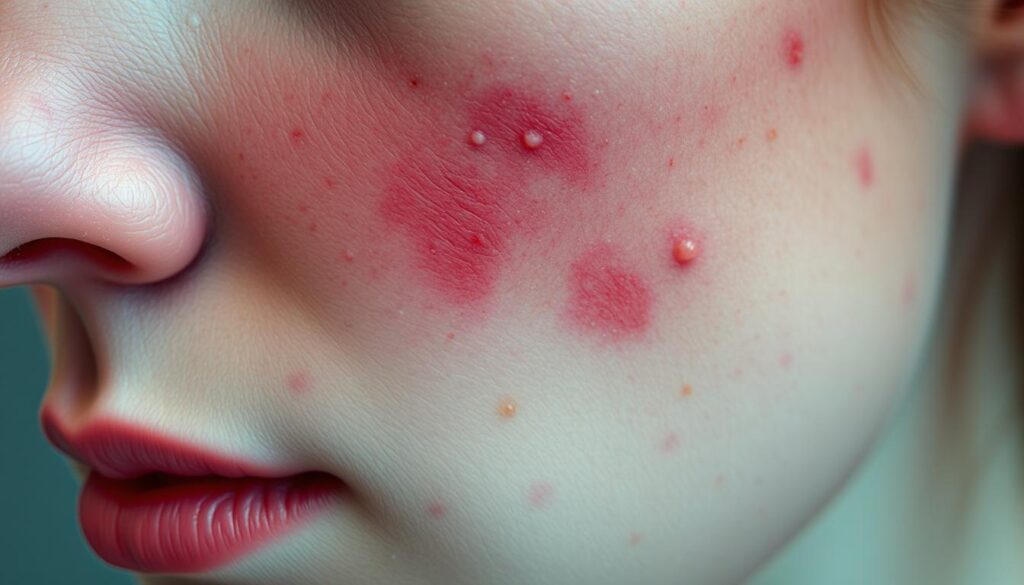
Rosacea is a complex skin issue affecting millions worldwide. It can drastically change your face and daily life. Many confuse it with other skin problems, making proper understanding crucial12.
This chronic condition usually appears around age 30. It starts with subtle facial redness that may worsen over time1. Rosacea often affects fair-skinned people who blush easily3.
Rosacea goes beyond skin-deep issues. It can hurt your self-esteem and social life. In fact, 90% of patients report lower self-confidence because of it3.
Knowing its triggers and symptoms is key to managing rosacea effectively. A personalized approach can help you tackle this challenging skin condition.
Key Takeaways
- Rosacea is a complex skin condition affecting facial appearance
- Most commonly develops after age 30
- Can impact emotional and social experiences
- Affects people with fair skin more frequently
- Requires personalized dermatology approach
What is Rosacea and Who Does it Affect?
Rosacea is a complex skin condition that impacts daily life and self-confidence. This chronic inflammatory disorder affects the face, causing persistent skin redness and other symptoms4.
Understanding Rosacea
Rosacea causes facial flushing and skin redness, which can be uncomfortable and emotionally challenging4. It involves complex interactions between skin, blood vessels, and the immune system.
Common Risk Factors
- Fair skin complexion
- Age between 30-60 years5
- Family history of skin conditions
- Genetic predisposition
Demographics Most Affected
Rosacea can impact anyone, but certain groups are more susceptible. Women are diagnosed more often, while men often experience more severe symptoms5.
| Demographic Group | Prevalence |
|---|---|
| Fair-skinned individuals | Higher risk |
| Women | More common diagnosis |
| Age range | 30-60 years |
About 14 million people in the United States are affected by rosacea5. Knowing your risk factors can help you manage this condition effectively.
“Rosacea is not just a skin issue, it’s a complex condition that requires personalized care and understanding.”
Rosacea isn’t caused by poor hygiene and isn’t contagious. Its exact origins remain unclear, possibly involving genetic, immunological, and environmental factors4.
Identifying the Symptoms of Rosacea
Rosacea is a complex skin condition that affects people differently. Recognizing its symptoms is key for early detection and management. This challenging disorder can manifest in various ways.
Common Signs to Look For
Rosacea presents several distinct symptoms that impact skin appearance and comfort. Key indicators are noticeable and can affect daily life.
- Persistent facial redness that resembles a constant blush
- Visible blood vessels (spider veins) across the cheeks and nose
- Acne rosacea-like bumps and swollen red patches
- Burning or stinging sensations on the skin6
Different Types of Rosacea
Rosacea isn’t a one-size-fits-all skin condition. Dermatologists have identified multiple variations, each with unique characteristics.
| Rosacea Type | Primary Characteristics |
|---|---|
| Erythematotelangiectatic | Persistent redness and flushing |
| Papulopustular | Acne-like breakouts and inflammation |
| Phymatous | Skin thickening, more common in men6 |
| Ocular | Eye-related symptoms affecting 50% of patients6 |
Triggers You Should Know
Managing rosacea involves understanding your personal triggers. While these can vary, some factors are common among patients.
- Sun exposure7
- Extreme temperatures
- Spicy foods
- Emotional stress
- Alcohol consumption
“Identifying your specific triggers is key to controlling rosacea symptoms and preventing flare-ups.”
Fair-skinned individuals are more prone to rosacea. It typically emerges after age 30. Recognizing symptoms and triggers helps in taking proactive steps.
Understanding your unique rosacea patterns is crucial. This knowledge empowers you to manage the condition effectively and improve your skin’s health.
Effective Treatment Options for Rosacea
Rosacea management requires a multi-faceted approach. Dermatologists suggest personalized plans to tackle this unique skin condition8. These strategies aim to reduce inflammation and control symptoms effectively.
Rosacea treatment options range from over-the-counter products to prescription medications. Each path offers ways to soothe your skin and manage symptoms. Understanding these choices is key to finding relief.
Over-the-Counter Solutions
Mild rosacea can be managed with several over-the-counter products. These include gentle cleansers for sensitive skin and mineral-based sunscreens. Anti-inflammatory moisturizers can also provide relief.
Prescription Medication Strategies
Prescription treatments offer stronger anti-inflammatory solutions. Dermatologists may suggest topical medications like azelaic acid. This can help 18 out of 100 people with symptoms9.
Brimonidine gel can reduce persistent redness for up to 12 hours10. In more severe cases, oral antibiotics might be prescribed.
Advanced Treatment Options
Laser therapy and intense pulsed light are advanced options for stubborn symptoms. These treatments can effectively reduce visible blood vessels and skin discoloration10.
“Effective rosacea management is about finding the right combination of treatments tailored to your specific symptoms.”
Tips for Managing Rosacea Daily
Rosacea requires gentle care and careful trigger management. A personalized strategy can help control symptoms and maintain healthier skin. Your sensitive skin needs thoughtful care to minimize flare-ups.
Choose products designed for sensitive skin. Use lukewarm water and mild, non-abrasive cleansers. Sunscreen is crucial for protecting your skin from potential triggers11.
Opt for zinc oxide or titanium dioxide formulations. Look for broad-spectrum options with SPF 30 or higher12. These will shield your skin from harmful sun exposure.
Dietary changes can help manage rosacea. Limit red wine and hot beverages. Add anti-inflammatory foods like leafy greens, berries, and omega-3 rich foods12.
Practice stress management through deep breathing and meditation. These techniques can help reduce potential flare-ups13. Managing stress is key to controlling rosacea symptoms.
Exercise can be tricky with rosacea. Choose low-intensity workouts in cooler environments. This approach minimizes skin irritation1112.
Keep a diary to track your triggers. Consult with a dermatologist regularly. These steps will help you refine your management strategy13.
FAQ
What exactly is rosacea?
Rosacea is a long-lasting skin condition affecting the face. It causes redness, visible blood vessels, and sometimes acne-like bumps. Rosacea usually starts after age 30 and can be managed with proper care.
Who is most likely to develop rosacea?
Fair-skinned people, especially those of northern or eastern European descent, are more prone to rosacea. Women aged 30-50 are often diagnosed, but men may have worse symptoms. Those with a family history or who flush easily have a higher risk.
What are the main symptoms of rosacea?
Key signs include facial redness, visible blood vessels, and swollen bumps. Some people feel burning or stinging sensations on their skin. Eye problems may occur in some cases.
Severe cases, mainly in men, can lead to a thickened nose skin called rhinophyma.
What triggers rosacea flare-ups?
Common triggers are sun exposure, extreme temperatures, spicy foods, and alcohol. Emotional stress, intense exercise, and certain skincare products can also cause flare-ups. Keeping a diary helps identify personal triggers.
How can I manage rosacea on a daily basis?
Use a gentle cleanser and non-irritating moisturizer daily. Always wear broad-spectrum sunscreen and avoid products that irritate your skin. Practice stress management techniques like meditation.
Limit known dietary triggers and stick to a consistent skincare routine.
What treatment options are available for rosacea?
Treatment plans are tailored to each person. Options include gentle skincare products and prescription topical medications. Severe cases may require oral antibiotics or light therapy for visible blood vessels.
Always consult a dermatologist for the most effective treatment plan.
Is rosacea contagious?
No, rosacea cannot spread through physical contact. It’s a chronic condition likely caused by genetics, immune system issues, and environmental factors.
Can rosacea be completely cured?
There’s no permanent cure for rosacea, but it can be effectively managed. Combine medical treatments, good skincare, and lifestyle changes to control symptoms. Many people successfully minimize flare-ups with proper care.
Source Links
- Rosacea: Symptoms and Treatment | Keystone Dermatology | Philadelphia, PA – https://www.keydermpartners.com/conditions/rosacea
- Rosacea – Symptoms and causes – https://www.mayoclinic.org/diseases-conditions/rosacea/symptoms-causes/syc-20353815
- All About Rosacea: Signs & Symptoms and Treatment – https://www.rosacea.org/patients/all-about-rosacea
- Rosacea – https://www.nhsinform.scot/illnesses-and-conditions/skin-hair-and-nails/rosacea/
- Rosacea – https://www.hopkinsmedicine.org/health/conditions-and-diseases/rosacea
- Rosacea: Signs and symptoms – https://www.aad.org/public/diseases/rosacea/what-is/symptoms
- Rosacea: Causes and Treatment | The Dermatology & Skin Cancer Surgery Center at Creedmoor – https://www.creedmoorskinsurgerycenter.com/conditions/rosacea
- Treatment Options for Acne Rosacea – https://www.aafp.org/pubs/afp/issues/2009/0901/p461.html
- Rosacea medication: Options and how they work – https://www.medicalnewstoday.com/articles/rosacea-medication
- Rosacea: Diagnosis and treatment – https://www.aad.org/public/diseases/rosacea/treatment/diagnosis-treat
- How to prevent rosacea flare-ups – https://www.aad.org/public/diseases/rosacea/triggers/prevent
- 6 Tips for Managing and Living with Rosacea – https://www.goldenstatedermatology.com/blog/6-tips-for-managing-and-living-with-rosacea/
- Rosacea – Diagnosis and treatment – https://www.mayoclinic.org/diseases-conditions/rosacea/diagnosis-treatment/drc-20353820

