
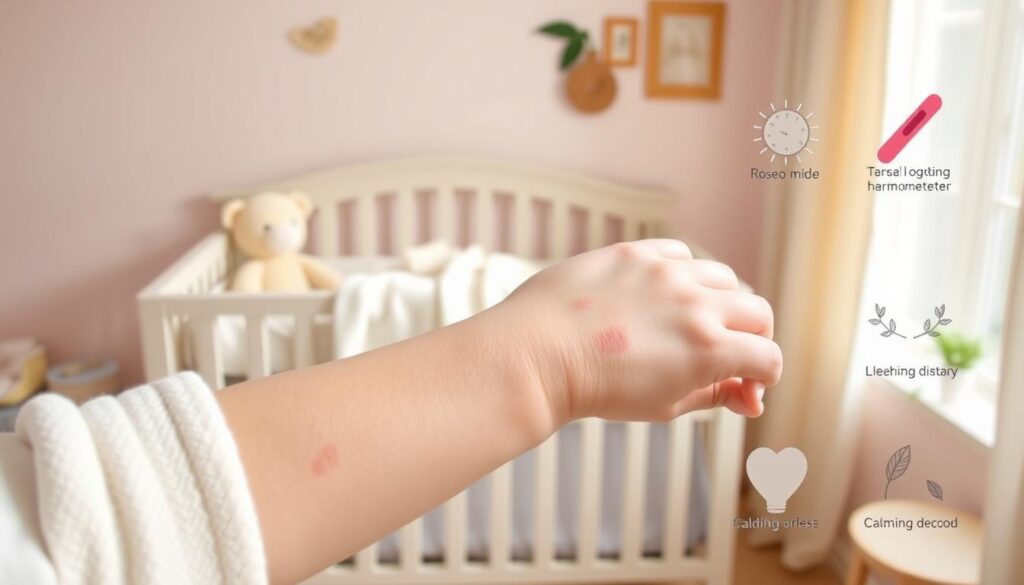
Roseola is a common viral rash affecting young children. It mainly targets kids between 6 months and 2 years old. Parents often worry when their little ones get this illness12.
The main sign of roseola is a sudden high fever. It can reach 102°F to 104°F and last 3 to 7 days1. By age two, 95% of children will have had this viral infection2.
Roseola is caused by a virus in the human herpes family. It’s usually mild and goes away on its own1. The illness follows a pattern: high fever, then a rash on the body, arms, and legs2.
Key Takeaways
- Roseola is a common viral infection in young children
- High fever is the primary initial symptom
- The illness typically affects children under 2 years old
- Most children recover without long-term issues
- The rash appears after the fever breaks
Understanding Roseola Symptoms and Signs
Roseola is a common childhood fever illness that often surprises parents. This viral infection mainly affects young kids, showing a distinct pattern of symptoms3.
The disease follows a specific progression parents should know about. Roseola symptoms often appear suddenly. It’s vital to recognize the key stages of this condition.
Initial Fever Phase
Roseola starts with an intense fever that can be alarming. Children’s temperatures typically range from 103 to 105 degrees Fahrenheit. This high fever usually lasts between 3 to 5 days34.
During this time, your child might become irritable and tired. They may also show less interest in eating.
- Irritable
- Less interested in eating
- More tired than usual
Characteristic Rash Development
Interestingly, not all children with roseola develop a rash. About 25% of infected kids get a measles-like rash after the fever breaks3.
This rash typically starts on the trunk and spreads outward. It consists of small pink or red spots that are flat and non-itchy4.
- Starts on the trunk
- Spreads to neck, face, and limbs
- Consists of small pink or red spots
- Tends to be flat and non-itchy4
Additional Physical Symptoms
Some children might show extra symptoms that help identify roseola. A small number may have febrile seizures. These affect 10% to 15% of kids aged 6 to 18 months4.
Look out for signs such as swollen lymph nodes and mild breathing issues. Some kids might also have slight stomach discomfort.
- Swollen lymph nodes
- Mild respiratory symptoms
- Slight gastrointestinal discomfort
Most children develop immunity after having roseola once. This makes repeat infections rare4.
How Roseola Spreads and Affects Children
Roseola is a common disease that spreads quickly among young children. It mainly affects infants and toddlers, causing concern for parents5. Children between 6 months and 2 years old are at the highest risk5.
The virus spreads through tiny droplets when infected kids talk, sneeze, or cough5. Children are most contagious during the fever phase. This happens before the typical toddler rash appears6.
- Transmission occurs through respiratory droplets
- Most contagious during fever phase
- Primarily affects children under 2 years old
Roseola’s incubation period lasts 5 to 15 days after exposure6. During this time, the virus can spread without visible symptoms. Some children might carry and transmit the virus without showing signs5.
“Understanding how roseola spreads is crucial for protecting your child’s health”
Febrile seizures can occur in 10-15% of young children with roseola5. These seizures happen due to rapid fever progression. Most kids develop immunity after the first infection, making repeat cases rare5.
There’s no specific way to prevent roseola. The best approach is good hygiene and close monitoring of your child’s health.
Managing and Treating Roseola at Home
Home care is vital for your child’s comfort and recovery from roseola. Effective treatment strategies can help you handle this common childhood illness confidently7.
Fever Management Techniques
Fever management is crucial in roseola care. Use acetaminophen or ibuprofen to ease your child’s discomfort, following pediatrician guidelines7.
Fevers can reach 105°F and typically last 3 to 5 days. They usually disappear suddenly7.
- Use age-appropriate fever medication
- Monitor temperature regularly
- Dress your child in lightweight clothing
Hydration and Comfort Measures
Keeping your child hydrated is key during roseola. Offer plenty of fluids and consider oral rehydration solutions. Rest is vital8.
When to Seek Medical Attention
Roseola usually resolves on its own. However, watch for warning signs. Seek immediate medical help for persistent high fever9.
Also, get help if you notice signs of complications.
Remember: Most children recover from roseola within a week without complications.
Good hand washing can help stop the spread of infection8. Symptoms may develop 9-10 days after exposure to roseola8.
Conclusion
Roseola infantum is a common, mild illness in infants. It typically affects children between six months and two years old. The disease starts with a high fever lasting three to seven days1011.
Your child’s immune system fights this viral infection naturally. Most kids develop immunity by school age. The pink rash appears 12 to 24 hours after the fever breaks11.
Monitoring and comforting your child are crucial during roseola. Medical research shows most children recover without issues. The rash signals your child’s body is fighting the infection well10.
Stay calm and attentive during your child’s roseola episode. Seek medical help if symptoms worsen. Remember, this illness is usually harmless and part of childhood development.
FAQ
What exactly is roseola?
Roseola is a common viral illness affecting kids aged 6 months to 2 years. It’s caused by human herpesvirus types 6 and 7. The illness brings a high fever followed by a pink or red rash.
Also known as sixth disease, it’s usually mild and clears up within a week. Most children recover without complications.
How can I recognize the symptoms of roseola?
Roseola typically starts with a sudden high fever, often over 103°F (39.5°C), lasting 3-5 days. After the fever breaks, a distinctive rash appears on the trunk and spreads.
The rash consists of small pink or red spots, flat or slightly raised. Your child might also be irritable, have less appetite, and show swollen lymph nodes.
How is roseola spread?
Roseola is highly contagious, spreading through respiratory droplets or saliva from infected people. The incubation period is 5 to 15 days after exposure.
Kids are most contagious during the fever phase and 24 hours after. Even people without symptoms can spread the virus.
How do I treat roseola at home?
Most roseola cases don’t need specific medical treatment and get better on their own. Focus on managing your child’s fever with acetaminophen or ibuprofen.
Avoid aspirin due to Reye syndrome risk. Keep your child hydrated with breast milk, formula, or rehydration solutions. Cool compresses can soothe the rash.
When should I contact a healthcare provider?
Seek immediate medical help if your child has a seizure or shows signs of dehydration. Also call if the fever lasts beyond 7 days.
For kids with weak immune systems, consult a doctor promptly. They may face more severe complications.
Can my child get roseola more than once?
Most children develop immunity after the first infection, making repeat cases rare. Those with compromised immune systems might be more susceptible to reinfection.
They may also experience more severe symptoms if they catch it again.
Are there any potential complications of roseola?
Complications are uncommon, but some children may have febrile seizures due to rapid temperature rise. Kids with weak immune systems face higher risks.
A healthcare professional should closely monitor these children for potential serious complications.
Source Links
- When Your Child Has Roseola – https://www.saintlukeskc.org/health-library/when-your-child-has-roseola
- Kids Health Info : Roseola infantum – https://www.rch.org.au/kidsinfo/fact_sheets/roseola_infantum/
- Roseola: Common children’s infection usually treated at home-Roseola – Symptoms & causes – Mayo Clinic – https://www.mayoclinic.org/diseases-conditions/roseola/symptoms-causes/syc-20377283
- What You Should Know About Roseola – https://my.clevelandclinic.org/health/diseases/15785-roseola-infantumsixth-disease
- Roseola (for Parents) – https://kidshealth.org/en/parents/roseola.html
- Roseola – https://www.hopkinsmedicine.org/health/conditions-and-diseases/roseola
- Roseola in Children – https://www.nationwidechildrens.org/conditions/health-library/roseola-in-children
- Roseola-Viral Rash – https://www.seattlechildrens.org/conditions/a-z/roseola-viral-rash/
- Roseola: Symptoms, Causes, and Treatments – https://www.webmd.com/skin-problems-and-treatments/what-is-roseola
- PDF – https://www.cocukenfeksiyondergisi.org/upload/documents/201702/2017-11-2-e053-059.pdf
- Roseola Infantum: Symptoms, Treatment and More – https://www.apollohospitals.com/diseases-and-conditions/roseola-infantum-symptoms-treatment-and-more/

