
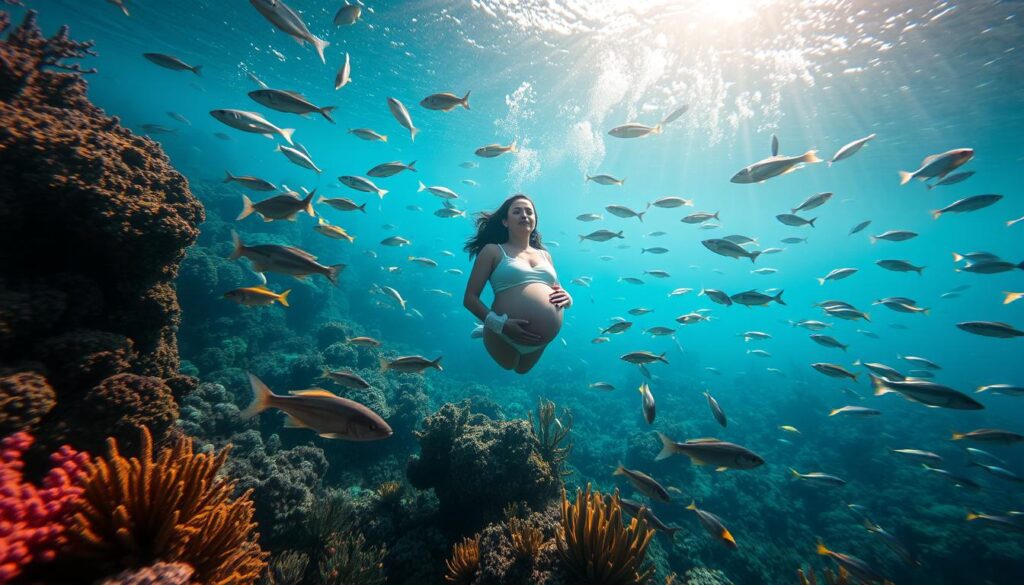
Seafood can be a nutritional powerhouse during pregnancy when chosen wisely. Understanding seafood safety and essential nutrients is crucial. Most pregnant women in the U.S. eat less than half a serving of seafood weekly1.
Experts suggest eating 2-3 servings of low-mercury seafood per week. This helps support your baby’s development2. Omega-3 fatty acids are vital for fetal brain and nervous system growth.
During the last trimester, about 65 mg of DHA is needed daily1. Proper preparation is key. Cook fish thoroughly to prevent foodborne illnesses.
The FDA and EPA offer guidelines for selecting safe, low-mercury fish. Good options include salmon, shrimp, and trout2.
Key Takeaways
- Consume 2-3 servings of low-mercury seafood weekly
- Prioritize omega-3 fatty acids for fetal brain development
- Avoid high-mercury fish species
- Cook seafood thoroughly to prevent foodborne risks
- Consult health professionals for personalized dietary advice
Benefits of Pregnancy and Fish Consumption
Fish is a powerful source of essential nutrients for healthy fetal development. Only 10% to 20% of pregnant women eat enough fish weekly. This means many miss out on crucial developmental benefits3.
Essential Nutrients for Fetal Development
Omega-3 fatty acids are vital for your baby’s brain and nervous system. They can boost your child’s IQ by 3 to 5 points3.
Eating 112 to 168 grams of fish weekly provides 70% of the maximum neurodevelopmental benefits. Your unborn child will greatly benefit from this nutrient-rich food.
- Key nutrients in fish include:
- Protein
- Omega-3 fatty acids
- Iron
- Zinc
- Iodine
- Choline
Recommended Serving Sizes
The FDA and EPA offer guidelines for fish consumption during pregnancy4. Pregnant or breastfeeding adults should eat 2 to 3 servings of “Best Choices” fish weekly.
Each serving should be about four ounces. This amount ensures you get the necessary nutrients without overdoing it.
| Fish Category | Weekly Servings | Mercury Level |
|---|---|---|
| Best Choices | 2-3 servings | Low |
| Good Choices | 1 additional serving | Moderate |
| Choices to Avoid | 0 servings | High |
Remember, the quality and type of fish matter as much as the quantity when supporting prenatal nutrition.
Fish oil supplements don’t offer the same benefits as eating fish. There’s no consistent evidence that they provide equal neurocognitive advantages3.
Choose fresh, low-mercury fish for the best nutritional benefits. Your developing baby will thank you for making this healthy choice.
Safe and Unsafe Fish Species During Pregnancy
Choosing seafood during pregnancy can be tricky. Mercury levels and sustainability are key factors to consider. Your health and baby’s growth depend on making informed choices5.
Experts suggest eating 8-12 ounces of fish weekly. However, not all fish are safe options5.
Best Fish Choices for Pregnant Women
- Wild salmon
- Shrimp
- Catfish
- Tilapia
- Cod
- Trout
These fish are safe seafood options with low mercury levels6. They offer vital nutrients for your postpartum diet without mercury risks5.
Fish to Limit or Avoid
| Avoid Completely | Limit to One Serving |
|---|---|
| Shark | Albacore tuna |
| Swordfish | Halibut |
| King Mackerel | Mahi-mahi |
| Tilefish | Snapper |
High mercury fish can harm your baby’s nervous system5. If you have a seafood allergy, ask your doctor about other nutrition sources7.
Always cook seafood to an internal temperature of 145°F to ensure safety during pregnancy6.
Conclusion
Navigating pregnancy nutrition can be tricky, especially regarding seafood safety. But with careful planning, you can enjoy fish’s benefits for prenatal health. Different countries offer unique guidelines, reflecting diverse diets and environmental factors8.
Science backs up fish consumption during pregnancy. The Avon Longitudinal Study showed that fish-eating moms had smarter kids9. Eating fish twice weekly can lower preterm birth risks and pregnancy depression9.
Experts recommend 2-3 servings of fish per week. Focus on DHA-rich options like salmon, trout, and herring9. It’s crucial to understand mercury exposure while valuing fish’s nutrients8.
The USA and Canada offer specific advice about mercury levels in seafood. This guidance helps pregnant women make safe choices8. Consult your doctor and use nutrition apps to create a personalized pregnancy and fish consumption plan8.
Your seafood choices during pregnancy can greatly impact your baby’s health. Pick low-mercury fish and follow recommended serving sizes. Stay informed about the latest nutrition advice for a healthy pregnancy journey.
FAQ
How much fish can I safely eat during pregnancy?
Eat 8-12 ounces of low-mercury fish weekly during pregnancy. This gives you 2-3 servings of essential nutrients. These nutrients help your baby grow while keeping mercury exposure low.
Which fish are safe to eat during pregnancy?
Safe fish include wild salmon, shrimp, catfish, and tilapia. Sole, flounder, haddock, pollock, cod, and trout are also good choices. You can eat these 2-3 times a week.
Always cook fish to 145°F (63°C) inside. Canned light tuna is another safe option.
What fish should I avoid during pregnancy?
Skip high-mercury fish like shark, swordfish, and king mackerel. Avoid tilefish from the Gulf of Mexico, orange roughy, and bigeye tuna. Marlin is also off-limits.
Don’t eat raw or undercooked seafood. This includes sushi, oysters, and smoked salmon. These can cause harmful infections.
Why are omega-3 fatty acids important during pregnancy?
Omega-3s, especially DHA, help your baby’s brain grow. They may boost your memory and lower depression risk. These fats might also reduce the chance of early birth.
Are fish oil supplements a good alternative to eating fish?
Experts say eating fish is better than taking supplements during pregnancy. You can get omega-3s from other foods too. Try flaxseed, canola oil, walnuts, or fortified foods.
How can I minimize mercury risks when eating fish?
Pick low-mercury fish and stick to recommended serving sizes. Check local fish warnings and cook seafood well. If you’re unsure, ask your doctor for advice.
Can I eat canned tuna during pregnancy?
Yes, but be careful. Canned light tuna is usually safe in small amounts. Limit albacore tuna to 4 ounces weekly. It has more mercury.
Choose low-mercury types and follow the guidelines. This helps keep you and your baby safe.
Source Links
- Can pregnant women eat fish? Your easy guide to eating fish – https://aboutseafood.com/can-pregnant-women-eat-fish/
- Can you eat fish while pregnant? – https://www.babycenter.com/pregnancy/diet-and-fitness/is-it-safe-to-eat-fish-if-im-pregnant-trying-to-get-pregnant_10319861
- Fish Consumption During Pregnancy: An Opportunity, Not a Risk – https://pmc.ncbi.nlm.nih.gov/articles/PMC7346675/
- Questions & Answers from the FDA/EPA Advice on Eating Fish – https://www.fda.gov/food/consumers/questions-answers-fdaepa-advice-about-eating-fish-those-who-might-become-or-are-pregnant-or
- Fish & Pregnancy: What is Safe to Eat? – https://www.healthychildren.org/English/ages-stages/prenatal/Pages/Fish-Pregnancy-What-is-Safe-to-Eat.aspx
- Eating Fish During Pregnancy: What Varieties Are Safe? – https://www.whattoexpect.com/pregnancy/diet/eating-fish-during-pregnancy/
- Advice About Eating Fish – https://www.fda.gov/food/consumers/advice-about-eating-fish
- A review of guidance on fish consumption in pregnancy: is it fit for purpose? – https://pmc.ncbi.nlm.nih.gov/articles/PMC6033312/
- Eating Fish Benefits Mother and Baby During Pregnancy – Fleur Women’s Health – https://fleurhealth.com/blog/eating-fish-benefits-mother-and-baby-during-pregnancy/

