
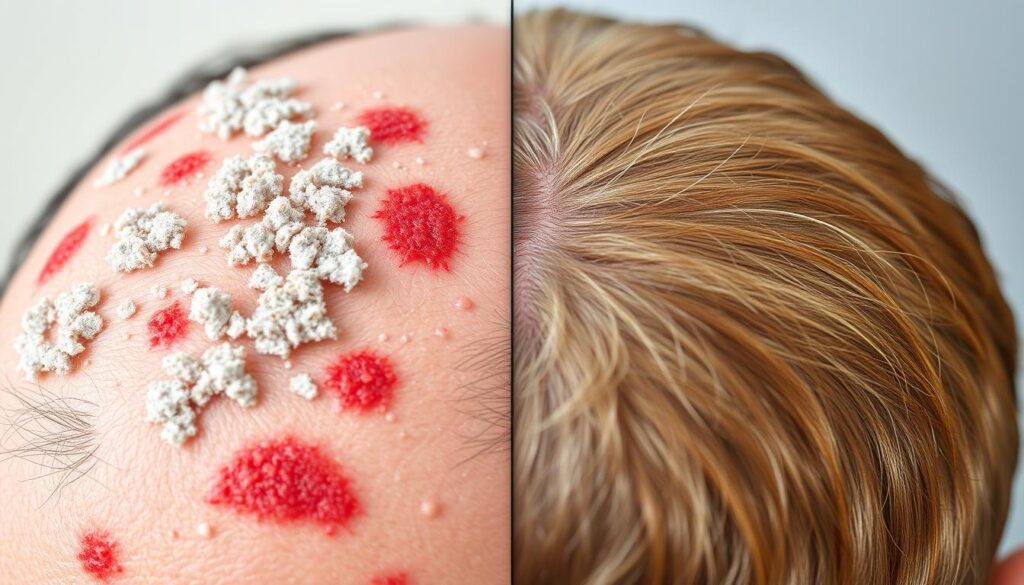
Scalp skin disorders can be tricky to manage. Your scalp might have conditions that look alike but need different care. Knowing the differences between scalp psoriasis and seborrheic dermatitis can help you handle symptoms better1.
Flaky scalps are more common than you might think. Scalp eczema occurs about four times more often than scalp psoriasis1. These skin problems affect people differently at various ages.
Scalp eczema usually starts in babies and kids. Psoriasis often shows up between ages 15 and 351.
Spotting these itchy scalp issues takes a keen eye. Scalp eczema looks like dry, scaly skin with red or gray patches. Your skin tone affects the color you see1.
Psoriasis forms thick layers with clearer edges. It can have silvery, white, or red scaly patches1.
Key Takeaways
- Scalp skin conditions vary in symptoms and age of onset
- Understanding differences is crucial for proper treatment
- Psoriasis and eczema affect different age groups
- Visual appearance can help distinguish between conditions
- Professional diagnosis is recommended for accurate treatment
Understanding Scalp Conditions and Their Impact
Scalp conditions affect millions globally, causing complex challenges. Grasping autoimmune diseases and fungal infections is key for effective management. This knowledge helps in treating scalp issues successfully.
Common Risk Factors and Age of Onset
Various factors influence scalp health, differing between conditions. Psoriasis usually appears between ages 15-35, affecting both genders equally2.
Seborrheic dermatitis is more common in young adults and those over 50. It occurs more frequently in males2.
- Age ranges for condition onset
- Gender distribution
- Genetic predispositions
Impact on Quality of Life
Scalp conditions can disrupt daily life significantly. Persistent inflammation and visible symptoms often lead to:
- Social anxiety
- Emotional distress
- Reduced self-confidence
Role of Genetics and Environment
Psoriasis and seborrheic dermatitis have complex origins. They involve both genetic and environmental triggers2. Potential triggers include:
| Condition | Potential Triggers |
|---|---|
| Psoriasis | Stress, skin injury, medications |
| Seborrheic Dermatitis | Hormone changes, harsh chemicals, stress |
“Understanding your unique scalp condition is the first step towards effective scalp treatments.” – Dermatology Research Institute
These conditions share similarities but need unique management approaches. Tailored care is essential for each specific scalp issue.
Scalp Psoriasis vs. Seborrheic Dermatitis: Key Differences
Scalp psoriasis and seborrheic dermatitis are tricky skin conditions with unique traits. Both cause red patches and dandruff, but they differ in important ways3.
Psoriasis is an autoimmune disease that speeds up skin cell growth. It creates thick, silvery-white scales on the skin.
Seborrheic dermatitis comes from fungal infections. It usually shows up as greasy, yellow-tinted scales4.
| Characteristic | Psoriasis | Seborrheic Dermatitis |
|---|---|---|
| Appearance | Raised, red patches with silver scales | Yellow, greasy scales |
| Affected Areas | Scalp, elbows, knees, hands | Primarily scalp and face |
| Underlying Cause | Autoimmune condition | Fungal yeast overgrowth |
Psoriasis affects about 10% of cases and has various forms. These include:
- Guttate Psoriasis (small dotted lesions)
- Plaque Psoriasis (raised red patches)
- Inverse Psoriasis (smooth, red lesions in skin folds)
“Not all skin conditions are created equal. Understanding your specific condition is the first step toward effective management.” – Dermatology Experts
Doctors need to diagnose both conditions professionally. They look at your medical history and examine your skin.
Sometimes, they use microscopes to tell these complex skin problems apart3.
Distinctive Symptoms and Clinical Features
Scalp conditions have unique traits that help with identification and management. Psoriasis and seborrheic dermatitis have subtle differences when causing a flaky scalp. Knowing these can aid in proper care5.
Scalp Psoriasis Characteristics
Scalp psoriasis shows clear signs that differ from other skin issues. It often has thick red patches with silvery-white scales. These patches can be very itchy and uncomfortable5.
- Thick, raised skin plaques
- Silvery-white scaling
- Potential skin cracking and bleeding
- Inflammation beyond the hairline
Seborrheic Dermatitis Signs
Seborrheic dermatitis looks different, with yellow, greasy scales and noticeable redness. It can cause dandruff-like flaking on your scalp. This condition may also create a burning feeling5.
| Characteristic | Psoriasis | Seborrheic Dermatitis |
|---|---|---|
| Appearance | Red, raised patches | Yellow, greasy scales |
| Prevalence | 2-3% of population | 11% of population |
| Age of Onset | 20-30 or 50-60 years | Infants or 30-60 years |
Complications and Related Conditions
Both conditions can lead to significant scalp health challenges. You might face hair loss or secondary infections. Psoriasis often links to other autoimmune issues6.
Seborrheic dermatitis can be affected by neurological disorders like Parkinson’s disease. Proper care is crucial for managing these scalp problems6.
Managing these scalp conditions requires careful attention and professional medical guidance.
See a doctor if you have ongoing itchy scalp or red patches. They can provide the right diagnosis and treatment6.
Conclusion
Scalp treatments for skin disorders need careful thought. Psoriasis and seborrheic dermatitis pose unique challenges. Effective management starts with knowing the differences between these conditions.
These skin issues may look alike, but they work differently. Seborrheic dermatitis affects adults over 30 and babies under 12 months7. Psoriasis usually impacts people aged 15 to 35.
The right treatments can greatly improve symptoms. They can boost your overall quality of life. Proper care helps control these skin problems.
Medical advice is key for correct diagnosis. Dermatologists can guide you through these complex conditions. They may suggest medicated shampoos, topical treatments, or advanced therapies8.
Each skin condition needs its own approach. What helps one person might not work for another. Be patient as you find the best solution.
Managing scalp disorders takes understanding and support. Work with your doctor to create an effective plan. Stay informed about your condition to better care for your skin7.
FAQ
What are the main differences between scalp psoriasis and seborrheic dermatitis?
Scalp psoriasis and seborrheic dermatitis have distinct appearances and causes. Psoriasis shows thick, red plaques with silvery-white scales beyond the hairline. It’s an autoimmune condition.
Seborrheic dermatitis appears as yellow, greasy scales on the scalp and face. It may be linked to an overreaction to skin yeast.
Who is most likely to develop these scalp conditions?
Scalp psoriasis often affects people aged 15-35, equally in men and women. Seborrheic dermatitis is more common in young adults and those over 50, especially males.
Both conditions can be triggered by stress, skin injuries, and environmental factors.
Can these conditions cause hair loss?
Yes, both scalp psoriasis and seborrheic dermatitis can lead to hair loss. Inflammation, itching, and scalp damage can disrupt normal hair growth.
With proper treatment and management, hair loss can often be minimized or prevented.
What are the typical treatment options for these scalp conditions?
Seborrheic dermatitis is treated with antifungal creams, medicated shampoos, and sometimes corticosteroids. Scalp psoriasis often needs more intensive treatments, like topical medications and light therapy.
Severe cases may require systemic medications or biologics. A dermatologist can create a personalized treatment plan.
Are these conditions contagious?
No, neither scalp psoriasis nor seborrheic dermatitis are contagious. Scalp psoriasis is an autoimmune condition, while seborrheic dermatitis relates to skin yeast.
Both can cause discomfort and may affect your quality of life.
How can I manage the symptoms at home?
Use gentle, fragrance-free hair products and avoid harsh chemicals. Manage stress and maintain good scalp hygiene for both conditions.
For psoriasis, moisturize and avoid skin injuries. For seborrheic dermatitis, wash regularly with medicated shampoos to control symptoms.
When should I see a doctor?
Consult a dermatologist if you have persistent scalp irritation, significant scaling, or hair loss. Seek help if the condition impacts your daily life.
Professional diagnosis is crucial to differentiate between these conditions and get proper treatment.
Source Links
- Scalp eczema vs. psoriasis: Differences, pictures and treatment – https://www.medicalnewstoday.com/articles/scalp-eczema-vs-psoriasis
- Psoriasis vs. seborrheic dermatitis: How to tell the difference – https://www.medicalnewstoday.com/articles/316911
- Seborrheic Dermatitis and Psoriasis: What’s the Difference? – https://www.webmd.com/skin-problems-and-treatments/psoriasis/seborrheic-dermatitis-psoriasis-difference
- Psoriasis vs. Seborrheic Dermatitis: Differences Explained – Soteri Skin – https://soteriskin.com/blogs/skincare-articles/psoriasis-vs-seborrheic-dermatitis?srsltid=AfmBOor2dIA9iZN9qYd_-NNQ2ofygQdO6BbXbcIK_qMqRKJp9sDSoAht
- Seborrheic Dermatitis vs. Psoriasis: 5 Notable Differences | MySebDermTeam – https://www.mysebdermteam.com/resources/seborrheic-dermatitis-vs-psoriasis-5-notable-differences
- Seborrheic Dermatitis: What Is It, Diagnosis & Treatment – https://my.clevelandclinic.org/health/diseases/14403-seborrheic-dermatitis
- Seborrheic Dermatitis vs Psoriasis: Understanding The Difference – https://happycappyshampoo.com/seborrheic-dermatitis/seborrheic-dermatitis-vs-psoriasis/?srsltid=AfmBOopNUJ7rwvV62cYVnhlfGzcd50oT26Xy_RYNZ96l4XjIIuNw3ljj
- Seborrheic Dermatitis vs Psoriasis : Combating Both | Prime IV – https://primeivhydration.com/blog/seborrheic-dermatitis-vs-psoriasis-combating-both/

