
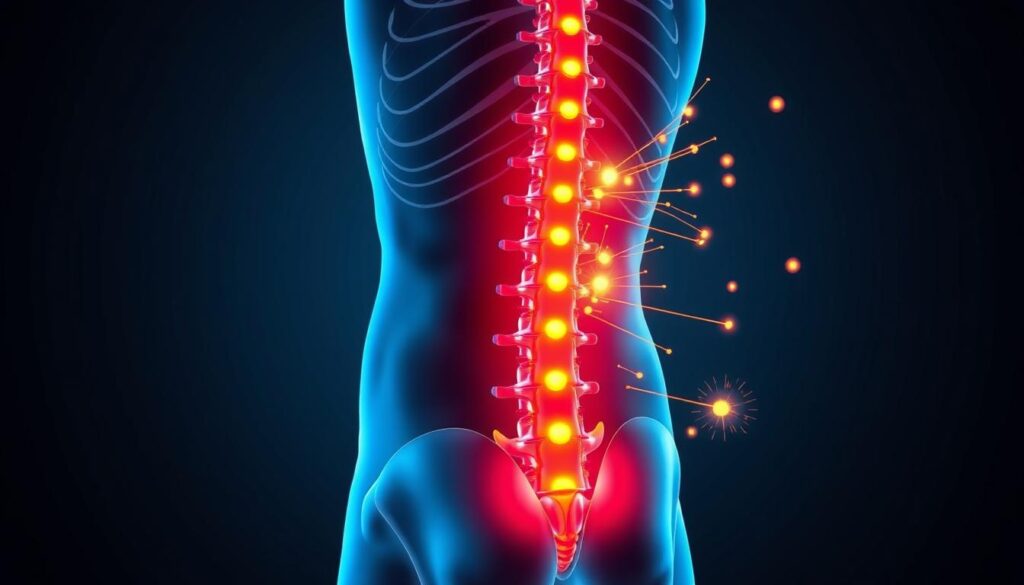
Sciatic nerve pain can disrupt your daily life. It’s a complex condition affecting millions, causing lower back pain that radiates down the leg. This nerve issue can appear suddenly or develop slowly, depending on your health.
Most people with sciatica are between 20 and 50 years old. Herniated disks are often the culprit. The pain varies from mild discomfort to sharp, burning sensations that interrupt your routine.
Understanding sciatica is key to managing your symptoms effectively. While it usually affects one leg, rare cases can involve both. Each person’s experience is unique, making personalized medical guidance essential.
Key Takeaways
- Sciatica affects adults primarily between 20-50 years old
- Symptoms can range from mild aches to intense pain
- Herniated disks are a common underlying cause
- One leg is usually affected, but both can be impacted
- Professional medical advice is crucial for proper management
What is Sciatica and Its Causes?
Sciatica is a painful condition that affects daily life. It occurs when the sciatic nerve in your lower back gets irritated or compressed3.
Understanding Sciatica’s Definition
This nerve problem usually affects one side of your body. Pain can range from mild to sharp and burning. Not all lower back pain is sciatica, but it has unique symptoms4.
Common Causes of Sciatica
Several conditions can trigger sciatica:
- Herniated disc: A bulging disk pressing on the nerve root3
- Spinal stenosis: Narrowing of the spinal canal
- Piriformis syndrome: Muscle spasms compressing the nerve
- Radiculopathy: Nerve root compression
Risk Factors for Developing Sciatica
Your chances of getting sciatica increase with certain factors:
| Risk Factor | Impact on Sciatica |
|---|---|
| Age | Most common between 30-50 years old5 |
| Occupation | Heavy lifting, prolonged sitting |
| Health Conditions | Obesity, diabetes |
“Understanding your risk factors can help prevent and manage sciatica effectively.”
About 80-90% of patients get better without surgery5. Spotting early signs and getting proper treatment can speed up your recovery.
Symptoms to Watch For
Sciatica can disrupt your daily life. Knowing the symptoms helps catch it early. Your body sends signals that point to this nerve problem.
Recognizing Sciatica Symptoms
Sciatica shows distinct pain patterns that affect how you move6. The symptoms often include:
- Pain radiating from lower back to buttock and down one leg6
- Burning or shooting pain sensations
- Nerve compression causing numbness in affected areas
- Muscle weakness in leg or foot
Differentiating Symptoms from Other Conditions
Neuropathy can look like sciatica, making diagnosis tricky. Key differences include the specific pain pathway and intensity of leg pain.
About 40% of American adults will face sciatica. Knowing the unique symptoms is vital7.
When to Seek Medical Attention
Some sciatica signs need quick medical help. Watch for these warning signs:
- Severe, persistent pain
- Sudden muscle weakness
- Loss of bladder or bowel control8
- Difficulty walking or maintaining balance
“When nerves become inflamed, their communication with the brain gets interrupted, potentially causing dangerous symptoms”7
If symptoms last or get worse, see a doctor. This ensures proper diagnosis and treatment6.
Effective Treatment Options
Sciatic nerve pain has many treatment options. Understanding these can help you find the best relief strategy. Your specific condition will determine the most effective approach.
Conservative Treatments for Sciatica
Conservative approaches are often the first step. Cold therapy can reduce inflammation and muscle spasms. Apply ice packs for 15-20 minutes at a time9.
Heat therapy helps heal by easing muscle tension. It also improves joint mobility9. Both methods can provide significant relief.
- Over-the-counter pain medications
- NSAIDs like ibuprofen9
- Rest and gentle stretching
Physical Therapy and Exercises
Physical therapy is key in managing sciatic nerve pain. It focuses on strengthening your spine and core muscles. Your therapy may include walking, swimming, and resistance training9.
“Movement is medicine for sciatica patients” – Sports Medicine Specialist
Surgical Interventions: When They Might Be Necessary
Surgery becomes an option when other treatments fail. Microdiscectomy removes part of a herniated disc to relieve nerve pressure9.
Doctors may recommend surgery for:
- Severe weakness
- Loss of bladder control
- Persistent pain lasting over a month10
Always consult with a healthcare professional to determine the most appropriate treatment plan for your specific sciatic nerve pain condition.
Prevention and Lifestyle Changes
Protecting your spinal health is key to managing sciatica. Regular exercise, like walking and swimming, strengthens muscles and improves flexibility. Maintaining a healthy weight reduces pressure on your spine and nerves11.
Core strength is vital for sciatica prevention. Planks, bridges, and leg raises support your spine and minimize nerve compression. Good posture is crucial, especially when sitting for long periods11.
Invest in ergonomic chairs and create a spine-friendly workspace. Take frequent breaks and stretch to ease muscle tension. This helps promote better spinal alignment11.
Your lifestyle choices affect sciatic nerve health. Manage stress through meditation or yoga to reduce muscle tension. Eat an anti-inflammatory diet rich in fruits and vegetables11.
Quitting smoking can improve blood flow and reduce inflammation. These changes can significantly lower your risk of developing sciatica11.
FAQ
What exactly is sciatica?
Sciatica is pain that travels along the sciatic nerve path. It starts in the lower back and can spread through the buttocks and leg. This condition can cause discomfort and affect daily activities.
What are the most common causes of sciatica?
Herniated discs, bone spurs, spinal stenosis, and piriformis syndrome are frequent causes. These can compress or irritate the sciatic nerve. This leads to pain, numbness, and tingling along the nerve’s pathway.
Who is most at risk for developing sciatica?
People aged 20-50, those with obesity, and individuals who lift heavy objects are at higher risk. Prolonged sitting and diabetes also increase the chances. Pregnant women may be more susceptible due to hormonal changes.
What are the typical symptoms of sciatica?
Sciatica symptoms include pain from mild aches to sharp, burning sensations. These typically follow a path from the lower back to the buttock. You might also experience numbness, tingling, or muscle weakness in the affected leg.
When should I seek medical attention for sciatica?
Seek help if you have sudden numbness or significant muscle weakness. Loss of bowel or bladder control is also a red flag. Pain following a violent injury requires immediate medical attention.
What are the initial treatment options for sciatica?
Treatment often starts with rest, over-the-counter pain medications, and ice or heat therapy. Physical therapy and exercises to strengthen core muscles are also recommended. Improving flexibility is part of the initial treatment plan.
Can sciatica be prevented?
You can reduce your risk by maintaining good posture and engaging in regular exercise. Practice proper body mechanics and strengthen core muscles. Maintain a healthy weight and use proper lumbar support to minimize chances of sciatica.
When might surgery be considered for sciatica?
Surgery is typically a last resort when conservative treatments fail. It’s considered for severe nerve damage or persistent pain. Your doctor might recommend surgery if you have significant functional limitations or progressive symptoms.
How long does sciatica typically last?
The duration varies depending on the underlying cause. Most acute sciatica episodes resolve within a few weeks with proper care. Chronic sciatica can persist longer and may require more comprehensive management strategies.
Are there specific exercises that can help with sciatica?
Targeted exercises can help alleviate sciatica symptoms. Focus on core strengthening and gentle stretches for the lower back and hamstrings. Low-impact activities like swimming or walking can also be beneficial. Always consult a professional for a safe, personalized routine.
Source Links
- Sciatica: Putting pain and other symptoms behind you – https://my.clevelandclinic.org/health/diseases/12792-sciatica
- Sciatica – Symptoms and causes – https://www.mayoclinic.org/diseases-conditions/sciatica/symptoms-causes/syc-20377435
- Sciatica – https://www.hopkinsmedicine.org/health/conditions-and-diseases/sciatica
- What Is Sciatica & How Is It Treated? | Center for Comprehensive Spine Care – https://comprehensivespine.weillcornell.org/conditions-we-treat/sciatica/what-is-sciatica-and-how-is-it-treated/
- Sciatica – Causes & Treatment – OrthoInfo – AAOS – https://orthoinfo.aaos.org/en/diseases–conditions/sciatica/
- Sciatica: Simple Symptoms, Complex Causes | HSS – https://www.hss.edu/condition-list_sciatica.asp
- 5 Telltale Signs That Your Pain Is Due to Sciatica | Premier Spine Institute PLLC – https://premierspineinstitute.com/5-telltale-signs-that-your-pain-is-due-to-sciatica/
- Sciatica: Symptoms & Causes | NewYork-Presbyterian Och Spine – https://www.nyp.org/ochspine/sciatica/symptoms
- 9 Sciatica Treatment Options for Severe Spinal Pain | DISC – https://www.sciatica.com/blog/9-treatment-options-for-sciatica/
- Sciatica – Diagnosis and treatment – https://www.mayoclinic.org/diseases-conditions/sciatica/diagnosis-treatment/drc-20377441
- What lifestyle changes are most effective in preventing sciatica? – https://www.paragonchiropractic.com/What-Lifestyle-Changes-Are-Most-Effective-In-Preventing-Sciatica

