
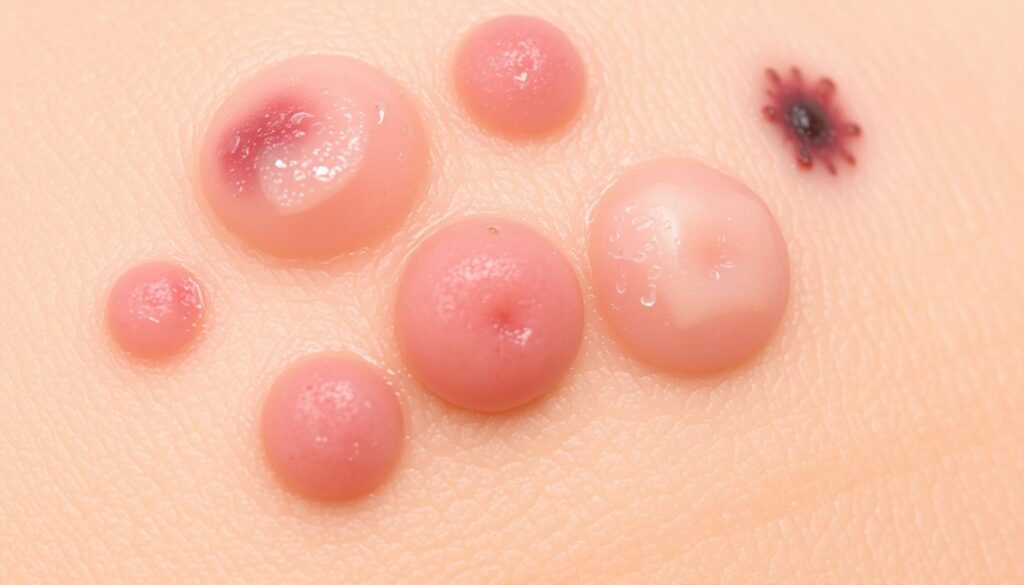
Seborrheic keratosis is a common, harmless skin growth that appears as we age1. These benign tumors affect many people. Most folks will have at least one seborrheic keratosis in their life2.
These growths can pop up on different body parts, often on the back1. Some may grow larger than 1 inch across. Don’t worry, though – they’re not cancerous or contagious12.
Age is a big factor in developing seborrheic keratosis. They usually show up after 50 and become more likely as we get older12. Genetics play a role too, making them more common in certain families12.
Key Takeaways
- Seborrheic keratosis is a common, benign skin growth
- Most prevalent in individuals over 50 years old
- Completely harmless and non-contagious
- Can appear as single growths or in clusters
- Typically does not require medical treatment
Understanding Seborrheic Keratosis and Its Causes
Seborrheic keratosis is a common skin growth that appears as we age. These benign developments are fascinating manifestations of dermatological processes. Understanding them helps you navigate these skin changes effectively.
What Exactly is Seborrheic Keratosis?
Seborrheic keratosis is a harmless skin growth appearing as a waxy, rough bump. These spots range from tan to dark brown or black. They typically develop on the face, back, chest, and shoulders.
These growths have a distinctive verruca senilis appearance. They often feel rough or scaly to the touch3.
How Do These Growths Develop?
Seborrheic keratosis develops through complex genetic and environmental interactions. These growths are the most frequent benign epithelial tumors in humans3.
Key factors influencing their formation include:
Common Risk Factors
Several risk factors contribute to developing these skin growths. These include age, sun exposure, and skin tone.
| Risk Factor | Impact |
|---|---|
| Age | Increases likelihood after 504 |
| Sun Exposure | Correlates with some subtypes4 |
| Skin Tone | More common in lighter skin4 |
Conditions like acanthotic nevus and epidermal nevus share similarities with seborrheic keratosis. This makes professional diagnosis crucial3.
Understanding your skin’s unique characteristics is the first step in maintaining its health and appearance.
Symptoms and Diagnosis of Seborrheic Keratosis
Skin growths have unique visual markers. Knowing these helps with early detection and management. Seborrheic keratosis shows specific signs linked to aging skin5.
Identifying the Symptoms
Seborrheic keratosis appears as round or oval growths. These keratin overgrowth lesions can show up on the face, chest, and back5.
You might see waxy or rough bumps. These growths often look “pasted on” the skin. They can vary in color and size.
- Waxy or rough textured bumps
- Growths that look like they’re “pasted on” the skin
- Variations in color and size
- Potential mild itchiness
When to Seek Professional Evaluation
Some people, especially those with dermatosis papulosa nigra, should see a dermatologist. This is important if they notice:
- Growths that cause discomfort
- Bleeding or irritated lesions
- Suspicious changes in appearance
Diagnostic Procedures
A doctor usually diagnoses seborrheic keratosis through visual examination. Most of these growths are harmless. About 90% of people over 65 have at least one5.
In rare cases, a biopsy might be needed. This helps confirm the diagnosis.
Early detection and professional evaluation are key to managing skin changes effectively.
These growths are more common in people with lighter skin. They tend to increase as you get older6.
Treatment Options and Management Strategies
Seborrheic keratosis affects over 80 million Americans. It’s the most common noncancerous skin tumor. Though harmless, you might want removal for looks or comfort.
Doctors often suggest cryotherapy as the main treatment. This method freezes the growth with liquid nitrogen. Thick lesions may need multiple cryotherapy sessions.
Other options include curettage and electrocautery. Curettage scrapes off the growth. Electrocautery burns it using electric current.
Topical meds can also help manage the condition. Your skin doctor might recommend tazarotene or alpha hydroxy acids. Imiquimod cream or vitamin D analogs are other choices.
Be aware that treatments may cause skin discoloration or scarring. Regular skin checks are crucial. Protect yourself from too much sun exposure7.
FAQ
What exactly is seborrheic keratosis?
Seborrheic keratosis is a harmless skin growth that often appears in middle age. These growths are typically brown, black, or tan with a waxy look. They seem “pasted on” the skin and can show up on your face, neck, chest, or back.
At what age do seborrheic keratoses typically develop?
Most people get seborrheic keratoses after age 50. They become more common as you age. Your genes play a big role in when and how many growths you might get.
Are seborrheic keratoses dangerous or cancerous?
No, seborrheic keratoses are harmless and not pre-cancerous. They don’t pose any serious health risks. If a growth bothers you or changes, talk to a skin doctor.
What do seborrheic keratoses look like?
These growths are round or oval bumps that can be flat or slightly raised. They have a waxy or rough texture and can vary in size. The color ranges from light tan to brown or black.
They may have a scaly surface with a “stuck-on” look.
Can seborrheic keratoses be removed?
Yes, removal is possible for looks or if the growth causes discomfort. Options include freezing, scraping, or burning the growth. Each method has risks, like scarring or skin color changes.
Are seborrheic keratoses hereditary?
There’s likely an inherited tendency for these growths. They often run in families. Your genes can affect how likely you are to get them and how many.
Do seborrheic keratoses cause any symptoms?
Most seborrheic keratoses don’t cause symptoms, but some may itch a bit. They can appear alone or in groups. If you notice odd changes, talk to a doctor.
Can I prevent seborrheic keratoses?
There’s no way to prevent seborrheic keratoses since they’re mostly genetic. But good skin care and sun protection can help overall skin health. Remember, these growths are normal for many people as they age.
Source Links
- Seborrheic keratosis-Seborrheic keratosis – Symptoms & causes – Mayo Clinic – https://www.mayoclinic.org/diseases-conditions/seborrheic-keratosis/symptoms-causes/syc-20353878
- Seborrheic Keratosis: Symptoms and Treatment | Tru-Skin Dermatology – https://www.tru-skin.com/conditions/seborrheic-keratosis
- Seborrheic Keratoses – The Most Common Benign Skin Tumor of Humans. Clinical presentation and an update on pathogenesis and treatment options – https://pmc.ncbi.nlm.nih.gov/articles/PMC6290447/
- Understanding Seborrheic Keratosis, a Benign Skin Condition – https://www.healthline.com/health/seborrheic-keratosis
- What’s This Velvety Brown Growth on My Skin? Is It a Seborrheic Keratosis? – https://www.webmd.com/skin-problems-and-treatments/what-are-sebborheic-keratoses
- Seborrheic Keratosis: Symptoms, Treatment, and Removal – https://skinsight.com/skin-conditions/seborrheic-keratosis/
- What are some treatment options for seborrheic keratosis? – https://www.medicalnewstoday.com/articles/seborrheic-keratosis-treatment

