
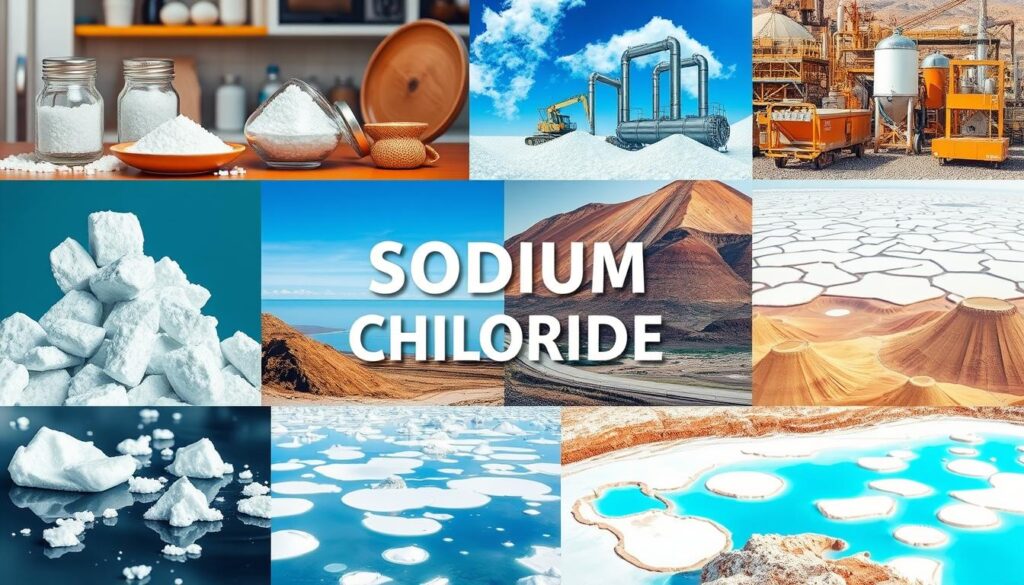
Sodium chloride, or table salt, is more than just a kitchen essential. This compound is vital for human biology and many industries worldwide. Your body needs NaCl for key functions, making up over 90% of blood serum’s inorganic part1.
Salt’s versatility goes beyond flavoring food. It’s crucial in medicine and industry, changing how we view nutrition and technology. Even small changes in salt intake can greatly affect health1.
While sodium chloride has many benefits, balance is key. Too much salt can upset your body’s sodium levels. This may lead to fluid retention and high blood pressure1.
Moderation is essential to tap into salt’s amazing potential. By using it wisely, we can reap its benefits without risking our health.
Key Takeaways
- Sodium chloride is essential for human biological functions
- NaCl has widespread applications across multiple industries
- Balanced salt consumption is crucial for maintaining health
- Table salt plays a critical role in bodily processes
- Salt’s versatility extends far beyond culinary uses
Understanding Sodium Chloride Properties and Composition
Sodium chloride is a fascinating ionic compound. It plays a crucial role in our daily lives. This essential mineral exists naturally and serves important functions in health and industry2.
Chemical Structure and Natural Occurrence
Sodium chloride has a simple yet remarkable chemical composition. It consists of sodium and chloride ions in a 1:1 ratio2. Its molecular weight is 58.44 g/mol.
Sodium chloride has unique physical properties:
Sodium chloride is abundant in nature, especially in seawater. Seawater contains about 1% to 5% NaCl3. It forms through a specific chemical reaction: 2Na(s) + Cl2(g) → 2NaCl(s)2.
Essential Nutritional Component
Sodium chloride serves critical nutritional functions in your body. It’s made up of 40% sodium and 60% chloride4. Your daily sodium intake greatly affects your health.
Dietary guidelines recommend specific consumption levels:
| Age Group | Recommended Daily Sodium Intake |
|---|---|
| Ages 1-3 | 1,200 mg |
| Ages 14 and older | 2,300 mg |
The World Health Organization suggests 2,000 mg daily for those 16 and older4. While essential, too much sodium can cause health risks like high blood pressure.
“Moderation is key when it comes to sodium chloride intake for optimal health.”
Knowing about sodium chloride helps you make smart food choices. It also lets you appreciate this versatile compound3.
Industrial and Commercial Uses of Sodium Chloride
Sodium chloride is more than just table salt. It’s a versatile substance used in many industries. The sodium chloride uses might surprise you56.
In food processing, sodium chloride is vital. It preserves food and enhances flavor. The meat-packing industry relies on salt to improve taste and extend shelf life6.
- Chemical Manufacturing: Salt is a key ingredient in producing baking soda, caustic soda, and hydrochloric acid6
- Pharmaceutical Production: Over 70% of pharmaceutical products contain sodium chloride5
- Water Treatment: Used in water-softening equipment to remove mineral compounds6
Textile manufacturers use salt as a grinding agent. It also improves dye absorption5. In drilling, salt increases soil density, making extraction processes safer5.
| Industry | Sodium Chloride Application |
|---|---|
| Chemical | Chlorine and acid production |
| Environmental | Road de-icing (used by nearly 50% of maintenance agencies)5 |
| Recreational | Saltwater systems for pools and spas5 |
Salt: A mineral so versatile, it transforms from a simple seasoning to an industrial powerhouse.
Sodium chloride is hard to replace entirely. Its unique properties make it essential in many industries. From food to industrial processes, salt plays a crucial role6.
Conclusion
Sodium chloride, or NaCl, is more than just a seasoning. It’s crucial for health, industry, and technology7. Balancing salt intake is vital for your well-being7.
In medicine, sodium chloride is essential for various treatments. It supports intravenous therapies and specialized procedures8. However, careful use is necessary to avoid health issues like hypernatremia8.
Moderation is key when using sodium chloride. The daily recommended intake is about 1,500 milligrams7. Avoid consuming too much salt.
Scientists are finding new uses for sodium chloride. Its importance in technology and medicine is likely to grow. This simple compound continues to shape our world in complex ways.
NaCl impacts everything from nutrition to industrial applications. It remains a vital part of human life and progress.
FAQ
What is sodium chloride?
Sodium chloride (NaCl) is table salt, made of sodium and chloride ions. It’s one of the most common minerals on Earth. You can find it in seawater and underground deposits.
Sodium chloride is crucial for your body’s fluid balance. It’s a key part of your blood and helps regulate fluids inside and outside cells.
Why is sodium chloride important for human health?
Sodium chloride is vital for maintaining osmotic tension in your blood and tissues. It regulates fluid balance in your body. However, balance is key.
Too much or too little salt can cause health problems. It’s important to consume the right amount for optimal health.
What are the industrial uses of sodium chloride?
Sodium chloride has many uses in various industries. In food, it’s a preservative and flavoring agent. It’s also used in metallurgy and chemical synthesis.
Industries use it to make plastics, glass, and paper. It’s useful for water treatment and de-icing roads. The oil industry uses it to improve drilling fluid density.
Are there health risks associated with salt consumption?
Yes, too much salt can lead to health issues. These include high blood pressure, stroke, and stomach cancer. Experts suggest reducing daily salt intake from 10 to 6 grams.
This reduction could lower blood pressure. It might also decrease deaths from heart diseases. Moderation is key for healthy salt consumption.
How is sodium chloride used in medicine?
In medicine, sodium chloride is crucial for saline solutions and medications. It’s used in eye wash products and to prevent dehydration.
Doctors use it to clean wounds and treat eye conditions. It helps maintain electrolyte balance and is used in various medical treatments.
What are some unique applications of sodium chloride?
Sodium chloride has exciting new uses in technology. It’s used in solar power generation as a catalyst. You’ll find it in textile production and rubber making.
Scientists are exploring its potential in energy storage. It’s also being studied for use in biotechnology and nanotechnology. These fields may unlock new uses for this common substance.
How does sodium chloride work in maintaining body fluid balance?
Sodium chloride regulates osmotic pressure in your body. This ensures proper fluid distribution between cells and their surroundings. It’s vital for nerve impulse transmission and muscle contraction.
It maintains the right balance of fluids inside and outside your cells. This balance is crucial for your body’s proper functioning.
Source Links
- Sodium chloride: Introduction; Application and Toxicity_Chemicalbook – https://www.chemicalbook.com/article/sodium-chloride-introduction-application-and-toxicity.htm
- Sodium Chloride – Preparation, Properties, Structure & Uses – https://byjus.com/chemistry/preparation-properties-and-uses-of-sodium-chloride/
- Sodium Chloride – Structure, Properties, and Uses of NaCl – https://byjus.com/chemistry/sodium-chloride/
- What Is Sodium Chloride and How Is It Used? – https://www.healthline.com/health/sodium-chloride
- The Industrial Applications of Salt — Bell Chem – https://www.bellchem.com/news/the-industrial-applications-of-salt
- Salt | Chemistry, History, Occurrence, Manufacture, Uses, & Facts | Britannica – https://www.britannica.com/science/salt
- Salt and Sodium – https://nutritionsource.hsph.harvard.edu/salt-and-sodium/
- What is Sodium Chloride used for? – https://synapse.patsnap.com/article/what-is-sodium-chloride-used-for

