
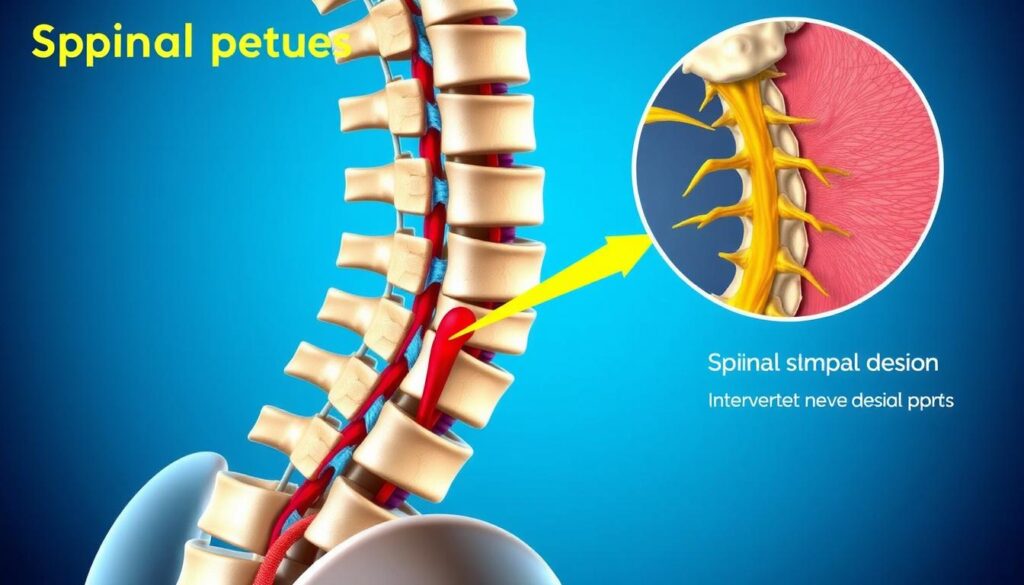
Spinal stenosis can seriously affect your daily life. It happens when your spine narrows, putting pressure on nerves and the spinal cord. This can cause pain and make moving around difficult.
Spinal stenosis usually affects people over 50. It’s often due to normal wear and tear as we age. However, younger people can get it too, usually from injuries or genetics.
Your spine’s health is vital. Knowing about vertebral compression helps spot early signs of nerve problems. Symptoms can vary from mild to severe.
You might feel pain in your back or neck. Numbness in your arms or legs is also common. Some people experience weakness that makes everyday tasks hard1.
Key Takeaways
- Spinal stenosis primarily affects individuals over 50
- Wear-and-tear from arthritis is a common cause
- Symptoms can include pain, numbness, and weakness
- Multiple treatment options are available
- Early detection can help manage symptoms effectively
Understanding Spinal Stenosis
Spinal stenosis affects your spine’s structure. It narrows the spinal canal, causing potential problems for your nervous system and mobility2.
What is Spinal Stenosis?
Spinal stenosis narrows the spinal canal, compressing nerves and the spinal cord. It can affect different spine regions, mainly the neck and lower back3.
How Common is Spinal Stenosis?
Spinal stenosis is common, especially in older adults. Degenerative spine changes occur in up to 95% of people by age 502.
The condition typically develops in adults over 60. Lumbar spinal stenosis affects more than 200,000 adults in the United States4.
Different Types of Spinal Stenosis
Spinal stenosis has several types, each with unique features:
- Cervical Stenosis: Affects the neck region
- Lumbar Stenosis: Impacts the lower back
- Congenital Stenosis: Present from birth2
“Understanding your specific type of spinal stenosis is crucial for effective management and treatment.”
| Type of Stenosis | Primary Characteristics | Age of Onset |
|---|---|---|
| Cervical Stenosis | Neck region compression | 50-60 years |
| Lumbar Stenosis | Lower back nerve compression | 60+ years |
| Congenital Stenosis | Born with narrow spinal canal | Late teens/twenties |
Spinal stenosis types can have different symptoms and challenges. A personalized medical evaluation is key for proper diagnosis and treatment3.
Causes of Spinal Stenosis
Spinal stenosis develops through complex mechanisms that impact your spine’s health. Understanding these causes can help you manage and prevent potential complications.
The main contributors to spinal stenosis include age-related changes, genetic factors, and injuries. These elements narrow your spinal canal and can cause discomfort.
Age-Related Changes
Your spine undergoes natural degenerative processes as you age. Degenerative Disc Disease becomes more common, causing wear on spinal structures5.
People over 50 are most at risk for these changes. They can lead to significant spinal issues6.
- Bone density reduction
- Cartilage breakdown
- Ligament thickening
Genetic Factors
Some people are born with a higher risk of spinal issues. A naturally narrow spinal canal can increase your chances of developing spinal stenosis6.
Genetic conditions may contribute to:
- Inherited bone structure abnormalities
- Connective tissue disorders
- Congenital spine malformations
Injuries and Trauma
Spinal injuries can trigger or speed up spinal stenosis development. Bone Spurs and Herniated Disks often result from physical trauma5.
These issues create extra pressure on your spinal cord.
“Understanding your spine’s vulnerabilities can help prevent long-term complications.” – Spine Health Experts
Potential injury-related causes include:
- Car accidents
- Sports-related impacts
- Workplace incidents
- Surgical complications
Early recognition of these causes can help you take proactive steps in managing your spinal health.
Symptoms to Look Out For
Spinal stenosis causes various symptoms. These depend on the condition’s location and severity. Recognizing these signs early helps you seek proper medical care for spinal health concerns.
Common Symptoms of Spinal Stenosis
The most frequent symptoms include:
- Back pain and discomfort
- Sciatica or leg pain with cramping
- Numbness or tingling in extremities
- Weakness in hands, arms, feet, or legs
Radiculopathy often causes sharp, shooting pain along nerve pathways. Symptoms typically depend on where the spine narrows7. Lumbar stenosis affects lower body function.
Cervical stenosis impacts upper body movements8.
Severe Symptoms Requiring Immediate Attention
Some symptoms signal a medical emergency and need urgent care:
- Complete loss of bowel or bladder control
- Severe numbness between legs and inner thighs
- Debilitating pain or extreme weakness in legs
Cauda equina syndrome is a critical condition. Its severe symptoms may indicate permanent nerve damage9.
Individual Symptom Variations
Myelopathy can cause unique symptom presentations. Some people might feel mild discomfort. Others face significant mobility challenges.
Age, overall health, and specific spinal changes affect symptom intensity8.
“Understanding your body’s signals is the first step toward effective treatment and management.”
Persistent or worsening symptoms require medical attention. Consult a healthcare professional for accurate diagnosis and personalized treatment.
Treatment Options for Spinal Stenosis
Spinal stenosis management requires a tailored approach based on your symptoms. Your doctor will help you find relief strategies that work best for you10.
Non-surgical treatments often come first in pain management. Physical therapy is key for spinal stenosis. It helps strengthen core muscles and improve posture, easing nerve pressure11.
Pain relievers like ibuprofen can help with nerve compression discomfort11. Your doctor may suggest heat treatment, massage, or meditation as complementary therapies11.
Spinal decompression surgery might be an option if other treatments fail. Minimally invasive surgery works well for 1-2 affected spine segments12. It can greatly reduce pain and improve life quality12.
Surgery becomes necessary if you have ongoing weakness or bladder issues10. Your doctor will guide you through this decision.
Lifestyle changes can greatly help manage spinal stenosis. Maintaining a healthy weight and good posture are crucial. Regular low-impact exercises can also ease symptoms.
Your healthcare team will create a personalized plan. They’ll help you manage your condition and boost your overall well-being.
FAQ
What exactly is spinal stenosis?
Spinal stenosis narrows spaces in your spine, putting pressure on nerves. It often occurs in the lower back and neck. This can cause pain, numbness, and weakness in arms or legs.
Who is most at risk for developing spinal stenosis?
People over 50 are most likely to develop spinal stenosis. Those with osteoarthritis or a narrow spinal canal face higher risks. Spinal injuries and certain genetic factors can also increase the chances.
What are the primary symptoms of spinal stenosis?
Common symptoms include back or neck pain and numbness in extremities. Muscle weakness and leg cramping (sciatica) may also occur. Symptoms vary based on the stenosis location.
Lumbar stenosis affects the lower body. Cervical stenosis impacts the upper body, causing arm and hand issues.
Are there different types of spinal stenosis?
Yes, there are two main types: cervical and lumbar stenosis. Cervical stenosis affects the neck area, causing arm numbness and walking problems. Lumbar stenosis occurs in the lower back, causing leg-related symptoms.
What causes spinal stenosis?
Age-related wear and tear linked to osteoarthritis is the most common cause. Other causes include bone spurs, herniated disks, and thickened ligaments. Spinal injuries, tumors, and genetic factors can also contribute.
When should I seek immediate medical attention?
Seek urgent care if you lose bowel or bladder control. Extreme numbness between legs and inner thighs is also serious. Severe leg pain or weakness may indicate cauda equina syndrome.
What treatment options are available for spinal stenosis?
Treatments range from conservative approaches to surgery. Non-surgical options include physical therapy, pain medications, and steroid injections. Surgical procedures like laminectomy may be recommended for severe cases.
Lifestyle changes can help manage symptoms. These include maintaining a healthy weight and exercising regularly.
Can spinal stenosis be prevented?
You can’t completely prevent age-related spinal stenosis. However, you can reduce your risk with a healthy lifestyle. Regular exercise strengthens back and core muscles.
Maintain a healthy weight and practice good posture. Avoid activities that strain your spine excessively.
Source Links
- No title found – https://www.arthritis.org/diseases/spinal-stenosis
- Lumbar Spinal Stenosis – OrthoInfo – AAOS – https://orthoinfo.aaos.org/en/diseases–conditions/lumbar-spinal-stenosis/
- Spinal stenosis – https://www.mountsinai.org/health-library/diseases-conditions/spinal-stenosis
- Spinal Stenosis: Nerve Compression Causing Neck & Back Pain – https://www.hss.edu/condition-list_spinal-stenosis.asp
- Spinal Stenosis | Back Pain Treatment in Baltimore – https://www.umms.org/ummc/health-services/orthopedics/services/spine/patient-guides/spinal-stenosis
- Spinal Stenosis – https://www.templehealth.org/services/conditions/spinal-stenosis
- Spinal stenosis – Symptoms and causes – https://www.mayoclinic.org/diseases-conditions/spinal-stenosis/symptoms-causes/syc-20352961
- Spinal Stenosis: Symptoms & Causes | Och Spine at NewYork-Presbyterian – https://www.nyp.org/ochspine/spinal-stenosis/symptoms
- Lumbar Spinal Stenosis – https://www.hopkinsmedicine.org/health/conditions-and-diseases/lumbar-spinal-stenosis
- Nonsurgical treatment options for lumbar spinal stenosis – https://www.mayoclinic.org/medical-professionals/physical-medicine-rehabilitation/news/nonsurgical-treatment-options-for-lumbar-spinal-stenosis/mac-20533117
- Nonsurgical Treatment for Spinal Stenosis – https://nyulangone.org/conditions/spinal-stenosis/treatments/nonsurgical-treatment-for-spinal-stenosis
- Spinal Stenosis – https://www.wakehealth.edu/condition/s/spinal-stenosis

