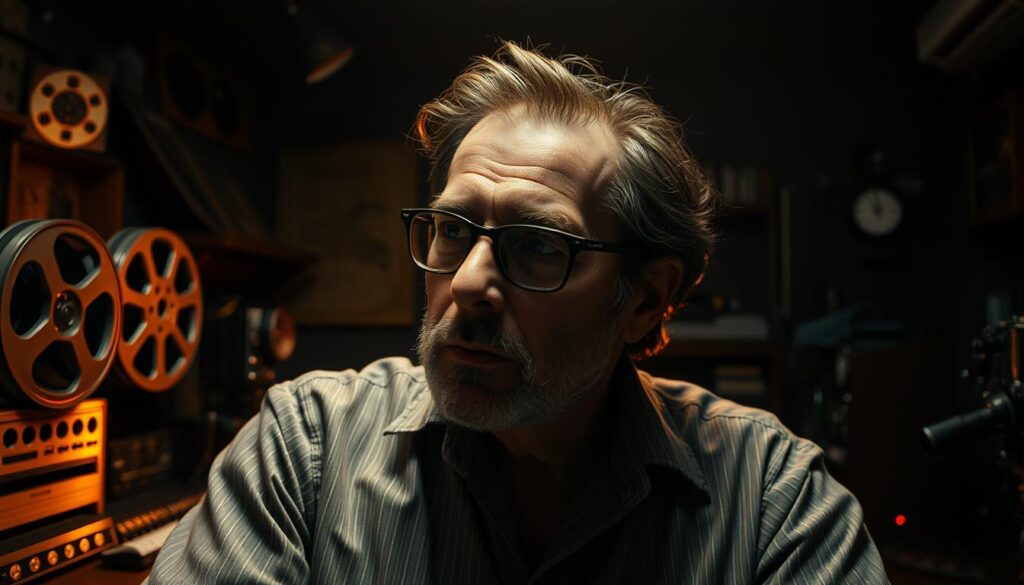
Stanley Kubrick was a legendary filmmaker born on July 26, 1928, in Manhattan, New York City. He passed away on March 7, 1999, at 70123. He was known for his detailed work and groundbreaking camera techniques1. His love for photography and chess shaped his career, making him a highly respected director1.
Kubrick worked on many projects, including “2001: A Space Odyssey.” This film won an Oscar for its special effects3.
Stanley Kubrick teamed up with sci-fi author Arthur C. Clarke on “2001: A Space Odyssey”2. He was famous for his perfectionism, often asking for many takes2. Kubrick’s work spanned many genres, like “A Clockwork Orange,” “Barry Lyndon,” and “The Shining”3.
Key Takeaways
- Stanley Kubrick was a film director, producer, writer, and photographer1.
- He was born on July 26, 1928, in Manhattan, New York City, and passed away on March 7, 1999, at the age of 70123.
- Kubrick’s early interest in photography and chess influenced his filmmaking career1.
- He collaborated with renowned sci-fi author Arthur C. Clarke on “2001: A Space Odyssey”2.
- Kubrick directed films across various genres, including “2001: A Space Odyssey,” “A Clockwork Orange,” “Barry Lyndon,” and “The Shining”3.
- He was known for his meticulous attention to detail and innovative cinematography12.
- Kubrick received an Oscar for special effects for “2001: A Space Odyssey”3.
The Artistic Vision of Stanley Kubrick
Stanley Kubrick was a unique director in cinema. His careful work and new ways of making movies changed how films are made. His movies are now classics that people love to watch.
Early Influences on Kubrick’s Work
Kubrick started with photography, selling his first photo to Look Magazine in high school4. At 20, he used all his money to make his first short film, “Day of the Fight.” This showed his dedication and vision4.
Key Themes in Kubrick’s Films
Kubrick explored big ideas like violence, technology’s impact, and human psychology54. These themes made his movies deep and meaningful. They touched both fans and critics.
Cinematic Techniques and Innovations
Kubrick was a master of lighting and camera work6. His films often had repeating symbols and deep meanings. This made them engaging and thought-provoking for viewers5.
Iconic Films and Their Impact
Stanley Kubrick’s films have left a lasting mark on cinema. They have shaped genres and inspired many filmmakers.
2001: A Space Odyssey and Its Legacy
“2001: A Space Odyssey” changed science fiction with its groundbreaking special effects and deep story. It set a new standard for visual storytelling7. Many modern space movies owe a debt to this film, making it a key part of the genre.
A Clockwork Orange: Controversy and Commentary
“A Clockwork Orange” caused a stir when it came out because of its graphic content and bold themes. Kubrick used shock and satire to explore free will and control. He made audiences think deeply about morality and ethics8.
The Shining: Horror and Psychological Depth
“The Shining” changed horror by mixing supernatural elements with deep psychological study. Kubrick’s use of creepy visuals and sounds created a lasting sense of fear. It offers a close look at the characters’ minds as they fall apart.
Full Metal Jacket: A Study of War
“Full Metal Jacket” shows the harsh reality of war and its effects on the mind. Kubrick’s unique approach focuses on the dehumanizing effects of military training and the chaos of battle. It gives a unique view of conflict and its impact.
| Film Title | Release Year | Box Office (USD) | Oscars Won | Impact |
|---|---|---|---|---|
| 2001: A Space Odyssey | 1968 | $146 million | 1 | Revolutionized sci-fi and special effects |
| A Clockwork Orange | 1971 | $26 million | 0 | Provoked debates on violence and free will |
| The Shining | 1980 | $47 million | 0 | Set new standards for psychological horror |
| Full Metal Jacket | 1987 | $120 million | 0 | Provided a stark portrayal of war’s impact |
Kubrick’s Legacy in Modern Cinema
Stanley Kubrick is a key figure in filmmaking, leaving a mark on today’s movies. His focus on perfection and innovative methods inspire directors like Christopher Nolan and Ava DuVernay.
Influence on Contemporary Filmmakers
Many modern directors look up to Kubrick for his attention to detail. Nolan, for example, uses practical effects and complex stories, just like Kubrick. This keeps Kubrick’s legacy alive in movies9.
The Evolution of Horror Through Kubrick
“The Shining” changed horror movies with its deep psychology and eerie atmosphere. Today, directors like Ari Aster use Kubrick’s methods to make horror even more intense and scary10.
Kubrick’s Style in Today’s Film Industry
Kubrick’s unique style, from symmetrical shots to classical music, is seen in today’s films. Directors like Wes Anderson pay tribute to Kubrick’s classic look11.
FAQ
Who was Stanley Kubrick and why is he considered a visionary filmmaker?
Stanley Kubrick was a famous film director known for his detailed work and deep themes. He mixed technical skill with deep ideas, making him a genius in cinema. His films, like “2001: A Space Odyssey” and “The Shining,” showed his unique vision. They changed how movies are made and left a big mark on the film world.
How did Stanley Kubrick’s early life and passion for photography shape his cinematic vision?
Stanley Kubrick grew up in New York and loved telling stories through photos. His work for Look magazine helped him see the world in a special way. This skill helped him make films that were both beautiful and full of meaning.
What key themes are prevalent in Stanley Kubrick’s films?
Kubrick’s movies often talk about violence, technology’s effects on humans, and the mind. For example, “A Clockwork Orange” is about free will and control. “Full Metal Jacket” shows how war changes people. These themes make his films both fun and thought-provoking.
What innovative cinematic techniques did Stanley Kubrick introduce?
Kubrick was a pioneer in many film techniques. He used lighting, camera moves, and sound in new ways. His special effects in “2001: A Space Odyssey” set new standards. His use of symmetry and unusual angles made his films feel real and intense.
How did “2001: A Space Odyssey” revolutionize science fiction and special effects?
“2001: A Space Odyssey” changed science fiction with its amazing effects and realistic space scenes. Kubrick’s attention to detail and practical effects made it a visual masterpiece. The film’s deep themes and open questions have inspired many filmmakers.
Why was “A Clockwork Orange” controversial upon its release?
“A Clockwork Orange” was banned in the UK for its graphic violence and themes. Kubrick used shock and satire to talk about free will and evil. This sparked debates about censorship and the power of art.
How did Stanley Kubrick transform “The Shining” into a psychological horror masterpiece?
Kubrick made “The Shining” a horror classic by focusing on the characters’ minds. He used scary camera angles, sound, and sets to create dread. His work on character and conflict made the film a deep study of the human psyche.
In what ways did “Full Metal Jacket” present a unique portrayal of war?
“Full Metal Jacket” showed war’s effects on soldiers in a raw and honest way. Kubrick’s realistic scenes of boot camp and Vietnam War were different from usual war movies. He highlighted the dehumanizing effects of war, showing its impact on people.
What is Stanley Kubrick’s legacy in modern cinema?
Kubrick’s legacy is his drive for perfection and innovation in films. His influence is seen in today’s filmmakers, who value his attention to detail and bold storytelling. His films continue to inspire and influence the film world.
How have contemporary filmmakers been influenced by Stanley Kubrick’s work?
Today’s filmmakers are inspired by Kubrick’s storytelling, technical skill, and themes. Directors like Christopher Nolan and Denis Villeneuve say Kubrick was a big influence. They use his visual style and deep themes in their own films.
How has Stanley Kubrick’s approach to horror influenced the evolution of the genre?
Kubrick’s horror films, like “The Shining,” focused on psychological fear, not just jump scares. His use of atmosphere and character made horror more complex. This approach has influenced modern horror, making it more sophisticated and thought-provoking.
In what ways does Kubrick’s distinctive style continue to resonate in today’s film industry?
Kubrick’s style, with its symmetry, music, and technical innovation, is influential today. Filmmakers use his visual and narrative techniques to make striking and meaningful films. His focus on art and methodical filmmaking inspires directors to aim for originality and depth.
Source Links
- Stanley Kubrick – https://en.wikipedia.org/wiki/Stanley_Kubrick
- Stanley Kubrick | Director, Writer, Producer – https://www.imdb.com/name/nm0000040/
- Stanley Kubrick | Biography, Movies, & Awards | Britannica – https://www.britannica.com/biography/Stanley-Kubrick
- Stanley Kubrick’s visions – https://udithawrites.wordpress.com/2020/10/14/stanley-kubricks-visions/
- The Kubrick Site: Stanley Kubrick and Modernism – http://www.visual-memory.co.uk/amk/doc/0092.html
- How Stanley Kubrick Influences My Design Path – https://medium.com/design-bootcamp/how-stanley-kubrick-influences-my-design-path-11d175289269
- All 13 Stanley Kubrick Movies, Ranked Worst To Best – https://screenrant.com/stanley-kubrick-best-movies-ranked/
- Influence of Stanley Kubrick – https://en.wikipedia.org/wiki/Influence_of_Stanley_Kubrick
- No Compromise: The Legacy of Stanley Kubrick – MovieMaker Magazine – https://www.moviemaker.com/the_legacy_of_stanley_kubrick_3267/
- Stanley Kubrick and His Influence on Film — Penn Moviegoer – https://www.thepennmoviegoer.com/movie-review/stanley-kubrick-and-his-influence-on-film
- Stanley Kubrick’s Monumental Impact on Science Fiction Cinema – https://medium.com/@alierkurt/stanley-kubricks-monumental-impact-on-science-fiction-cinema-dd76aafa1ecb