
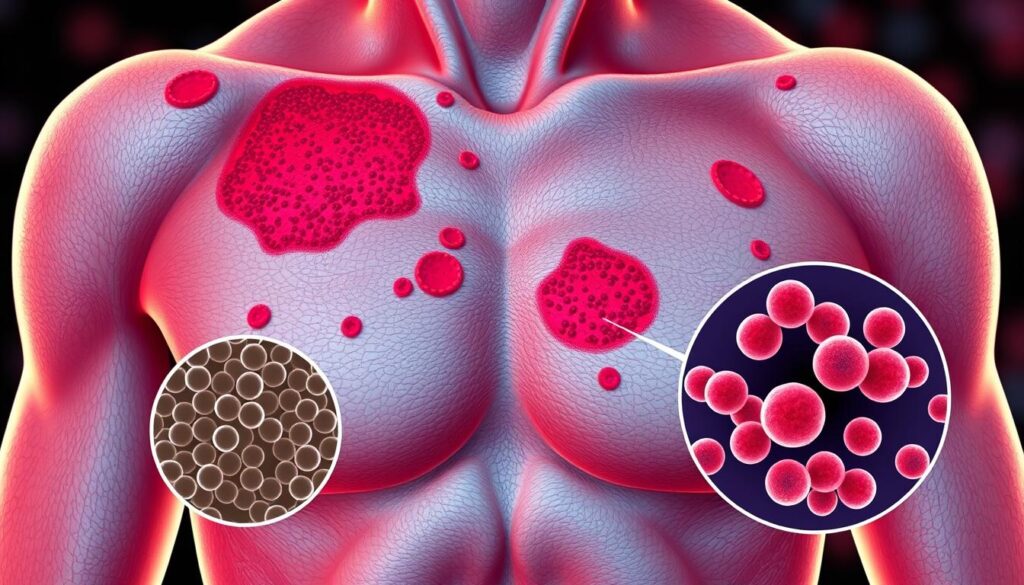
Staph infections are surprisingly common. About 25% of people carry Staphylococcus aureus bacteria without symptoms1. These harmless passengers can become dangerous invaders, causing various skin infections and health problems2.
Staphylococcus aureus is tough and can cause many infections. It spreads through skin contact, contaminated objects, and medical procedures1. Chronic health issues, weak immunity, and contact sports increase your risk2.
Antibiotic resistance makes staph infections tricky to treat. Half of staph infections now resist stronger antibiotics in hospitals and communities1. Treating these infections needs careful medical care and smart strategies.
Key Takeaways
- Staph bacteria are carried by about 25% of people without symptoms
- Over 30 types of staph infections exist
- Infections can spread through multiple transmission routes
- Antibiotic resistance is a significant medical challenge
- Prevention involves good hygiene and wound care
Understanding Staph Infections and Their Causes
Staph bacteria are tiny organisms that can cause various health issues. They often live harmlessly on your skin or in your nose3. However, certain conditions can turn these microbes into potential health threats.
What is Staphylococcus?
Staphylococcus is a group of bacteria with over 30 types. Staphylococcus aureus is the main cause of most infections4. These bacteria can survive extreme conditions, including temperature changes and stomach acid3.
Common Risk Factors for Staph Infections
- Weakened immune systems
- Chronic health conditions like diabetes
- Recent surgical procedures
- Hospitalization
- Intravenous drug use
Some groups are more likely to get staph infections. These include people with weak immune systems and ongoing health problems4.
Your risk goes up if you have chronic diseases or recent surgeries. Poor wound care can also increase your chances of infection3.
How Staph Bacteria Enter Your Body
| Entry Point | Potential Risks |
|---|---|
| Skin Cuts | Direct bacterial invasion |
| Surgical Implants | Increased infection probability |
| Shared Personal Items | Cross-contamination |
Staph bacteria can enter your body through different ways. Good hygiene is key to prevent spread, especially in hospitals or gyms4.
Cover wounds and wash your hands often. Don’t share personal items. These steps can greatly lower your infection risk3.
“Prevention is always better than cure when it comes to staph infections.”
Recognizing the Symptoms of Staph Infections
Staph infections can affect your skin and overall health in various ways. Knowing the warning signs helps you act fast and avoid potential complications5.
Identifying Skin Infections
Staph bacteria can cause different types of skin infections. These include boils, impetigo, and cellulitis.
Common signs are red, swollen areas on the skin and painful bumps or sores. You might also see pus-filled blisters and feel warm, tender skin around the infected area5.
- Red, swollen areas on the skin
- Painful bumps or sores
- Pus-filled blisters
- Warm, tender skin around the infected area5
Serious Warning Signs
Some staph infections can become more severe. They might lead to toxic shock syndrome or bacteremia.
Watch for these critical symptoms:
| Infection Type | Warning Signs |
|---|---|
| Invasive Staph Infection | High fever above 38°C, rapid heartbeat, breathing difficulties, confusion5 |
| Toxic Shock Syndrome | Sudden high fever, rash, dizziness, muscle aches6 |
When to Seek Medical Attention
Contact your healthcare provider right away if you notice:
- Persistent skin infections that don’t improve
- Infections spreading between family members
- Fever accompanying skin symptoms
- Large, painful abscesses
- Signs of systemic infection6
“Early detection and treatment are crucial in managing staph infections and preventing serious complications.”
Remember, most staph skin infections can be treated effectively with proper medical care and hygiene practices6.
Treatment Options for Staph Infections
Staph infection treatment varies based on severity and type. Skin-related cases often respond to topical antibiotics. For mild infections, over-the-counter treatments and wound care may suffice7.
Serious staph infections need prescription medications. Oral antibiotics help with spreading skin infections. IV antibiotics treat systemic or resistant infections8.
Vancomycin is crucial for treating methicillin-resistant Staphylococcus aureus (MRSA). MRSA poses significant challenges in medical treatment8.
Good hand hygiene is vital in managing staph infections. Follow your doctor’s wound care advice. Always finish your entire antibiotic prescription7.
Some people face higher staph infection risks. These include those with weak immune systems, surgical patients, and contact sport athletes8.
Seek medical help if symptoms persist or worsen. Your doctor can provide personalized advice for your situation.
FAQ
What are staph infections?
Staph infections come from bacteria on skin or in noses. They can cause minor skin issues or serious illnesses. These infections may appear as red bumps, painful abscesses, or severe conditions like toxic shock syndrome.
How do staph bacteria enter the body?
Staph bacteria enter through cuts, scrapes, or skin contact. They spread via shared items like towels or medical devices. Food handlers with poor hygiene can transfer bacteria through contaminated food.
People with skin damage, like eczema, are more vulnerable. Healthcare settings pose risks through invasive devices such as catheters or implants.
What are the common symptoms of staph infections?
Symptoms vary based on infection type and severity. Skin infections often show as red bumps or painful abscesses. Common types include boils, impetigo, and cellulitis.
Serious infections may cause fever, nausea, vomiting, and joint pain. Toxic shock syndrome can lead to high fever, rash, and confusion.
Who is at higher risk for staph infections?
People with diabetes, HIV/AIDS, kidney failure, or weak immune systems face higher risks. Athletes, hospital patients, and those with skin conditions are more susceptible.
Individuals who share personal items also have an increased risk of staph infections.
How are staph infections treated?
Treatment depends on infection severity. Minor skin infections often need topical antibiotics. Severe cases may require oral or intravenous antibiotics.
Healthcare providers might drain boils or abscesses to remove pus. Serious cases may need hospitalization.
How can I prevent staph infections?
Practice good hygiene: wash hands regularly, keep wounds clean and covered. Avoid sharing personal items like towels or razors. Change tampons frequently if you use them.
Complete the entire antibiotic prescription when treating a staph infection. This helps prevent antibiotic resistance.
When should I see a doctor about a possible staph infection?
See a doctor for red, irritated, or painful skin areas. Seek help for pus-filled blisters or fever. Consult if skin infections spread between family members.
Medical attention is needed if multiple family members have infections at the same time.
Are staph infections dangerous?
Many staph infections are minor, but some can become life-threatening. People with weak immune systems face higher risks. Serious complications include toxic shock syndrome and blood infections.
Some staph bacteria resist common antibiotics, making treatment more challenging. Infections of internal organs can also occur.
Source Links
- Staph Infections: Symptoms, Stages, Causes, Treatment, Contagiousness – https://www.webmd.com/skin-problems-and-treatments/staph-infection-cellulitis
- Staph Infection: Symptoms & Causes | NewYork-Presbyterian – https://www.nyp.org/primary-care/staph-infection
- Infection caused by staphylococcus bacteria-Staph infections – Symptoms & causes – Mayo Clinic – https://www.mayoclinic.org/diseases-conditions/staph-infections/symptoms-causes/syc-20356221
- Staphylococcal Infections: MedlinePlus – https://medlineplus.gov/staphylococcalinfections.html
- Staph infections – https://www.healthdirect.gov.au/staph-infections
- Staph Infections (for Parents) – https://kidshealth.org/en/parents/staphylococcus.html
- Medical Care, Surgical Care, Prevention – https://emedicine.medscape.com/article/971358-treatment
- Staph infection: Types, symptoms, causes, treatments – https://www.medicalnewstoday.com/articles/staph-infection

