
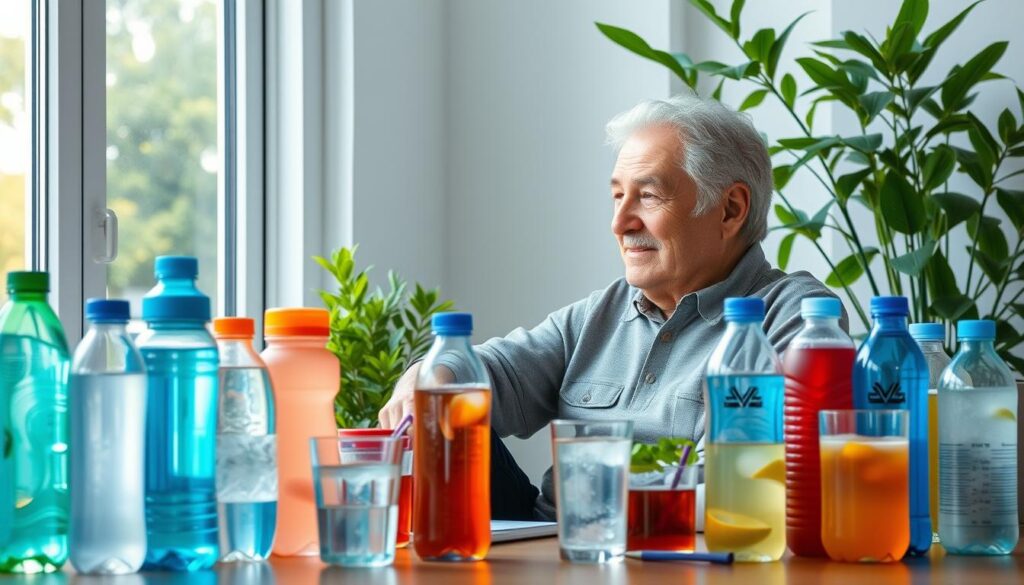
Proper hydration is vital for your health, especially as you age. Water supports heart health and muscle performance. As you get older, your body’s ability to retain water changes1.
Aging makes staying hydrated harder. Studies show that 40% of older adults may be chronically underhydrated. This can seriously affect your well-being1.
Water intake is crucial for your body’s functions. It’s not just about quenching thirst. It’s about keeping your body running smoothly.
Your hydration needs are unique. The National Academy of Medicine suggests different fluid intakes for men and women. Men over 51 need about 13 cups, while women need 9 cups1.
Knowing these guidelines helps you create a personal hydration plan. This approach supports your health as you age.
Key Takeaways
- Hydration is critical for maintaining overall health as you age
- Elderly individuals are at higher risk of chronic underhydration
- Water intake needs vary by gender and individual health conditions
- Proper hydration supports heart health and muscle function
- Monitoring your fluid intake becomes more important with age
Understanding the Importance of Hydration
Water is vital for health and slowing aging signs. It’s key to many body processes. Proper hydration helps your body work at its best2.
Shockingly, 75% of Americans face chronic dehydration. This can greatly affect overall health. Dehydration does more than make you thirsty.
It may speed up aging and increase health risks3.
How Hydration Affects Aging
Good hydration is crucial for youthful skin and vitality. Studies show it may slow aging2. High serum sodium levels can lead to risks.
- Premature aging
- Chronic diseases
- Reduced life expectancy
The Role of Water in Our Bodies
Water is key for many body functions. Joints contain about 80% water, aiding flexibility and comfort3. Good hydration supports:
- Cognitive function
- Digestion
- Skin health
Signs of Dehydration to Watch For
“Mild dehydration can cause the brain to contract away from the skull, leading to headaches and potential health complications.”
Spotting early dehydration signs is important. Look out for these symptoms:
- Dark-colored urine
- Fatigue
- Dizziness
- Muscle cramps
- Dry mouth
Knowing these hydration basics helps you stay healthy. It may even slow down aging23.
Changes in Hydration Needs as You Age
Aging affects how your body handles hydration. As you get older, staying properly hydrated becomes more challenging. Your body changes, impacting its ability to manage water effectively.
Your body’s water content decreases as you age. It can drop from about 70% to as low as 50%. This means you need to be more mindful of your water intake.
How Age Influences Fluid Requirements
Aging impacts your hydration needs in several critical ways:
- Reduced thirst sensation4
- Decreased body water retention
- Changes in kidney function
- Potential medication interactions
Factors Affecting Hydration in Seniors
Several factors can make hydration tricky for older adults:
| Factor | Impact on Hydration |
|---|---|
| Brain Thirst Center | Reduced activity leads to diminished thirst signals4 |
| Medication | Can increase fluid loss or reduce thirst perception5 |
| Medical Conditions | May require specific fluid intake recommendations5 |
*”Staying hydrated isn’t just about drinking water—it’s about understanding your body’s changing needs.”*
Dehydration is common among seniors. Up to 60% of older adults living at home experience it. In long-term care facilities, dehydration rates range from 28% to 38%6.
To stay hydrated, keep track of your water intake. Pay attention to your body’s signals. Sip water throughout the day to prevent dehydration and support your health5.
Effective Ways to Stay Hydrated
Staying hydrated is key for good health, especially as you age. Your body needs water to work well7.
Best Water Intake Strategies
Good hydration tips can boost your health. Adults should drink about 64 ounces of water daily.
Your needs may change based on age, gender, size, activity, and weather7.
- Age
- Gender
- Body size
- Activity level
- Weather conditions
Hydrating Foods to Include in Your Diet
Eat foods high in water to boost your intake8. Try these hydrating options in your meals:
| Food | Water Content |
|---|---|
| Cucumbers | 96% |
| Watermelon | 92% |
| Strawberries | 91% |
| Bell Peppers | 92% |
Flavoring Your Water: Tips and Tricks
Make water tastier to stay hydrated. Avoid sugary drinks and artificial sweeteners.
Try these fun hydration tricks8:
- Add fresh fruit slices
- Use herbs like mint or basil
- Infuse with cucumber
- Create herbal tea variations
“Hydration is not just about drinking water, it’s about creating a lifestyle that supports your body’s needs.” – Hydration Expert
Carry a water bottle and set reminders to drink often. Your body will love you for staying hydrated7!
Common Misconceptions About Hydration
Hydration myths can harm your health. Let’s bust some common falsehoods about water intake. Knowing the facts helps maintain wellness, especially as we age.
Myth: Thirst is the Best Hydration Indicator
Waiting for thirst to drink water is risky. Thirst is actually a late warning sign of dehydration. You can lose 2-3% of body weight before feeling thirsty9.
This becomes more dangerous as you age. Many older adults may already be dehydrated without realizing it10.
Myth: All Beverages Hydrate Equally
Not all drinks hydrate the same way. Some beverages affect your body differently:
- Caffeine and alcohol can have mild diuretic properties
- Water remains the most effective hydration source
- Some beverages might actually contribute to fluid loss
“Hydration is not just about drinking—it’s about drinking smartly.”
Moderate coffee intake can count toward daily fluids9. It doesn’t dehydrate you as once thought.
The National Academy of Medicine suggests different fluid intakes. Men over 51 need about 13 cups, while women need 9 cups9.
Knowing these facts helps maintain proper hydration. Your body’s needs change with age. Staying informed keeps you healthy.
| Beverage | Hydration Effect |
|---|---|
| Water | Optimal Hydration |
| Coffee | Moderate Hydration |
| Alcohol | Potential Dehydration |
| Sports Drinks | Good for Electrolytes |
Hydration does more than quench thirst. It’s vital for your body’s overall function and health.
Identifying Hydration Challenges for Older Adults
Aging brings unique hydration challenges. As you grow older, your body struggles with fluid balance. This can greatly affect your overall health and well-being11.
Medications and Hydration Interactions
Some medications can affect your hydration levels. Older adults often take multiple prescriptions. These may increase fluid loss or reduce thirst sensation11.
Key medications that impact hydration include:
- Blood pressure medications
- Diuretics
- Antidepressants
- Some diabetes treatments
Health Conditions Impacting Fluid Needs
Several health conditions can complicate hydration for seniors. Up to 40% of elderly people living at home may be chronically underhydrated. This can lead to serious health problems12.
| Health Condition | Hydration Impact |
|---|---|
| Diabetes | Increased fluid loss |
| Kidney Disease | Reduced fluid regulation |
| Dementia | Decreased thirst recognition |
Dehydration can weaken your immune system and increase susceptibility to illnesses11. Watch for these common signs:
- Dry mouth
- Darker urine color
- Infrequent urination
- Fatigue and dizziness
- Confusion
“Managing hydration is not just about drinking water, but understanding your body’s unique needs as you age.”
Get your family or caregivers involved in tracking your hydration. They can help ensure you drink enough fluids. They can also spot early signs of dehydration11.
Crafting a Daily Hydration Routine
Proper hydration is crucial for your health. A structured approach helps maintain optimal fluid levels. Your routine should be tailored to your unique needs.
Setting Reminders and Goals
Clear goals make tracking water intake easier. Aim for 6 to 8 glasses of fluid daily. This is recommended for older adults13.
Consider these hydration tips:
- Use smartphone apps to track water consumption
- Set hourly reminders to drink water
- Keep a water bottle nearby throughout the day
- Mark water intake on a daily chart
Incorporating Hydration into Meals
Meals offer a chance to boost your water intake. Behavioral interventions have improved hydration strategies14.
Try these approaches:
- Drink a full glass of water with each meal
- Choose water-rich foods like cucumbers and watermelon
- Sip water between bites
- Enjoy low-fat soups as a hydrating meal option
“Hydration is not just about drinking water, but making it a consistent part of your daily lifestyle.”
These strategies will improve your hydration benefits. They support your body’s essential functions13. Water intake is vital for your overall health and well-being.
Hydration Tips During Physical Activity
Proper hydration during exercise is vital for your health and performance. Your body needs more fluids when you’re active. Understanding how to stay hydrated during workouts is key.
Active people must watch their fluid intake closely. Sweat causes significant fluid loss during exercise. For every hour of exercise, individuals can lose up to 2 quarts of fluid, with intense activities potentially causing even greater fluid loss15.
Hydration Before Exercise
Start hydrating before your workout. Drink 24 ounces of sports drink or electrolyte water two hours before exercising15. This ensures you’re well-hydrated when you begin.
Staying Hydrated During Workouts
- Drink 4 to 8 ounces of fluid every 15 to 20 minutes during exercise16
- For activities lasting over 45 minutes, consider sports drinks to replace electrolytes16
- Adults should aim to consume 6 to 12 ounces every 20 minutes15
“Hydration is not just about drinking water, it’s about maintaining your body’s performance and health.”
Post-Workout Hydration Strategies
After exercise, replacing lost fluids is crucial. Drink about 3 cups of water for every pound lost during your workout16.
Aim for 16-24 ounces of water or a hypotonic sports drink. This will help restore your body’s hydration levels15.
Special Considerations for Different Athletes
Older athletes are more likely to get dehydrated. They have less fluid reserves and don’t feel thirsty as easily16.
Pregnant athletes must be extra careful about staying hydrated. It’s important for their health and their baby’s16.
Water is the main drink for hydration. Sports drinks help during intense activities lasting over 45 minutes16.
Monitoring Hydration Levels
Tracking your body’s fluid balance is crucial as you age. It helps prevent health issues related to dehydration. Understanding your hydration status can also slow down aging signs.
Simple Ways to Assess Hydration
You don’t need fancy equipment to check your hydration. Here are some easy methods to understand your body’s fluid status:
- Check your body weight before and after exercise17
- Observe your daily energy levels
- Monitor your skin elasticity
- Pay attention to physical symptoms
The Role of Urine Color in Hydration
Your urine color is a key sign of hydration and aging health. Pale, clear urine usually means good hydration. Dark-colored urine might indicate dehydration risks18.
| Urine Color | Hydration Status |
|---|---|
| Clear/Pale Yellow | Well Hydrated |
| Dark Yellow | Potential Dehydration |
| Amber/Honey Color | Significant Dehydration Risk |
Older adults face unique hydration challenges. They may feel less thirsty and experience changes in kidney function. This makes monitoring even more important17.
“Hydration is not just about drinking water, it’s about understanding your body’s unique needs.” – Hydration Expert
Watch for these signs of dehydration in seniors:
- Dry mouth and throat
- Fatigue and weakness
- Dizziness
- Sunken eyes
- Rapid heartbeat
Proactive hydration monitoring can significantly impact your overall health and well-being as you age.
The Impact of Climate on Hydration Needs
Climate affects your hydration strategy, especially as you age. Your body’s water needs change with the environment. Understanding weather’s impact on hydration is crucial for aging well19.
Hydration needs vary between hot and cold. Pay attention to your fluid intake. Climate challenges make water intake even more important20.
Staying Hydrated in Hot Weather
Hot weather increases fluid loss through sweating. Older adults face higher risks during extreme heat19. Your body needs extra care in summer.
Here are some hydration tips for summer:
- Drink water frequently
- Avoid direct sunlight during peak hours
- Wear lightweight, breathable clothing
- Consume water-rich foods
Hydration Considerations in Cold Weather
Cold weather can be deceiving about dehydration. Your body still needs regular fluid intake. Climate change affects rainfall patterns, making water conservation important20.
Hydration is not just about drinking water—it’s about maintaining your body’s delicate balance across changing environmental conditions.
Older adults face unique hydration challenges in changing climates. They’re more vulnerable to weather-related health risks21. Knowing these facts helps create a strong hydration plan.
Seeking Professional Guidance
Expert support is crucial for understanding hydration and aging. Your doctor can help with your unique hydration needs. This is especially important if you have health conditions or take certain medications22.
Your healthcare provider can offer personalized advice. They’ll consider your health profile and lifestyle. This guidance ensures you’re meeting your body’s specific hydration requirements.
Technology makes tracking hydration easier than ever. Hydration apps and smart water bottles help monitor daily fluid intake23. These tools support optimal hydration levels and overall wellness.
Health organizations offer valuable information about hydration benefits. Talking to healthcare pros helps you understand your changing water needs22. Stay informed to support your long-term health and vitality.
FAQ
How much water should I drink daily as I get older?
Men 51 and older should drink about 13 cups daily. Women in the same age group need 9 cups. Your needs may vary based on health, medications, and activity level.
A good rule is to drink one-third of your body weight in ounces of fluids daily.
Why are older adults more susceptible to dehydration?
Aging brings changes that increase dehydration risk. These include less appetite, thirst, and body water retention. Older adults also have less efficient temperature regulation.
Medications that cause fluid loss are more common in seniors. Up to 40% of elderly people may be chronically underhydrated.
What are the early signs of dehydration I should watch for?
Watch for dark urine, fatigue, irritability, dizziness, headaches, and muscle cramps. Dry mouth and confusion are also warning signs.
Feeling thirsty means you’re already dehydrated. Don’t wait for extreme symptoms to start drinking water.
Can I count other beverages towards my daily fluid intake?
Various fluids contribute to hydration, but pure water is best. Alcohol and caffeinated drinks can increase fluid loss.
Electrolyte drinks can help during intense exercise. Be careful of added sugars and calories in these beverages.
How can I make drinking water more appealing?
Add fresh lemon, apple, cucumber, or berries to your water. Eat water-rich foods like cucumbers, watermelon, lettuce, and strawberries.
Tomatoes and celery are also great choices. Soups, broths, and stews provide excellent hydration, especially in cold weather.
How can I tell if I’m properly hydrated?
Check your urine color. Pale, clear urine shows good hydration. Dark urine suggests dehydration.
Weigh yourself before and after exercise to measure fluid loss. Drink a pint of water for every pound lost.
Do hydration needs change with climate?
Yes! Hot weather increases fluid loss through sweat. Cold weather affects hydration as your body works to maintain core temperature.
Be mindful of your fluid intake in all climates. Adjust your water consumption based on weather conditions.
Should I drink water only when I’m thirsty?
No, thirst isn’t a reliable hydration indicator. By the time you feel thirsty, you’re already dehydrated.
Drink small amounts of water throughout the day. Set up a regular hydration routine to stay properly hydrated.
Source Links
- The Importance of Hydration for Older Adults – https://www.ncoa.org/article/how-to-stay-hydrated-for-better-health/
- Link between hydration and aging – https://www.nih.gov/news-events/nih-research-matters/link-between-hydration-aging
- Why Should Older Adults Stay Hydrated? – https://www.ncoa.org/article/10-reasons-why-hydration-is-important/
- As You Get Older, You Need to Drink More Water. Here’s Why – https://www.healthline.com/health-news/as-you-get-older-you-need-to-drink-more-water-heres-why
- The Connection Between Age and Dehydration Risk – https://health.clevelandclinic.org/drink-up-dehydration-is-an-often-overlooked-health-risk-for-seniors
- Hydration Status in Older Adults: Current Knowledge and Future Challenges – https://pmc.ncbi.nlm.nih.gov/articles/PMC10255140/
- 6 Simple Ways to Stay Hydrated – https://www.scripps.org/news_items/6630-6-simple-ways-to-stay-hydrated
- The Importance of Staying Hydrated As You Age – https://www.christianhealthnj.org/news/2024/june/the-importance-of-staying-hydrated-as-you-age/
- The Truth About Hydration: 7 Myths and Facts – https://www.ncoa.org/article/the-truth-about-hydration-7-myths-and-facts/
- Misconceptions may lead to dehydration in older adults – https://www.medicalnewstoday.com/articles/327349
- Importance of Hydration for Seniors – https://www.wesleylife.org/blog/importance-of-hydration-for-seniors
- Study finds a lack of adequate hydration among the elderly – https://www.uclahealth.org/news/release/study-finds-a-lack-of-adequate-hydration-among-the-elderly
- Tips for Water Intake for Older Adults – https://www.webmd.com/healthy-aging/tips-for-water-intake-for-older-adults
- Interventions to Improve Hydration in Older Adults: A Systematic Review and Meta-Analysis – https://pmc.ncbi.nlm.nih.gov/articles/PMC8537864/
- Sports and Hydration for Athletes: Q&A with a Dietitian – https://www.hopkinsmedicine.org/health/wellness-and-prevention/nutrition-and-fitness/sports-and-hydration-for-athletes
- Hydration Tips for Athletes | Mass General Brigham – https://www.massgeneralbrigham.org/en/about/newsroom/articles/tips-for-staying-hydrated
- A Guide to Hydration for Older Adults | Signs | Tips | EliteCare – https://www.elitecarehc.com/blog/a-guide-to-hydration-for-older-adults/
- Hydration Status Assessment in Older Patients – https://pmc.ncbi.nlm.nih.gov/articles/PMC10644957/
- Climate change and healthy ageing: An assessment of the impact of climate hazards on older people – https://pmc.ncbi.nlm.nih.gov/articles/PMC11116931/
- How Climate Change Impacts Our Water – https://news.climate.columbia.edu/2019/09/23/climate-change-impacts-water/
- The interplay between climate change and ageing: A systematic review of health indicators – https://pmc.ncbi.nlm.nih.gov/articles/PMC11042704/
- The Art of Aging Gracefully: Holistic Wellness for Seniors – Next Level Senior Advisors – https://nextlevelsenior.com/the-art-of-aging-gracefully-holistic-wellness-for-seniors/
- The Ultimate Guide to Graceful Aging: Tips for a Happy, Healthy, and Fulfilling Life – https://rentadaughter.org/graceful-aging-guide/

