
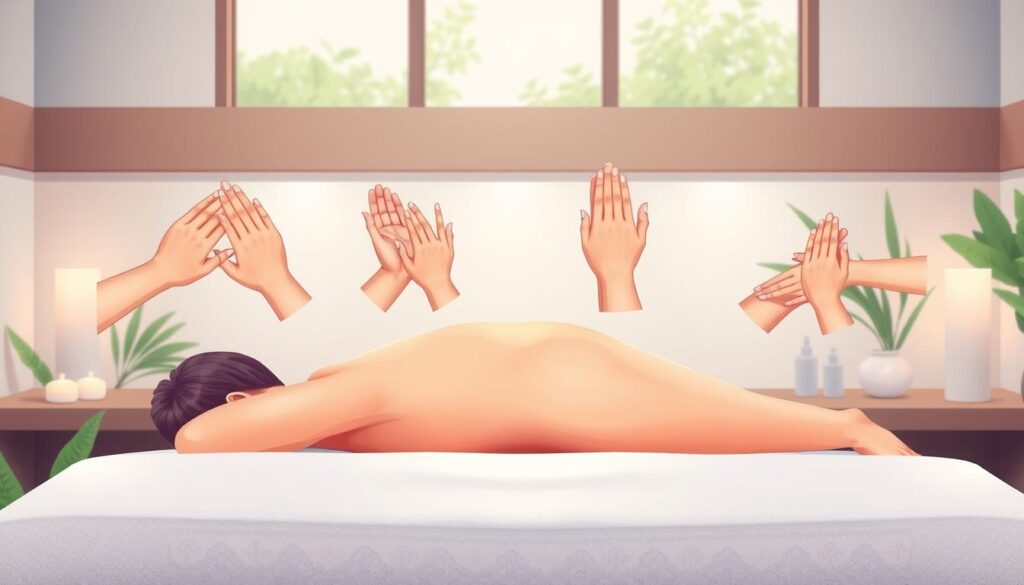
Mastering back massage techniques can help you relax friends and family. A proper back massage eases tension and boosts overall well-being1.
Choose a quiet room with soft lighting for the massage. This creates a soothing environment. Most professional massages last 30-60 minutes12.
Start by warming a teaspoon of high-quality massage oil. Olive oil and grape seed oil work great. The oil amount should be about the size of a quarter12.
Professional techniques include effleurage and petrissage. These methods help release muscle tension. Effleurage strokes should last 3-5 minutes2.
Apply petrissage techniques for 2-5 minutes. This promotes deep relaxation and muscle relief2.
Key Takeaways
- Create a peaceful massage environment with soft lighting and calm music
- Use high-quality massage oils for smooth application
- Learn proper massage techniques for maximum effectiveness
- Communicate with the recipient about pressure and comfort levels
- Practice different massage strokes to improve skill
Understanding the Benefits of a Back Massage
Back massage therapy is more than just pampering. It’s a powerful way to heal and relax. This treatment can greatly improve your physical and mental health3.
Physical Health Advantages
Back massage therapy offers many proven health benefits. Your body can improve in several ways through specific massage techniques4:
- Reduced muscle tension and pain
- Enhanced blood circulation
- Improved flexibility and range of motion
- Accelerated recovery from muscle injuries
Regular massages can help ease back pain. Massage pros can find problem areas and create targeted treatments5.
Mental Wellness Impact
Back massage therapy also greatly affects mental health. Touch can lower stress and balance emotions4:
- Decreased cortisol levels
- Enhanced mood through endorphin release
- Reduced anxiety and depression symptoms
- Improved sleep quality
“Massage is not just a luxury, but a pathway to holistic healing and self-care.”
Adding back massage to your routine can change your health approach. Regular sessions help build long-term physical and mental strength5.
Preparing for the Massage Session
A great back massage starts with careful prep. Setting the stage right can turn a regular massage into a fantastic wellness experience.
Before you start, create the perfect space and gather all needed supplies. The right setting can make a big difference in your massage.
Creating a Relaxing Atmosphere
To set the mood for your back massage, try these tips:
- Dim the lights to create a soft, calming ambiance
- Play gentle, soothing background music
- Ensure the room temperature is comfortable
- Use aromatherapy candles or essential oils
Essential Massage Supplies
Getting the right supplies is key for a smooth massage. Here’s what you’ll need:
| Category | Recommended Items |
|---|---|
| Surface | Massage table or firm, comfortable surface |
| Linens | Clean sheets, towels, and blanket |
| Oils | Massage oil (grape seed, jojoba, or coconut) |
| Additional Items | Pillows for support, hand sanitizer |
Show up early to prep the space and set up your supplies6. Plan for about 15-20 minutes before the massage starts6.
Don’t forget to drink plenty of water before your session. This helps your muscles get ready and stay hydrated6.
Pro tip: Create a calm environment that helps both the massage giver and receiver feel relaxed and comfortable.
Follow these steps to create the perfect setting for a relaxing back massage. Your body and mind will thank you.
Essential Techniques for a Back Massage
Back massage techniques can revolutionize relaxation and pain relief. Mastering these skills is vital for an effective experience. This applies to beginners and those looking to improve.
Professional therapists use various techniques to address muscle needs. These methods provide comprehensive relief. Let’s explore the primary techniques for a therapeutic back massage.
Effleurage: The Gentle Starting Technique
Start with effleurage, a key technique for beginners. Use long, sweeping strokes across the back. Begin at the lower back and move upward.
This method warms up the muscles. It prepares them for deeper work7.
Petrissage: Kneading and Releasing Tension
Petrissage uses palms, fingertips, or knuckles for circular kneading motions. It targets muscle knots and releases built-up tension. Professional massage techniques stress varying pressure and rhythm.
Friction: Targeting Specific Areas
Friction techniques focus on specific muscle groups and trigger points. Apply concentrated pressure in small, circular motions with thumbs or fingertips. This method effectively addresses chronic back pain and muscle stiffness8.
“The key to a great massage is understanding each unique muscle group and responding to the body’s signals.” – Massage Therapy Expert
- Start with light pressure and gradually increase
- Watch for your partner’s comfort signals
- Use a variety of techniques for comprehensive relief
Back massage techniques require practice and sensitivity. Always communicate with the recipient to ensure comfort. This approach guarantees an effective massage experience7.
Tips for a Successful Massage Experience
Mastering back massage requires more than just technical skill. Communication is crucial for an exceptional massage experience. Most people enjoy massages more when therapists use proper hand positioning and muscle warm-up techniques.
Pay attention to your partner’s cues about pressure and comfort. Adjust your approach for the best back massage techniques. Many therapists recommend using bodyweight for pressure to prevent muscle fatigue.
Focus on high-tension areas like the shoulders, where stress often builds up. A professional massage approach uses gentle yet firm movements. These help release muscular knots and promote relaxation9.
After the massage, proper aftercare ensures complete healing. Encourage your partner to drink water and rest. Most massage recipients feel more comfortable with pillow or cushion support.
Help your partner fully absorb the therapeutic benefits. This will help maintain the relaxed state achieved during the massage.
FAQ
How long should a typical back massage last?
A professional back massage usually lasts 15 to 30 minutes. The duration depends on the recipient’s needs and preferences. For a thorough full-back massage, 20-25 minutes is ideal.
Do I need special training to give a good back massage?
Professional massage therapy requires certification. However, you can learn basic techniques for home use. Watch tutorials, read guides, and practice gentle movements.
Communication is key. Be attentive to the recipient’s comfort and feedback.
What type of oil should I use for a back massage?
Natural oils like grape seed, sweet almond, or coconut work well. They provide smooth gliding and nourish the skin. Warm the oil in your hands before applying.
Avoid heavy or scented oils for sensitive skin. Always check for allergies before use.
Can anyone receive a back massage?
Most people can enjoy back massages. However, some medical conditions may prevent it. These include severe osteoporosis, recent injuries, and blood clotting disorders.
Always check for contraindications. Respect the recipient’s physical limitations and consult a healthcare provider if unsure.
How often should I get a back massage?
Frequency depends on individual needs. For stress relief, every 2-4 weeks is beneficial. Weekly massages might help with chronic pain or muscular issues.
Listen to your body. Consult a professional massage therapist for personalized advice.
Is it normal to feel sore after a massage?
Mild soreness is normal and typically resolves within a day or two. This “massage soreness” occurs due to muscle tension release.
Stay hydrated and apply a warm compress to help. Gentle stretching can also alleviate post-massage discomfort.
What should I wear during a back massage?
Wear comfortable, loose clothing that’s easy to remove. Many people undress to their underwear and are covered with a sheet.
The most important factor is feeling relaxed and at ease during the massage.
Can a back massage help with specific conditions?
Back massages can help manage muscle tension, stress, and poor circulation. However, they’re not a substitute for medical treatment.
For chronic pain or health issues, consult a healthcare professional. They can provide comprehensive treatment advice.
Source Links
- Tips and Techniques for Giving a Great Back Massage – https://carrington.edu/blog/tips-and-techniques-for-giving-a-great-back-massage/
- How to Give a Back Massage: 15 Steps (with Pictures) – wikiHow – https://www.wikihow.com/Give-a-Back-Massage
- Relaxing Back Massage: How to give a Back Massage? | Tips – https://flamingos.villadelpalmar.com/blog/wellness/relaxing-back-massage
- Discovering the Benefits of Back Relief Massage for Long-Term Wellness – https://compassionatehart.com/discovering-the-benefits-of-back-relief-massage-for-long-term-wellness/
- The Benefits of Massage Therapy for Back Pain | NYC Spine – https://newyorkcityspine.com/the-benefits-of-massage-therapy-for-back-pain/
- What to Do Before and After a Massage – https://www.vivadayspa.com/news-tips/what-to-do-before-and-after-a-massage/
- The Best Back Massage Practices: Heal Chronic Back Pain – https://healingtouchmassageclinic.com/the-best-back-massage-practices-heal-chronic-back-pain/
- Lower Back Massage: Instructions, Self-Massage, Benefits, and More – https://www.healthline.com/health/back-pain/lower-back-massage
- 7 Tips For Giving A Perfect Massage From Experts — Press Modern Massage – https://www.pressmodernmassage.com/blogs/going-deep/perfect-massage

