
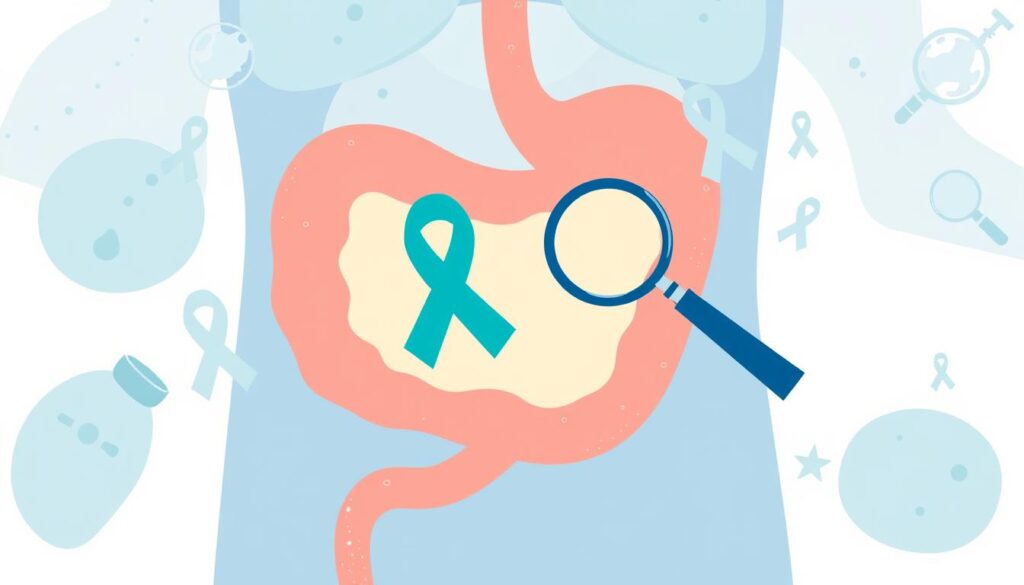
Stomach cancer starts with small DNA changes in stomach cells. These changes lead to abnormal growth and tumor formation1. Your risk goes up as you age, with most cases happening after 651.
Stomach tumors are the fifth most common cancer worldwide2. Men have a slightly higher lifetime risk than women1. Diagnosis rates vary across different populations2.
In the U.S., some groups face higher rates of gastric cancer. These include Black, Hispanic, Asian, and Native American individuals2. Knowing your personal risk factors can help with early detection and prevention.
Key Takeaways
- Stomach cancer develops gradually through cellular changes
- Age and gender influence cancer risk
- Worldwide prevalence varies by geographic region
- Early awareness is crucial for potential prevention
- Certain populations have higher diagnosis rates
Understanding Stomach Cancer: What You Need to Know
Stomach cancer is a serious health condition affecting thousands worldwide. It’s a complex medical challenge that requires understanding its nature, types, and prevalence.
What is Stomach Cancer?
Stomach cancer, or Gastric Carcinoma, grows in the stomach’s inner lining. Most stomach cancers are adenocarcinomas, starting in the stomach’s glandular cells3.
There are two main types of stomach cancer:
- Gastric cardia cancer
- Non-cardia gastric cancer3
How Common is Stomach Cancer?
Stomach cancer rates vary across different populations. Overall rates are declining, but some groups face higher risks. Diagnosis rates of Stomach Neoplasm differ based on ethnicity, gender, and age.
Different Types of Stomach Cancer
Besides Gastric Adenocarcinoma, other types of stomach cancer include:
- Gastrointestinal Neuroendocrine Tumors
- Gastrointestinal Stromal Tumors (GIST)
- Primary Gastric Lymphoma
- Rare types like squamous cell carcinoma3
“Understanding the various types of stomach cancer is crucial for effective diagnosis and treatment.”
Adenocarcinomas can be intestinal or diffuse. Intestinal adenocarcinomas are well-differentiated. Diffuse adenocarcinomas are poorly differentiated and spread quickly3.
Knowing about stomach cancer helps you understand potential risks. It also helps you seek proper medical guidance when needed.
Recognizing the Signs and Symptoms
Stomach cancer often develops quietly. Its symptoms can mimic common digestive issues. Early detection is key for effective treatment4.
Early Warning Signs to Watch For
Your body may signal potential stomach health issues. Be alert to these early indicators:
- Persistent indigestion or heartburn
- Difficulty swallowing
- Feeling unusually full after small meals
- Unexplained weight loss
These signs can be mistaken for minor issues. Awareness is crucial for early detection5. Gastric ulcers may show similar symptoms.
Always seek professional medical evaluation if concerned.
Advanced Symptoms You Shouldn’t Ignore
As the cancer progresses, more severe symptoms may appear:
- Blood in stool
- Severe abdominal pain
- A noticeable lump in the abdomen
- Chronic nausea or vomiting
“Early detection can significantly improve treatment outcomes for stomach cancer patients.”
When to See a Doctor
Consult a doctor if you have ongoing digestive symptoms. This is especially important if you have risk factors like family history.
Doctors may recommend stomach surgery or gastric resection for accurate diagnosis4. Early detection greatly improves treatment success.
Men face twice the risk of stomach cancer5. Regular screenings are particularly vital for this group.
Key Risk Factors and Prevention Strategies
Your lifestyle and genes affect your stomach cancer risk. H. pylori infection is a major cause, leading to chronic inflammation. This can trigger cell changes that may lead to cancer6.
Men are more likely to get stomach cancer than women7. Some genetic conditions, like HDGC, increase lifetime risk7. Your ethnic background and family history also play a role8.
Smoking doubles your risk of stomach cancer7. Drinking three or more alcoholic drinks daily also raises your chances8. Gastroesophageal Reflux Disease and stomach polyps can contribute too.
Regular check-ups and a healthy diet can help lower your risk. Eating fruits and vegetables is especially important. Managing existing conditions is also crucial for prevention.
Screenings and addressing H. pylori infections are key prevention steps. Understanding your genetic risks is helpful too. Talk to your doctor about strategies that fit your unique risk profile.
FAQ
What is stomach cancer?
Stomach cancer is a malignancy in the stomach lining. It happens when stomach cells grow abnormally, forming tumors. Adenocarcinoma, starting in mucus-producing cells, is the most common type.
Who is most at risk for stomach cancer?
People over 65, males, and certain ethnic groups face higher risks. Key factors include H. pylori infection, chronic gastritis, and obesity.
Smoking, high intake of salted foods, and genetic factors also increase risk. Hereditary diffuse gastric cancer (HDGC) is a notable genetic predisposition.
What are the early warning signs of stomach cancer?
Early symptoms can be subtle. They include trouble swallowing, bloating after eating, and feeling full quickly.
Other signs are heartburn, indigestion, nausea, stomach pain, and unexpected weight loss. Advanced stages may cause bloody stools or severe pain.
How is stomach cancer diagnosed?
Doctors use upper endoscopy, biopsy, and imaging tests like CT scans. Blood tests are also common.
In some cases, laparoscopic surgery helps stage the cancer. This procedure aids in creating the best treatment plan.
Can stomach cancer be prevented?
While complete prevention isn’t possible, you can lower your risk. Eat a diet rich in fruits and vegetables.
Avoid tobacco, limit alcohol, and maintain a healthy weight. Treat H. pylori infections promptly. Regular check-ups are crucial, especially with family history.
What are the different types of stomach cancer?
The main types are adenocarcinoma, lymphomas, gastrointestinal stromal tumors (GISTs), and neuroendocrine tumors. Adenocarcinoma is most common.
Adenocarcinomas have two subtypes: intestinal and diffuse. These differ in growth patterns and characteristics.
Is stomach cancer treatable?
Treatment depends on cancer stage, location, and overall health. Options include surgery, chemotherapy, radiation, targeted therapy, and immunotherapy.
Early detection greatly improves treatment outcomes. It increases the chances of successful recovery.
Source Links
- Stomach cancer – Symptoms and causes – https://www.mayoclinic.org/diseases-conditions/stomach-cancer/symptoms-causes/syc-20352438
- Causes of Stomach Cancer – https://www.cancer.gov/types/stomach/causes-risk-factors
- What Is Stomach Cancer? – https://www.cancer.gov/types/stomach
- Stomach cancer: Recognize the signs and reduce your risk – https://uknow.uky.edu/uk-healthcare/stomach-cancer-recognize-signs-and-reduce-your-risk
- Stomach cancer – https://www.nhsinform.scot/illnesses-and-conditions/cancer/cancer-types-in-adults/stomach-cancer/
- Gastric cancer: prevention, risk factors and treatment – https://pmc.ncbi.nlm.nih.gov/articles/PMC4017429/
- What Are the Risk Factors for Stomach Cancer? – https://www.cancer.org/cancer/types/stomach-cancer/causes-risks-prevention/risk-factors.html
- Stomach Cancer Risk Factors & Prevention – https://www.mskcc.org/cancer-care/types/stomach-gastric/risk-prevention-screening

