
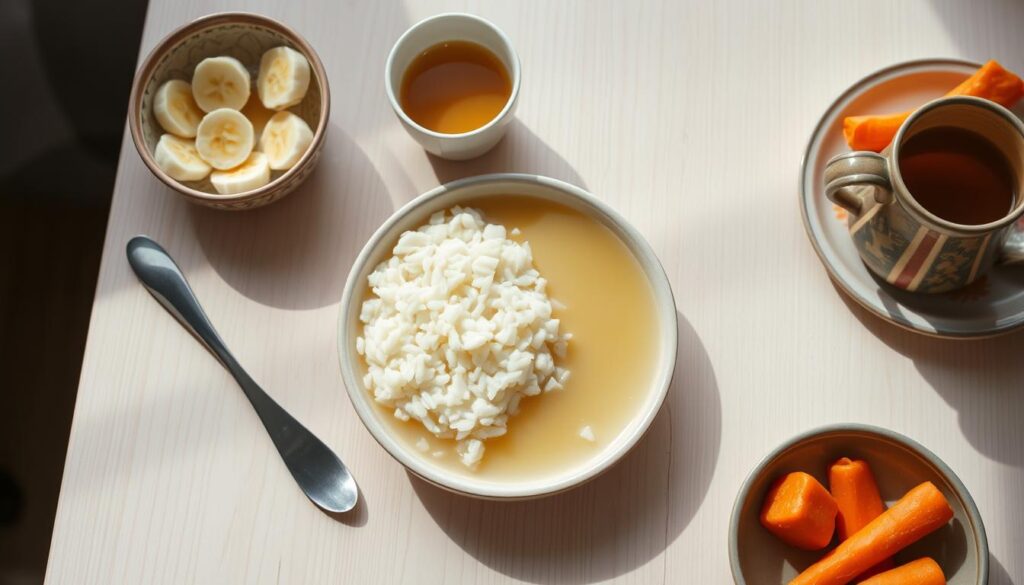
Stomach flu can be tough, but the right diet can ease your recovery. Norovirus affects about 21 million people yearly in the U.S1. Picking easy-to-digest foods is key when your stomach is upset.
Focus on foods that help healing and provide comfort. Choose options that are gentle, hydrating, and easy on your system. This approach will support your body’s recovery process.
Stomach flu diet isn’t just about food choices. It’s also about how you eat during illness. Simple, bland foods can provide nutrition while allowing your stomach to heal.
Bananas, rice, applesauce, and toast are good options. These foods offer nutrients without overwhelming your sensitive digestive system1.
Key Takeaways
- Stomach flu affects millions of people annually
- Choose gentle, easily digestible foods during recovery
- Hydration is critical when fighting stomach flu
- Bland foods can help manage symptoms
- Listen to your body and eat slowly
Understanding Stomach Flu and Hydration Essentials
Stomach flu can quickly drain your body’s resources. Hydration is crucial for recovery. Maintaining electrolyte balance is a top priority for healing2.
Different viruses can trigger stomach flu with varying symptom durations. Norovirus might last one to three days. Other viruses could persist up to two weeks2.
Your primary defense is maintaining proper hydration. Replenishing essential nutrients is also key.
Signs of Dehydration to Watch For
Recognizing dehydration early can prevent serious complications. Key indicators include:
- Extreme lethargy
- Decreased urination
- Dry mouth and lips
- Dizziness or lightheadedness
- Dark-colored urine
Best Hydrating Beverages for Recovery
Your drink choices matter significantly when battling stomach bugs. Opt for clear liquids that restore water and electrolyte balance:
- Water (primary hydration source)
- Clear broths
- Herbal teas
- Coconut water
Electrolyte-Rich Drinks and Solutions
Some groups need special attention during hydration for stomach flu2. These include children, older adults, and those with weakened immune systems.
Oral rehydration solutions like Pedialyte provide an optimal blend of electrolytes and glucose. They support recovery effectively.
“Proper hydration is your body’s strongest weapon against stomach flu complications.”
Sports drinks can help adults but might contain too much sugar for children. Always consult healthcare professionals for personalized guidance on managing symptoms3.
What to Eat with Stomach Flu
Choosing the right foods is crucial when you have stomach flu. A bland diet helps your digestive system heal and regain strength4. Quick recovery foods are gentle on your stomach and provide essential nutrients.
The BRAT diet is a popular approach for managing stomach flu symptoms. It includes:
- Bananas: Easy to digest and rich in potassium
- Rice: A bland, gentle carbohydrate
- Applesauce: Provides mild nutrition
- Toast: Simple and easily tolerated
Other soothing foods for upset stomachs are available too. Try these options:
- Lean proteins like skinless chicken
- Probiotic-rich yogurt4
- Clear broths
- Boiled potatoes
| Recommended Foods | Benefits |
|---|---|
| Ginger tea | Reduces nausea |
| Watermelon | Provides hydration |
| Plain crackers | Settles stomach |
Remember to introduce foods slowly and in small quantities to prevent overwhelming your digestive system5.
Steer clear of dairy, spicy, and fatty foods. These can make your symptoms worse. Medical experts recommend sticking to bland, easily digestible options4. This approach supports your recovery best.
Conclusion
Recovering from stomach flu takes patience and care. Following the right diet can speed up your healing process6. Good nutrition and staying hydrated are crucial for managing symptoms and supporting recovery stomach flu management7.
Focus on slowly reintroducing foods while staying hydrated. Bland options like toast and bananas can soothe your stomach6. Some studies suggest probiotics and zinc might help shorten symptom duration7.
Keep in mind that diet alone can’t cure the viral infection. Your body needs time to fight off the illness8. If symptoms worsen or you have severe dehydration, seek medical help8.
Rest, hydration, and listening to your body are key to overcoming stomach flu. Be patient and give yourself time to heal fully.
FAQ
What is the best diet when I have stomach flu?
The BRAT diet (Bananas, Rice, Applesauce, Toast) is a good start. Stick to bland, easily digestible foods like potatoes, crackers, and skinless chicken. Eat small, frequent meals and slowly return to your normal diet as you feel better.
How can I prevent dehydration during stomach flu?
Sip clear fluids like water, unsweetened tea, or oral rehydration solutions. Drink electrolyte-rich beverages to replace lost minerals. Avoid caffeine and alcohol, and watch for signs of dehydration like tiredness and headaches.
Are sports drinks good for stomach flu?
Sports drinks can work for adults but may be too sugary for kids. For best results, use oral rehydration solutions like Pedialyte. These have a better balance of sugar and electrolytes.
What foods should I avoid when I have stomach flu?
Stay away from dairy, fatty foods, spicy dishes, and high-sugar items. These can upset your stomach and make symptoms worse. Stick to simple, easy-to-digest foods until you feel better.
Can probiotics help during stomach flu?
Yes, probiotic foods like yogurt and kefir can help restore gut health. They support your digestive system and may speed up recovery. Add these foods slowly as you start feeling better.
How long should I follow a bland diet?
Stick to bland foods for 2-3 days or until you feel much better. Then slowly add normal foods back into your diet. Focus on nutrient-rich, easy-to-digest options and listen to your body.
When should I see a doctor about stomach flu?
See a doctor if symptoms last more than a few days. Get help if you can’t keep fluids down or have severe dehydration. Seek medical care for high fever or blood in your stool.
Infants, children, and older adults may need medical attention sooner. Don’t hesitate to call your doctor if you’re worried.
Source Links
- What to Eat When You Have the Stomach Flu: 17 Great Options – https://www.healthline.com/nutrition/what-to-eat-when-you-have-the-stomach-flu
- Have a Stomach Bug? This Is When You’ll Feel Better – https://www.health.com/condition/digestive-health/stomach-flu-remedies
- Stomach Flu Survival Guide – https://truecare.org/blog/stomach-flu-survival-guide/
- What You Should Eat—and Avoid—When You Have the Stomach Flu – https://www.health.com/stomach-flu-what-to-eat-8351161
- What Should You Eat When You Have the Stomach Flu? – https://health.clevelandclinic.org/eat-drink-avoid-stomach-flu
- 8 Helpful Tips to Handle Stomach Flu in Kids and Toddlers – https://yourkidsurgentcare.com/8-tips-to-handle-stomach-flu-in-kids/
- Got gastro? Here’s why eating bananas helps but drinking flat lemonade might not – https://theconversation.com/got-gastro-heres-why-eating-bananas-helps-but-drinking-flat-lemonade-might-not-198293
- Stomach Flu (Gastroenteritis): Symptoms, Types, Prevention and Treatment (At Home) | Metropolis TruHealth Blog – https://www.metropolisindia.com/blog/preventive-healthcare/stomach-flu-symptoms-and-treatment

