
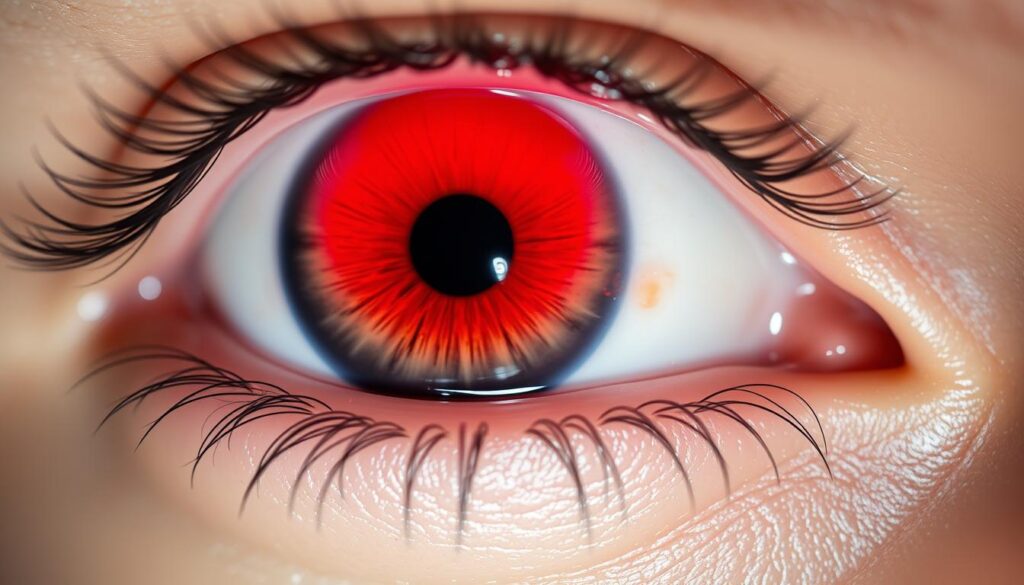
A subconjunctival hemorrhage can startle you with its bright red appearance on your eye’s white part. It happens when a tiny blood vessel breaks beneath the eye’s surface1. Although alarming, it’s usually harmless and heals on its own2.
Your red or bloody eye might result from everyday actions like coughing, sneezing, or straining. These common triggers can cause an eye hemorrhage1. Most people experience this without any significant eye damage2.
Knowing about this condition can help you stay calm if you see a red patch on your eye. A subconjunctival hemorrhage typically clears up within two to three weeks12. No special treatment is usually needed.
Key Takeaways
- Subconjunctival hemorrhage is usually harmless
- Common triggers include coughing and sneezing
- The condition typically resolves within 2-3 weeks
- Most cases do not require medical intervention
- Gentle eye care can help prevent potential trauma
Understanding Subconjunctival Hemorrhage
A burst blood vessel in the eye can be startling. It’s called subconjunctival hemorrhage. Tiny blood vessels break beneath the eye’s surface, causing a red patch.
This condition looks alarming but is typically harmless. Eye discoloration can happen from everyday activities. Small bleeds can result from various causes1.
- Violent coughing
- Powerful sneezing
- Straining
- Vomiting
- Minor eye trauma
What Exactly Happens?
Blood gets trapped beneath the eye’s clear surface. This condition affects about 2.9% of patients3. The risk increases with age, especially for those over 503.
Common Symptoms to Recognize
Most people notice a subconjunctival hemorrhage in the mirror4. Key signs include:
- A bright red patch on the white of the eye
- No pain or vision changes
- Possible slight scratchy sensation
- Spontaneous occurrence
These eye bleeds usually heal within 10-14 days without treatment4. However, recurring hemorrhages may need medical evaluation1.
“Most subconjunctival hemorrhages are harmless and do not affect your vision” – Eye Health Professionals
Causes of Subconjunctival Hemorrhage
Subconjunctival hemorrhage can be triggered by eye trauma and various medical factors. Knowing its causes helps manage and prevent this eye condition. It’s often alarming but usually harmless.
Common Triggers and Risk Factors
Everyday activities can lead to subconjunctival hemorrhage. Common triggers include:
Certain lifestyle and health factors increase your risk of eye redness. Patients over 50 are more likely to experience subconjunctival hemorrhage.
Medical Conditions That May Contribute
| Medical Condition | Impact on Subconjunctival Hemorrhage |
|---|---|
| Hypertension | Increases risk, especially in older adults5 |
| Diabetes | Heightens susceptibility to eye trauma3 |
| Blood-thinning medications | Can increase likelihood of hemorrhage1 |
Contact lens users should be particularly cautious. Improper lens handling can lead to eye injury and potential hemorrhage3.
“Understanding your individual risk factors is key to preventing subconjunctival hemorrhage.”
Most cases heal without treatment. However, persistent symptoms or recurring eye redness require professional medical evaluation5.
When to Seek Medical Attention
Most subconjunctival hemorrhages are harmless. However, certain symptoms require immediate medical evaluation. Recognizing these signs is crucial for your eye health.
Your eye health is paramount. Certain signs indicate the need for an eye specialist consultation.
Critical Warning Signs
- Persistent red patch lasting more than two weeks6
- Multiple subconjunctival hemorrhages occurring frequently6
- Accompanying eye pain or vision changes6
- History of bleeding disorders or high blood pressure6
- Recent eye trauma or injury
The Role of an Eye Specialist
Eye specialists are vital in diagnosing and managing eye hemorrhage complications. They perform thorough evaluations to identify serious underlying conditions7.
| Specialist Focus | Potential Treatments |
|---|---|
| Corneal Diseases | External eye condition assessment |
| Trauma Evaluation | Detailed eye injury examination |
| Diagnostic Screening | Blood pressure and bleeding disorder checks |
Remember, while most eye hemorrhages resolve naturally, professional medical guidance ensures your visual health remains protected.
Early detection and professional consultation can prevent potential long-term eye complications.
Treatment Options for Subconjunctival Hemorrhage
Most subconjunctival hemorrhages heal without major medical intervention8. Your body naturally mends the small blood spot in days or weeks8. Stay calm and understand the healing process, despite the alarming appearance9.
Home care can aid recovery. Don’t rub your eyes too hard to avoid worsening the condition8. A cool compress may offer mild comfort. Avoid direct pressure on the affected area.
If you wear contacts, take a break until the hemorrhage heals. This prevents potential friction or additional irritation8.
Usually, no specific medical treatment is needed. Medical professionals recommend monitoring the healing and watching for new symptoms8. Manage blood pressure and wear protective eyewear to reduce future risks8.
Consult an eye specialist if your red eye persists or hemorrhages recur. They can check for underlying conditions like diabetes or blood clotting disorders9. Most subconjunctival hemorrhages heal completely within 7-14 days9.
FAQ
What exactly is a subconjunctival hemorrhage?
A subconjunctival hemorrhage occurs when a tiny blood vessel breaks under your eye’s clear surface. It appears as a bright red patch on the white of your eye. This condition looks alarming but is typically harmless.
What causes a subconjunctival hemorrhage?
Various factors can trigger this condition. These include violent coughing, powerful sneezing, straining, vomiting, or roughly rubbing your eye. Trauma from a foreign object can also cause it.
Risk factors include diabetes, high blood pressure, and blood-thinning medications. Blood-clotting disorders may also increase your chances of experiencing this condition.
Is a subconjunctival hemorrhage painful?
Usually, a subconjunctival hemorrhage doesn’t cause pain or vision changes. You might feel a slight scratch on your eye’s surface. Most people don’t experience any discomfort at all.
The condition typically resolves on its own within two to three weeks.
When should I see a doctor about a subconjunctival hemorrhage?
Consult a healthcare provider if you have recurrent subconjunctival hemorrhages. Seek medical attention if it’s due to eye trauma or causes pain or vision changes.
Also, see a doctor if you notice other areas of bleeding or bruising.
Can subconjunctival hemorrhage be prevented?
While no definitive prevention methods exist, you can take steps to reduce your risk. Maintain healthy blood pressure and be careful with blood-thinning medications.
Avoid activities that might increase eye pressure. Practice gentle eye care and don’t rub your eyes excessively.
Is a subconjunctival hemorrhage serious?
In most cases, a subconjunctival hemorrhage isn’t serious. It usually heals on its own within 2-3 weeks.
However, frequent occurrences, especially in older adults, may signal an underlying health issue. If this happens, consult a healthcare professional.
What does a subconjunctival hemorrhage look like as it heals?
As the hemorrhage heals, the white of your eye may change colors. It starts as a bright red patch and gradually turns yellow.
Eventually, it disappears completely. This color change is normal and shouldn’t worry you.
Can newborns get subconjunctival hemorrhages?
Yes, subconjunctival hemorrhages are common in newborn infants. They may occur due to pressure changes during childbirth.
In most cases, these hemorrhages are harmless. They usually resolve on their own without any treatment.
Source Links
- Subconjunctival hemorrhage (broken blood vessel in eye)-Subconjunctival hemorrhage (broken blood vessel in eye) – Symptoms & causes – Mayo Clinic – https://www.mayoclinic.org/diseases-conditions/subconjunctival-hemorrhage/symptoms-causes/syc-20353826
- Subconjunctival hemorrhage – https://www.mountsinai.org/health-library/diseases-conditions/subconjunctival-hemorrhage
- Subconjunctival hemorrhage: risk factors and potential indicators – https://pmc.ncbi.nlm.nih.gov/articles/PMC3702240/
- Subconjunctival Hemorrhage – Eye Diseases and Conditions – Services – WK Eye Institute – TOP Eye Doctors – TOP Ophthalmologists – TOP Optometrists – Your Eye Specialists in Shreveport Bossier City – Best Eye Care Center – Shreveport – Bossier City Louisiana – https://www.wkeyeinstitute.com/Services/Eye-Diseases-and-Conditions/Subconjunctival-Hemorrhage
- Subconjunctival Hemorrhage – https://www.webmd.com/eye-health/subconjunctival-hemorrhage-eye-red-spot-causes
- Subconjunctival Hemorrhage – Eye Diseases and Conditions – Services – WK Eye Institute – TOP Eye Doctors – TOP Ophthalmologists – TOP Optometrists – Your Eye Specialists in Shreveport Bossier City – Best Eye Care Center – Shreveport – Bossier City Louisiana – https://www.wkeyeinstitute.com/Services/Eye-Diseases-and-Conditions/Subconjunctival-Hemorrhage/
- Subconjunctival Hemorrhage – Causes and Treatment – http://www.medparkhospital.com/en-US/disease-and-treatment/subconjunctival-hemorrhage
- Subconjunctival Hemorrhage Causes and Treatment Options – https://www.carecredit.com/well-u/health-wellness/subconjunctival-hemorrhage/
- The Most Effective Subconjunctival Hemorrhage Treatments – NVISION – https://www.nvisioncenters.com/conditions/subconjunctival-hemorrhage/

