
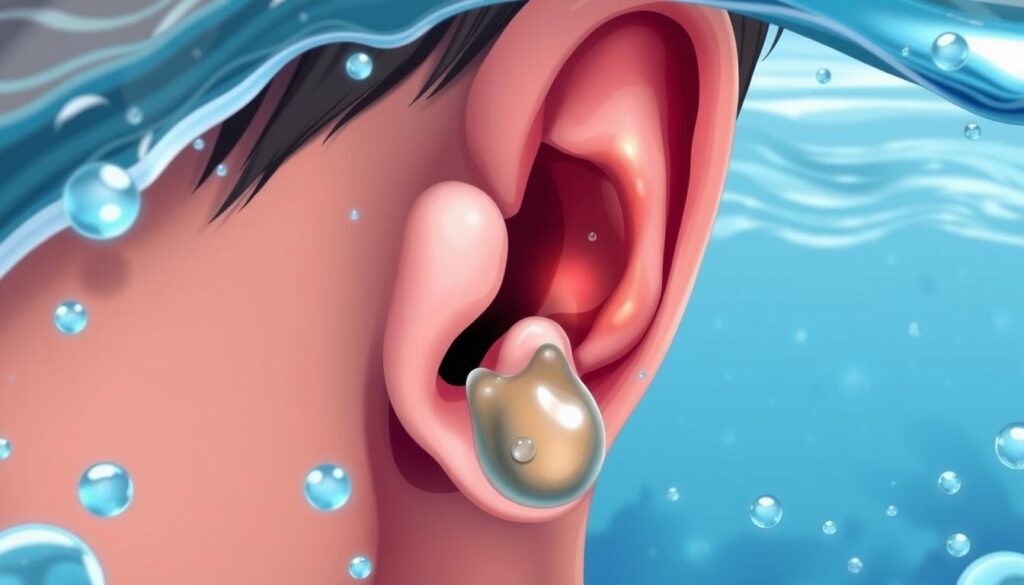
Swimmer’s ear is a bothersome ear canal inflammation. It happens when moisture gets trapped in your ear, creating a perfect home for bacteria1. This condition can quickly disrupt your daily life.
You don’t have to be a swimmer to get this infection. It can affect anyone who gets water in their ears2. Even bathing can lead to swimmer’s ear.
Inserting objects like cotton swabs into your ear can cause irritation. This can potentially lead to infection1. Skin conditions like eczema or psoriasis may also increase your risk2.
Knowing the risks and prevention methods is key. It can help you protect your ears from this uncomfortable infection.
Key Takeaways
- Swimmer’s ear is an ear canal infection caused by moisture and debris
- Water activities and improper ear cleaning can increase infection risk
- Proper ear care and drying techniques are essential for prevention
- Most cases can be treated with antibiotic ear drops
- Seek medical attention if symptoms persist or worsen
Understanding Swimmer’s Ear and Its Causes
Ear infections can disrupt your daily life. Swimmer’s ear, or otitis externa, affects the outer ear canal. This condition can be uncomfortable and hinder your normal routine.
What Exactly is Otitis Externa?
Otitis externa inflames the outer ear canal. It runs from the eardrum to the outside of the head. Bacteria usually cause it, but fungi and viruses can too3.
The nickname “swimmer’s ear” comes from its link to water exposure. This often leads to the infection’s development.
Common Causes and Risk Factors
Several factors can increase your risk of this ear infection:
- Prolonged moisture in the ear canal4
- Swimming in contaminated water5
- Damage to the ear canal’s protective skin
- Exposure to warm, humid environments5
How the Infection Develops
The infection occurs when your ear’s natural defenses fail. Water retention and minor ear injuries create ideal conditions for bacteria or fungi3.
Swimmers and those often exposing ears to moisture are at risk4. The condition affects teens and young adults more frequently3.
“Prevention is always better than cure when it comes to ear health.” – Medical Professionals
Swimmer’s ear peaks during summer. This is when swimming activities increase4.
Recognizing Early and Advanced Symptoms
Swimmer’s ear develops in stages, with symptoms getting worse over time. Spotting these signs early can help you act fast and avoid complications6.
Early symptoms often start with subtle signs. You might not notice them at first.
- Mild itching inside the ear canal7
- Slight redness in the outer ear7
- A feeling of fullness or blockage7
- Clear, odorless drainage7
As the infection worsens, you’ll notice more pain and discharge. The ear becomes tender to touch7.
Advanced stages can bring serious issues:
- Severe pain radiating to face or neck6
- Complete blockage of the ear canal
- Potential fever
- Muffled hearing due to inflammation7
“Early recognition of swimmer’s ear symptoms can prevent more serious complications” – Ear Health Experts
Seek medical help if you have muffled hearing or ongoing ear discharge. Most cases improve within two days of proper treatment6.
Untreated cases can lead to rare but serious problems. This is especially true for people with weak immune systems6.
| Symptom Stage | Key Characteristics |
|---|---|
| Early Stage | Mild itching, slight redness, minimal discomfort |
| Intermediate Stage | Increased pain, more noticeable ear discharge |
| Advanced Stage | Severe pain, potential fever, muffled hearing |
Protect your ears and get timely medical advice. This can stop swimmer’s ear from getting worse6.
Prevention and Treatment Options for Ear Canal Infections
Swimmer’s ear can be frustrating. Understanding prevention techniques and treatment options helps manage this uncomfortable infection. Protecting ear health requires medical care and personal hygiene.
Managing ear canal infections involves key strategies for quick recovery. These strategies also help prevent future occurrences recommended by medical professionals.
Medical Treatment Approaches
Healthcare providers typically prescribe specific ear drops to combat swimmer’s ear. These may include:
- Antibiotic ear drops to fight bacterial infections8
- Antifungal medications for fungal-based infections9
- Corticosteroid drops to reduce inflammation
Home Care and Recovery Tips
Your recovery process is crucial in healing swimmer’s ear. Follow these essential steps:
- Keep your ears dry during treatment8
- Avoid swimming or submerging your head in water
- Gently dry your ears after showering or accidental water exposure8
When to Seek Professional Help
Be aware of warning signs that require immediate medical consultation:
| Symptoms | Action Required |
|---|---|
| Severe ear pain | Immediate medical evaluation |
| Fever | Contact healthcare provider |
| Persistent symptoms | Schedule follow-up appointment |
Most cases of swimmer’s ear clear up within 10 days with proper treatment8.
Remember, prevention is always better than cure. Protect your ears and stay healthy!
Conclusion
Preventing swimmer’s ear begins with understanding and proactive ear health management. Protect your ears from infections while enjoying water activities. Simple strategies can significantly reduce your risk of developing otitis externa1011.
Proper ear care is key to infection prevention. Dry your ears thoroughly after swimming or water exposure. Consider using specialized ear drops designed for swimmers. Custom-fitted swimming earplugs offer excellent protection against water entry12.
Maintain good ear hygiene through gentle cleaning. Avoid inserting objects into your ear canal. Seek medical advice if you experience persistent ear discomfort, pain, itching, or discharge11.
Early intervention can prevent serious complications and ensure quick recovery. Professional guidance can make a significant difference in managing potential infections12. Ear health requires consistent attention and care.
Stay informed and practice prevention to keep your ears safe. Respond quickly to potential issues. Enjoy water activities while maintaining healthy ears.
FAQ
What is swimmer’s ear?
Swimmer’s ear is an infection of the outer ear canal. It happens when water stays in your ear after swimming. This creates a moist environment for bacteria to grow. The infection can cause discomfort ranging from mild itching to severe pain.
How can I tell if I have swimmer’s ear?
Early signs include itching, mild redness, and slight discomfort in the ear canal. As it worsens, you may feel intense pain and notice excessive fluid drainage. You might also experience a feeling of fullness in your ear.
Advanced stages can cause pain that spreads to your face or neck. A low-grade fever may also develop.
What causes swimmer’s ear?
The main causes are prolonged moisture in the ear and exposure to dirty water. Damage to the ear canal’s delicate skin can also lead to infection. Bacteria are usually responsible, but fungi and viruses can cause it too.
Using cotton swabs or swimming in unclean water increases your risk. Small cuts in the ear canal can also make you more susceptible.
How can I prevent swimmer’s ear?
Keep your ears dry and use waterproof earplugs while swimming. Avoid putting objects into your ear canal. After swimming, gently dry your ears with a towel.
Consider using ear drops to remove moisture. Don’t swim in dirty water and maintain good ear hygiene.
What treatments are available for swimmer’s ear?
Treatments typically include antibiotic or antifungal ear drops. Corticosteroid drops may be used to reduce swelling. Your doctor might prescribe pain medication if needed.
Home care involves keeping the ear dry and following the prescribed treatment. Avoid swimming until the infection clears up.
When should I see a doctor?
Seek medical help if you have severe ear pain or fever. Also, see a doctor if symptoms persist or worsen despite home treatment. Significant hearing loss is another reason to get professional care.
Quick medical attention can prevent complications and ensure fast recovery.
How long does swimmer’s ear typically last?
With proper treatment, swimmer’s ear usually clears up in 7-10 days. Follow your doctor’s instructions and keep your ear dry. Complete the full course of prescribed medication for a full recovery.
Can swimmer’s ear lead to serious complications?
If untreated, swimmer’s ear can cause more serious infections. It may spread to surrounding tissues or cause temporary hearing loss. In rare cases, it can damage bone and cartilage.
Early detection and proper treatment are crucial to avoid these complications.
Source Links
- Swimmer’s Ear: Care Instructions – https://myhealth.alberta.ca/Health/aftercareinformation/pages/conditions.aspx?hwid=te8205
- Acute Otitis Externa (Swimmer’s Ear) – https://www.aafp.org/pubs/afp/issues/2023/0200/patient-information-acute-otitis-externa.html
- Swimmer’s ear – https://www.mountsinai.org/health-library/diseases-conditions/swimmers-ear
- Swimmer’s Ear (Otitis Externa) (for Parents) – https://kidshealth.org/en/parents/swimmer-ear.html
- Swimmer’s Ear (Otitis Externa) – https://www.hopkinsmedicine.org/health/conditions-and-diseases/otitis-externa
- What Is Swimmer’s Ear? – https://www.webmd.com/cold-and-flu/ear-infection/understanding-swimmer-ear-basics
- Swimmer’s Ear: Symptoms, Causes, and When to Consult Your Primary Care Doctor in Southington, CT – https://docsmedicalgroup.com/docsurgentcare/swimmers-ear-symptoms-causes-and-when-to-consult-your-primary-care-doctor-in-southington-ct/
- Swimmer’s Ear – https://www.hopkinsmedicine.org/health/conditions-and-diseases/swimmers-ear
- Swimmer’s ear-Swimmer’s ear – Symptoms & causes – Mayo Clinic – https://www.mayoclinic.org/diseases-conditions/swimmers-ear/symptoms-causes/syc-20351682
- What is Swimmer’s Ear? | Annapolis and Severna Park, MD – https://aaentmd.com/blog/what-is-swimmers-ear/
- Swimmer’s Ear (Otitis Externa) | Kaiser Permanente – https://healthy.kaiserpermanente.org/health-wellness/health-encyclopedia/he.swimmer’s-ear-otitis-externa.za1096
- Swimmer’s Ear: Prevention and Treatment | Annapolis and Severna Park, MD – https://aaentmd.com/blog/swimmers-ear-prevention-and-treatment/

