
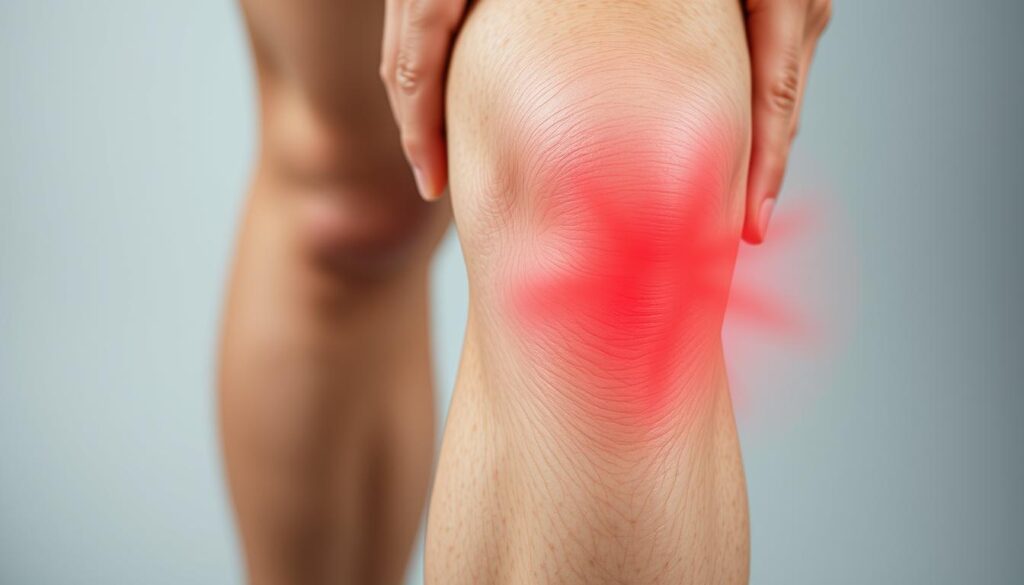
Knee swelling can be frustrating and uncomfortable. It happens when extra fluid builds up around your knee joint. This can cause pain and make it hard to move your leg.
You might notice visible swelling and stiffness in your knee. Understanding why your joint gets inflamed can help you manage and prevent knee pain.
Many things can cause knee swelling. Sports injuries, medical conditions, and lifestyle choices all play a role. Athletes who play sports with quick direction changes are more likely to hurt their knees.
Extra weight can put stress on your knee joints. This can make the tissues wear down faster. As you get older, you’re more likely to have knee problems1.
Arthritis, infections, and sudden injuries can also make your knee swell. Knowing these causes can help you take steps to keep your knees healthy2.
Key Takeaways
- Knee swelling can result from sports injuries, medical conditions, and lifestyle factors
- Sudden movements and excess weight contribute to knee joint stress
- Age increases the risk of knee-related complications
- Different sports and activities have varying impacts on knee health
- Early recognition of knee swelling symptoms is crucial for effective management
Understanding the Causes of a Swollen Knee
Knee swelling can be caused by various issues. Knowing these causes helps identify the source of discomfort. This knowledge allows you to seek proper treatment3.
Your knee may swell due to medical conditions, injuries, or inflammation. Let’s look at the common reasons for knee swelling.
Common Medical Conditions
Several medical conditions can cause knee swelling. Arthritis is a main cause. Osteoarthritis happens when bones rub together, causing inflammation3.
Severe osteoarthritis often leads to joint fluid buildup4. This can result in significant knee pain and swelling.
- Osteoarthritis: Causes bone friction and inflammation
- Rheumatoid arthritis: Autoimmune joint disease
- Gout: Causes sudden, intense joint pain and swelling3
Injuries and Trauma
Knee injuries often cause swelling. Damage can occur to:
- Ligaments (especially ACL)
- Cartilage
- Shock absorbers
- Surrounding soft tissues
Regular exercise might trigger knee swelling. This often points to an underlying issue like a small cartilage injury3.
Inflammatory Responses
Inflammatory conditions can greatly affect knee health. Bursitis can cause significant swelling and inflammation around the joint3.
| Condition | Key Characteristics |
|---|---|
| Septic Arthritis | Painful joint infection with rapid symptom development4 |
| Reactive Arthritis | Joint inflammation triggered by infection4 |
“Knee swelling usually indicates an underlying issue rather than occurring independently.” – Medical Research
For persistent knee swelling, try RICE: Rest, Ice, Compression, and Elevation. See a doctor if symptoms last over two weeks or happen often3.
Effective Treatment Options for a Swollen Knee
Swollen knees can be tough to handle. But knowing your treatment choices can help ease pain and speed up healing. The best approach depends on what’s causing your knee problem and how bad it is.
Several methods can help reduce knee swelling and manage pain. These strategies can make a big difference in your comfort and recovery.
Home Remedies for Knee Swelling
- Apply the RICE method:
- Rest the affected knee
- Use Ice to reduce inflammation
- Apply Compression bandages
- Elevate your leg to minimize swelling
- Take over-the-counter pain relievers like ibuprofen to manage discomfort5
- Use gentle stretching and low-impact exercises to maintain joint flexibility6
Medical Treatments and Procedures
For ongoing knee problems, medical help can offer more targeted solutions. These treatments focus on reducing joint inflammation and improving overall knee health.
- Diagnostic imaging to understand the underlying condition:
- Advanced treatment options:
When to Seek Professional Help
You should consult a healthcare professional if:
- Knee swelling persists beyond 6 weeks6
- Pain becomes severe or unbearable
- The knee appears red or feels warm to touch
- You experience significant mobility restrictions
Professional guidance from a rheumatologist or orthopedic specialist can provide personalized knee effusion management5.
Tips for Preventing a Swollen Knee
Protecting your knees requires smart choices and targeted exercises. By preventing injuries, you’ll avoid future pain and potential medical issues. Your knee health is worth the effort.
Lifestyle Modifications for Joint Health
Maintaining a healthy weight is crucial for knee health. Losing 10 pounds can reduce knee pain by 20%. Good posture and strong core muscles also help protect your knees7.
Knee Strengthening Exercises
Targeted exercises can greatly improve knee stability. Focus on low-impact activities that build strength without strain.
- Swimming
- Walking on level ground
- Using an elliptical machine
- Strength training targeting quadriceps and hamstrings7
Choosing the Right Footwear
Your shoes play a vital role in knee health. Avoid high heels, which can harm knee joints. Choose supportive footwear that provides proper alignment and cushioning7.
“Prevention is always better than cure when it comes to knee health.”
Implementing these strategies can significantly reduce your risk of knee injuries. By doing so, you’ll maintain long-term mobility and overall joint health8.
When to Consult a Healthcare Professional
Knowing when to seek medical help is vital for knee health. Persistent knee pain or swelling may require a specialist visit. Sudden deformities or intense pain need immediate attention910.
An orthopedic evaluation is crucial for serious knee complications. Significant swelling, redness, warmth, or recurring joint noises could signal underlying issues9. A professional assessment can diagnose ligament injuries, meniscus tears, or arthritis9.
Joint fluid analysis may be needed for unusual symptoms. Chronic pain, numbness, or tingling could indicate nerve compression or complex joint problems9. Your doctor will choose the best diagnostic approach based on your symptoms10.
Early intervention prevents long-term complications. Don’t ignore persistent knee issues that affect daily activities. A professional can offer personalized treatment strategies for optimal knee health11.
FAQ
What causes a knee to become swollen?
Swollen knees can stem from various factors. Medical conditions like arthritis and injuries such as ligament tears can cause swelling. Inflammatory responses, overuse, bursitis, and autoimmune disorders are also potential culprits.
How can I tell if my knee swelling is serious?
Be concerned if your knee swelling comes with severe pain or redness. Warmth to the touch and inability to bear weight are also warning signs. These symptoms could indicate a serious condition requiring immediate medical attention.
What is the RICE method for treating a swollen knee?
RICE stands for Rest, Ice, Compression, and Elevation. This method helps reduce swelling and manage pain. Rest the knee and apply ice for 15-20 minutes at a time.
Use a compression bandage to minimize swelling. Elevate your leg above heart level to reduce fluid buildup.
Can I prevent knee swelling?
Yes, you can help prevent knee swelling by maintaining a healthy weight. Do low-impact exercises like swimming or cycling and wear proper footwear. Strengthen muscles around your knee to improve stability.
When should I see a doctor about my swollen knee?
Consult a doctor if swelling doesn’t improve with home care. Seek help if it persists for days or causes significant pain. Redness, warmth, or fever are also reasons to see a healthcare professional.
What medical treatments are available for a swollen knee?
Medical treatments include prescription medications and physical therapy. Joint aspiration to remove excess fluid may be necessary. In some cases, advanced procedures like arthroscopy or joint replacement are options.
Are there any home remedies for knee swelling?
Yes, home remedies include the RICE method and over-the-counter anti-inflammatory medications. Gentle compression, supportive braces, and avoiding painful activities can help. If symptoms persist, seek professional medical advice.
Can knee swelling be a sign of a serious condition?
Knee swelling can indicate serious conditions like infections or severe arthritis. It may also signal autoimmune disorders or significant injuries. Persistent swelling with fever or extreme pain needs immediate medical attention.
Source Links
- Swollen knee: Treatment to keep moving-Swollen knee – Symptoms & causes – Mayo Clinic – https://www.mayoclinic.org/diseases-conditions/swollen-knee/symptoms-causes/syc-20378129
- Swollen knee: Causes, treatments, and home remedies – https://www.medicalnewstoday.com/articles/swollen-knee
- 5 Reasons Why Your Knee Is Swollen – https://stvincents.org/about-us/news-press/news-detail?articleId=56009
- What Causes a Swollen Knee (Water on the Knee)? – NJ’s Top Orthopedic Spine & Pain Management Center – https://redefinehealthcare.com/what-causes-a-swollen-knee-water-on-the-knee/
- Knee pain – Diagnosis and treatment – https://www.mayoclinic.org/diseases-conditions/knee-pain/diagnosis-treatment/drc-20350855
- Knee problems – https://www.nhsinform.scot/illnesses-and-conditions/muscle-bone-and-joints/leg-and-foot-problems-and-conditions/knee-problems/
- Preventing Knee Pain – https://www.rush.edu/news/preventing-knee-pain
- How to Reduce Knee Swelling with Exercise | BenchMark PT – https://www.benchmarkpt.com/blog/exercises-to-reduce-knee-swelling/
- When to Seek Medical Help for Knee Pain – Dr. Eric Giang – https://orthosports.net/when-to-seek-medical-help-for-knee-pain/
- Knee pain: Symptom When to see a doctor – https://www.mayoclinic.org/symptoms/knee-pain/basics/when-to-see-doctor/sym-20050688
- Knee pain: Symptom When to see a doctor – https://www.mayoclinic.org/symptoms/knee-pain/basics/when-to-see-doctor/sym-20050688?p=1

