
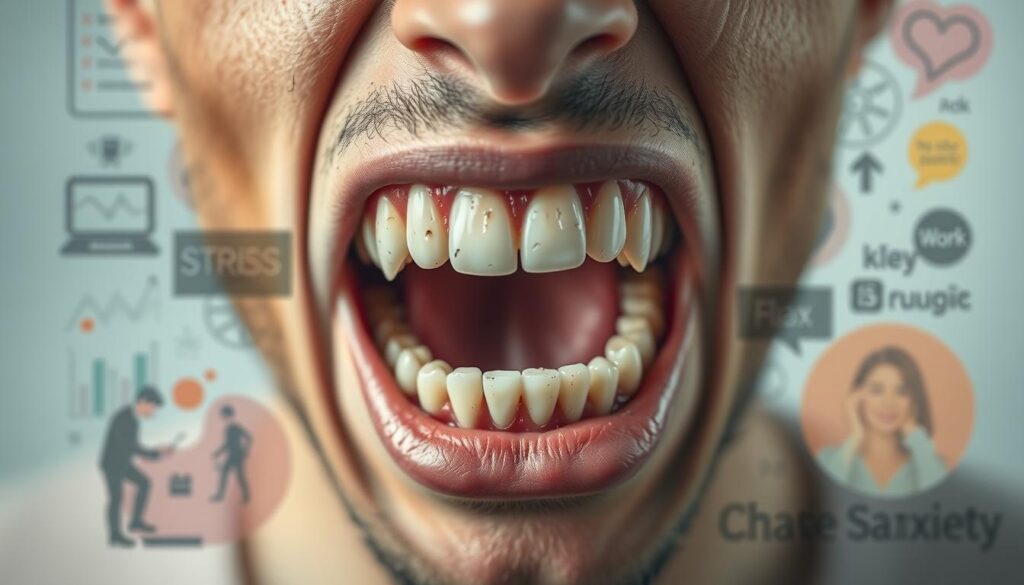
Teeth grinding, or bruxism, is a common dental issue affecting both kids and adults. It can harm your teeth and jaw1. Many people grind their teeth without knowing it.
About 15% to 33% of children grind their teeth, mostly while sleeping1. Stress often leads to jaw pain and tooth wear from grinding.
Caffeine, alcohol, and certain health conditions can trigger bruxism1. Long-term grinding may cause tooth fractures and require dental work1.
Knowing why you grind your teeth helps manage the problem. Simple lifestyle changes can ease symptoms and protect your teeth. Exercise and counseling are some ways to tackle this issue1.
Key Takeaways
- Bruxism affects up to 33% of children and a significant portion of adults
- Stress and lifestyle factors contribute to teeth grinding
- Chronic grinding can cause serious dental damage
- Early detection and management are crucial
- Multiple treatment options exist for managing bruxism
Understanding Teeth Grinding (Bruxism)
Teeth grinding, or bruxism, is a complex condition affecting many people unknowingly. It’s a challenging sleep disorder impacting overall health and dental well-being2.
What is Bruxism?
Bruxism involves involuntary teeth clenching and grinding during day or night. It can occur in two main forms: awake and sleep bruxism2.
Your body might do this unconsciously, risking dental and muscular health. This behavior can lead to serious problems if left unchecked.
Types of Bruxism
- Awake Bruxism: Involves conscious or unconscious teeth clenching during waking hours2
- Sleep Bruxism: Occurs during sleep as a movement disorder2
Common Signs and Symptoms
Spotting bruxism early can prevent major dental damage. Look out for these key signs:
| Symptom Category | Specific Signs |
|---|---|
| Dental Indicators | Flattened or fractured teeth, worn enamel |
| Pain Symptoms | Jaw pain, tooth sensitivity, headaches |
| Sleep Disruptions | Associated with snoring and sleep apnea3 |
Your risk for nighttime grinding goes up with certain factors2:
- High stress levels
- Aggressive personality traits
- Substance use like caffeine or alcohol
- Certain medications
Understanding your bruxism can help prevent long-term dental and health complications.
Notably, 80-90% of teeth grinding cases stem from stress and anxiety3. Tackling these root causes can greatly reduce nighttime grinding symptoms.
Risk Factors and Medical Conditions Associated with Bruxism
Knowing bruxism risk factors helps identify causes and find proper treatment. Stress and anxiety often trigger involuntary teeth clenching or grinding45. Understanding these factors empowers you to manage and prevent bruxism.
- Psychological triggers like high stress and anxiety5
- Specific personality types (aggressive or hyperactive individuals)
- Poor lifestyle habits including:
- Smoking
- Excessive alcohol consumption
- High caffeine intake5
Medical conditions can be linked to bruxism. Neurological disorders like Parkinson’s, sleep apnea, and epilepsy increase teeth grinding risk5. Family history also plays a role in susceptibility.
About 30 to 40 million Americans have bruxism5. Your genes might make you more prone to this condition. This is especially true if close relatives have similar dental issues.
Medications can also trigger teeth grinding, particularly psychiatric drugs and those treating neurological conditions5.
Some additional risk factors include:
- Misaligned dental structures
- Chronic sleep disorders
- Psychiatric medications4
By recognizing these factors, you can take steps to manage bruxism. Consult a dentist if you suspect you’re grinding your teeth. They can provide personalized advice and treatment options.
Treatment Options and Professional Care
Bruxism management requires a comprehensive approach. It addresses both dental and lifestyle factors. Your journey to effective teeth protection involves strategies targeting the root causes of grinding.
Customized Dental Solutions
Professional dental interventions protect your teeth from grinding damage. Custom-fitted mouth guards are crucial for bruxism treatment6. These devices create a barrier between upper and lower teeth, reducing potential damage.
- Night guards for sleep bruxism
- Dental splints to minimize grinding pressure
- Potential dental reshaping for severe cases
Medical Intervention Strategies
Medical treatments can provide relief for persistent bruxism. Options include muscle relaxants, Botox injections, and short-term anti-anxiety medications. Stress management is crucial in addressing teeth grinding triggers6.
| Treatment Type | Primary Focus | Effectiveness |
|---|---|---|
| Muscle Relaxants | Reducing Jaw Tension | Moderate |
| Botox Injections | Muscle Relaxation | High |
| Anti-Anxiety Medication | Stress Reduction | Variable |
Lifestyle Modifications
Lifestyle changes can significantly impact bruxism management. Key strategies include stress reduction techniques and improved sleep hygiene. Avoiding stimulants like caffeine is also important6.
“Effective bruxism treatment requires a holistic approach addressing physical and psychological factors.”
Regular dental check-ups are essential for monitoring progress. They help adjust treatment plans as needed. A multifaceted approach can effectively manage teeth grinding and protect dental health7.
Conclusion
Bruxism is a complex condition that can greatly affect your dental health8. It’s crucial to understand the risks and protect your teeth9. Taking action can help manage this issue effectively.
You can ease jaw discomfort and prevent dental damage with proactive steps. Regular check-ups, stress management, and custom mouthguards are key tools8. Work with dental experts to create a plan that fits your needs learn more about bruxism management.
Early action is vital in managing bruxism. Reducing caffeine and practicing relaxation can help lessen teeth grinding9. Consistent care and expert guidance can prevent long-term dental problems8.
Take charge of your dental health now. Stay informed and listen to your body. Seek professional help when needed. Your teeth will benefit from your efforts to manage bruxism.
FAQ
What is bruxism?
Bruxism is teeth grinding or clenching. It can happen during the day or while sleeping. This common condition may cause dental and health issues.
Bruxism involves unconscious grinding or clenching of teeth. It can lead to significant tooth wear and jaw pain.
What are the main types of bruxism?
There are two primary types of bruxism: awake and sleep. Awake bruxism involves daytime teeth clenching or grinding.
Sleep bruxism occurs during sleep. It’s a sleep-related movement disorder that can disrupt rest and damage teeth.
What are the common signs of teeth grinding?
Common signs include loud grinding sounds, flattened teeth, and worn tooth enamel. Other symptoms are tooth sensitivity, jaw pain, and locked jaw.
Enlarged jaw muscles, earache-like pain, and dull headaches may also occur. Many people don’t know they have bruxism until problems become noticeable.
What causes bruxism?
Bruxism can be caused by stress, anxiety, sleep disorders, and certain medications. Lifestyle habits can also play a role.
Risk factors include personality type, smoking, caffeine, and alcohol use. Medical conditions like Parkinson’s disease, sleep apnea, and ADHD may contribute.
How can I treat teeth grinding?
Treatment options include custom-fitted mouth guards to protect teeth. Dental corrections, muscle relaxants, and Botox injections may help.
Lifestyle changes can manage symptoms effectively. These include stress management, better sleep habits, and avoiding stimulating drinks.
When should I see a professional about teeth grinding?
Consult a dentist if you have persistent jaw pain or notice tooth damage. Seek help for frequent headaches or if you suspect teeth grinding.
Regular dental check-ups are crucial. They help detect bruxism early and prevent long-term complications.
Can children experience bruxism?
Yes, bruxism is actually more common in children. Many kids outgrow teeth grinding over time.
It’s important to monitor the condition in children. Consult a pediatric dentist if you notice persistent grinding or tooth wear.
Are there natural ways to reduce teeth grinding?
Natural methods include stress management techniques like meditation and yoga. Deep breathing exercises can also help reduce bruxism.
Avoid caffeine and alcohol. Establish a consistent sleep routine. Practice jaw relaxation techniques. A relaxing bedtime routine can minimize nighttime grinding.
Source Links
- An Overview of Teeth Grinding (Bruxism) – https://www.webmd.com/oral-health/teeth-grinding-bruxism
- Teeth grinding (bruxism) – Symptoms and causes – https://www.mayoclinic.org/diseases-conditions/bruxism/symptoms-causes/syc-20356095
- Teeth grinding (bruxism) – https://www.nhs.uk/conditions/teeth-grinding/
- Bruxism – https://www.hopkinsmedicine.org/health/conditions-and-diseases/bruxism
- Risk Factors for Bruxism – https://www.comfortcaredentists.com/risk-factors-for-bruxism/
- Bruxism Treatment | Ellenton, FL Dentist – https://northriverdental.com/bruxism-treatment/
- Bruxism Management – StatPearls – NCBI Bookshelf – https://www.ncbi.nlm.nih.gov/books/NBK482466/
- The Impact of Bruxism on Your Teeth and Oral Health | Altoona, IA | Altoona Smiles – https://altoonasmiles.com/blog/the-impact-of-bruxism-on-your-teeth-and-oral-health/
- Teeth Grinding (Bruxism) Explained: Causes, Symptoms, and Treatment Options – https://www.beachesdentalmonavale.com.au/resources/teeth-grinding-causes-symptoms-treatments/

