
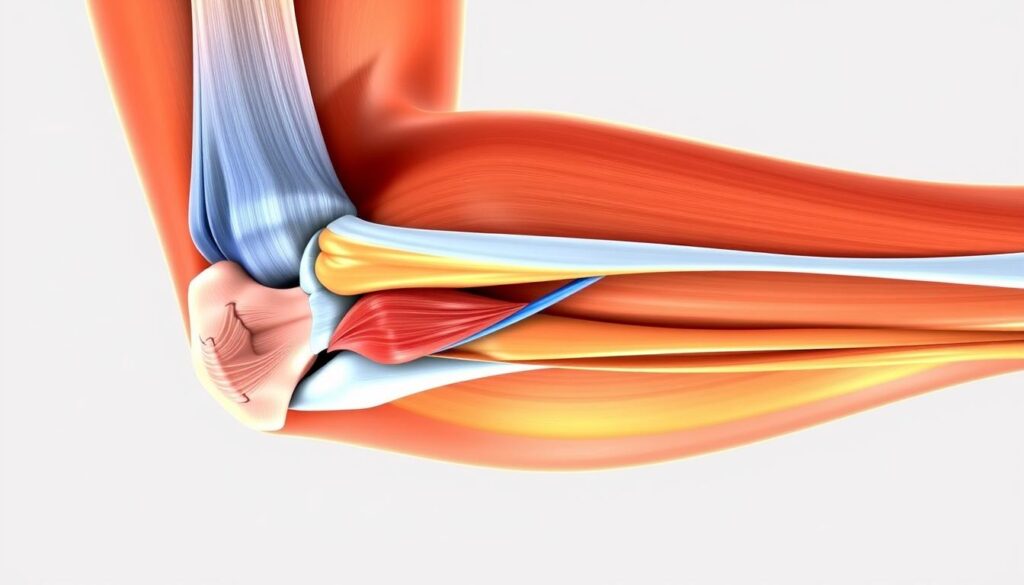
Persistent arm pain near your elbow might be tennis elbow, or lateral epicondylitis. This condition affects anyone with repetitive arm movements, not just tennis players1. It can greatly impact your daily activities and life quality2.
Tennis elbow is elbow tendinitis from stress on tendons connecting forearm muscles to the elbow. It often affects people aged 30 to 601. Workers using hand tools, painters, and others with repetitive arm motions are also at risk1.
Recognizing symptoms is crucial for effective management. Seeking proper treatment can reduce pain and prevent long-term issues2. Understanding tennis elbow is key to finding relief.
Key Takeaways
- Tennis elbow affects people of all ages who perform repetitive arm movements
- The condition causes pain and inflammation in the outer elbow region
- Multiple treatment options are available, from self-care to medical interventions
- Early diagnosis and treatment can prevent worsening symptoms
- Both athletes and non-athletes can develop tennis elbow
Understanding Tennis Elbow: What Is It?
Tennis elbow is a painful condition affecting many people, not just athletes. It’s a repetitive strain injury impacting those who perform repeated arm movements. Overuse can stress muscles and tendons, causing forearm discomfort3.
Adults between 30 and 60 years old often experience tennis elbow3. This condition extends beyond the tennis court, affecting various people in different professions.
Understanding the Basics
Tennis elbow, or lateral epicondylitis, inflames tendons connecting forearm muscles to the outer elbow. Continuous stress and repetitive motions cause this inflammation.
Who Is Most at Risk?
- People with jobs involving repetitive arm movements4
- Painters
- Plumbers
- Carpenters
- Auto workers
- Cooks
- Racquet sports enthusiasts3
- Individuals performing activities requiring constant arm motion
Common Causes of Tennis Elbow
Certain activities and lifestyle factors increase your risk. Playing racket sports for over two hours daily can lead to this condition3.
Poor equipment or incorrect technique can also cause forearm discomfort4. Smoking, obesity, and specific medications are additional risk factors3.
“Prevention is always better than cure when it comes to repetitive strain injuries.”
Knowing these factors can help you protect yourself from developing tennis elbow. Take precautions and adjust your activities to reduce your risk.
Recognizing Symptoms of Tennis Elbow
Tennis elbow causes arm pain and forearm discomfort. Early detection is key for effective treatment5. Knowing the symptoms helps you spot this challenging condition quickly.
Key Symptoms to Watch For
The primary indicators of elbow tendinitis include:
- Persistent pain around the outer elbow joint
- Tenderness when touching the bony bump on the elbow
- Weakness in forearm muscles5
- Difficulty gripping or lifting objects
- Numbness or tingling sensations in the forearm5
Tennis elbow usually affects people aged 30 to 506. It’s not just for athletes. Carpenters, painters, and auto workers often get it from repetitive arm movements6.
When to Seek Medical Attention
“Prompt diagnosis can prevent long-term damage and complications”
You should consult a healthcare professional if you experience:
- Pain persisting for several weeks
- Significant limitation in arm movement
- Intense discomfort during daily activities
- Visible swelling or unusual lumps around the elbow
Doctors often suggest nonsurgical treatments first. These may include rest, anti-inflammatory drugs, and physical therapy6.
Quick action can speed up healing. It also stops symptoms from getting worse5. Don’t wait to seek help if you notice these signs.
Effective Treatment Options for Tennis Elbow
Tennis elbow requires a well-rounded approach to recovery. Various options can reduce tendon swelling and promote healing. Most patients find relief without surgery, which is encouraging news.
Home remedies are vital for managing sports injuries. Short ice applications and over-the-counter pain relievers can ease symptoms. Gentle stretches also help. Modify activities to avoid pain triggers.
A supportive brace can lessen muscle strain during flare-ups. This simple tool often provides significant relief.
Professional treatments offer advanced solutions for stubborn cases. Physical therapists may suggest manual therapy with active and passive exercises. Steroid injections and platelet-rich plasma therapy can provide quick pain relief.
Surgery might be considered for long-lasting symptoms. However, this is only in rare cases when other treatments fail.
Prevention is key to avoiding tennis elbow. Use proper warm-up techniques and the right equipment. Strengthen your forearm muscles with targeted exercises.
Your lifestyle and job can affect recovery. With the right approach, you can beat tennis elbow. Soon, you’ll return to normal activities with confidence789.
FAQ
What exactly is tennis elbow?
Tennis elbow is an overuse injury affecting the outer part of your elbow. It causes inflammation in the tendons connecting forearm muscles to the elbow. Despite its name, it can affect anyone who performs repetitive arm movements.
The condition develops from repeated motions that strain muscles and tendons. This leads to microscopic tears and inflammation in the affected area.
Who is most likely to develop tennis elbow?
Tennis elbow typically affects people aged 30-60, but can occur at any age. It’s common among those who engage in activities involving repetitive arm motions.
Athletes, painters, carpenters, musicians, and typists are often affected. Workers who frequently use tools or perform repetitive tasks are also at risk.
What are the primary symptoms of tennis elbow?
The main symptoms include pain and tenderness on the outside of the elbow. This pain may spread into your upper or lower arm.
You might have trouble moving your arm or feel pain when lifting objects. Some people experience redness or swelling around the elbow.
The pain is often most intense during gripping or lifting activities.
How can I treat tennis elbow at home?
Apply ice for 15 minutes every 3-4 hours to reduce inflammation. Take over-the-counter pain relievers like ibuprofen to manage discomfort.
Perform gentle stretching exercises and rest the affected arm. Using a compression bandage can also help manage symptoms.
Avoid activities that cause pain to prevent further irritation.
When should I see a doctor about my tennis elbow?
See a doctor if your pain lasts for months or gets worse over time. Seek medical help if the pain interferes with your daily activities.
If you notice a lump or bulge in your elbow or arm, consult a healthcare professional. Also, seek help if home treatments don’t provide relief after a few weeks.
What professional treatments are available for tennis elbow?
Professional treatments include physical therapy and steroid injections. Platelet-rich plasma therapy and innovative procedures like needle fenestration are also options.
In severe cases that don’t improve after 6-12 months, surgery might be considered. Your doctor will recommend the best treatment based on your condition.
How can I prevent tennis elbow?
Warm up properly before activities and use correct techniques in sports and work tasks. Make sure your equipment fits your size and strength.
Do exercises to strengthen your forearm muscles. Make ergonomic adjustments and take regular breaks during repetitive tasks.
How long does recovery from tennis elbow typically take?
Recovery time varies depending on the severity of the condition and chosen treatment. Mild cases might improve within a few weeks with proper rest and care.
More severe cases could take several months to heal completely. Consistent treatment and following medical advice are crucial for successful recovery.
Source Links
- Lateral Epicondylitis (Tennis Elbow) – https://www.hopkinsmedicine.org/health/conditions-and-diseases/lateral-epicondylitis-tennis-elbow
- The Basics of Tennis Elbow – https://www.webmd.com/fitness-exercise/tennis-elbow-lateral-epicondylitis
- Tennis elbow – Symptoms and causes – https://www.mayoclinic.org/diseases-conditions/tennis-elbow/symptoms-causes/syc-20351987
- Tennis Elbow (Lateral Epicondylitis) – OrthoInfo – AAOS – https://orthoinfo.aaos.org/en/diseases–conditions/tennis-elbow-lateral-epicondylitis/
- What Are The Common Symptoms and Treatment for Tennis Elbow – https://www.chicagostemcells.com/blog/what-are-the-common-symptoms-and-treatment-for-tennis-elbow/?bp=40425
- Tennis Elbow | Symptoms and Treatments | OrthoIndy Blog – https://blog.orthoindy.com/2017/03/06/tennis-elbow-2/
- What Does Tennis Elbow Feel Like? – https://www.houstonmethodist.org/blog/articles/2023/sep/what-is-tennis-elbow-how-is-it-treated/
- Tennis elbow: Learn More – The treatment options for tennis elbow – InformedHealth.org – https://www.ncbi.nlm.nih.gov/books/NBK507012/
- What Are Tennis Elbow Treatments? – https://www.scripps.org/news_items/7315-what-is-the-best-treatment-for-tennis-elbow

